

Transforming your living room into a lush garden sanctuary is a growing trend that brings the calming essence of the outdoors directly into your home. This design philosophy focuses on biophilic elements, blending organic textures with vibrant greenery to create a space that feels both refreshing and deeply grounded. By integrating various botanical features, from vertical walls to earthy color palettes, you can cultivate an environment that promotes wellness and relaxation. Whether you live in a bustling city apartment or a suburban house, these concepts help bridge the gap between interior comfort and natural beauty. Let us explore various ways to achieve this serene aesthetic through thoughtful furniture choices and decor.
1. Indoor vertical garden
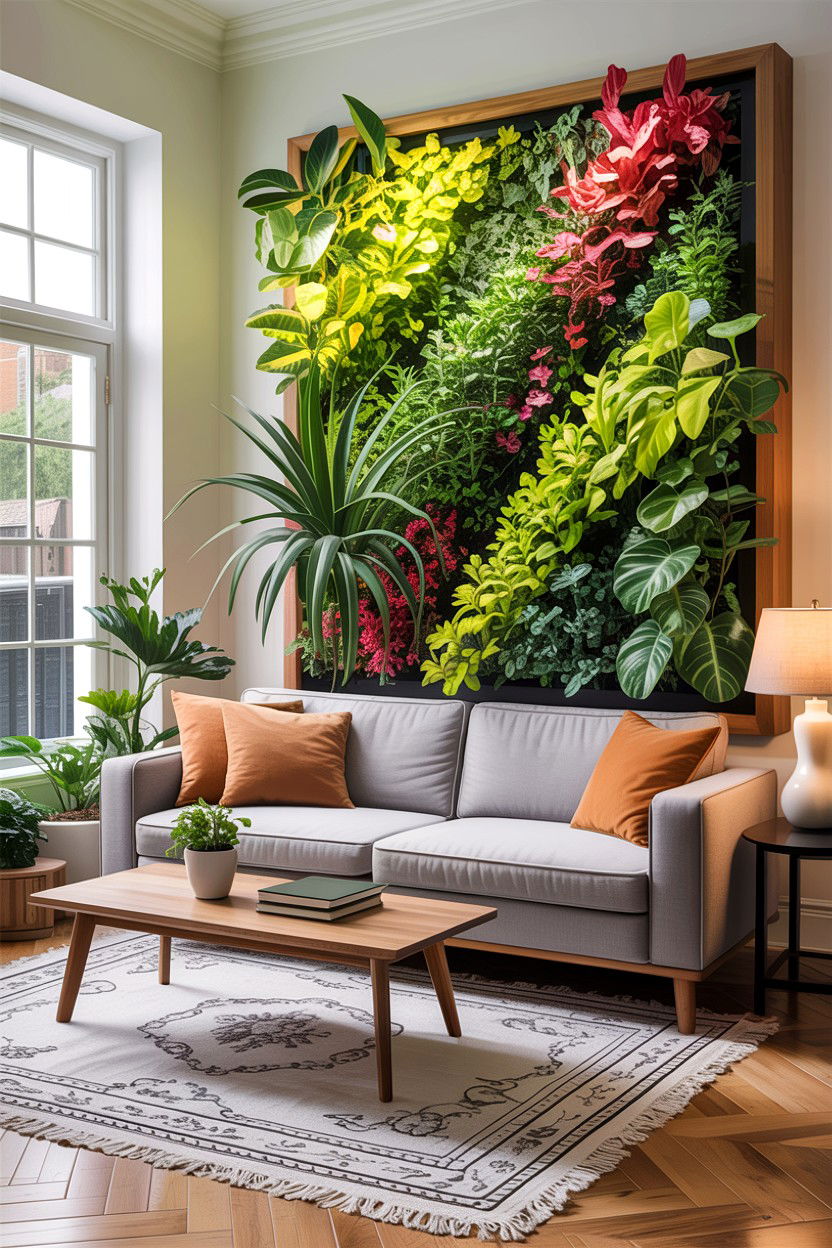
Imagine walking into a room where the boundaries between nature and architecture completely disappear through a stunning lush vertical installation. This specific layout focuses on a full-height living wall that acts as a breathing centerpiece for the entire seating area. To balance the heavy greenery, the furniture remains sleek and contemporary with neutral tones like soft gray or cream. Natural wood flooring provides a warm foundation that complements the organic textures of the plants. Large floor-to-ceiling windows allow sunlight to nourish the foliage while illuminating the vibrant shades of green throughout the space. This approach creates a refreshing sanctuary that feels alive and constantly evolving while providing a unique visual experience.
2. Botanical wallpaper
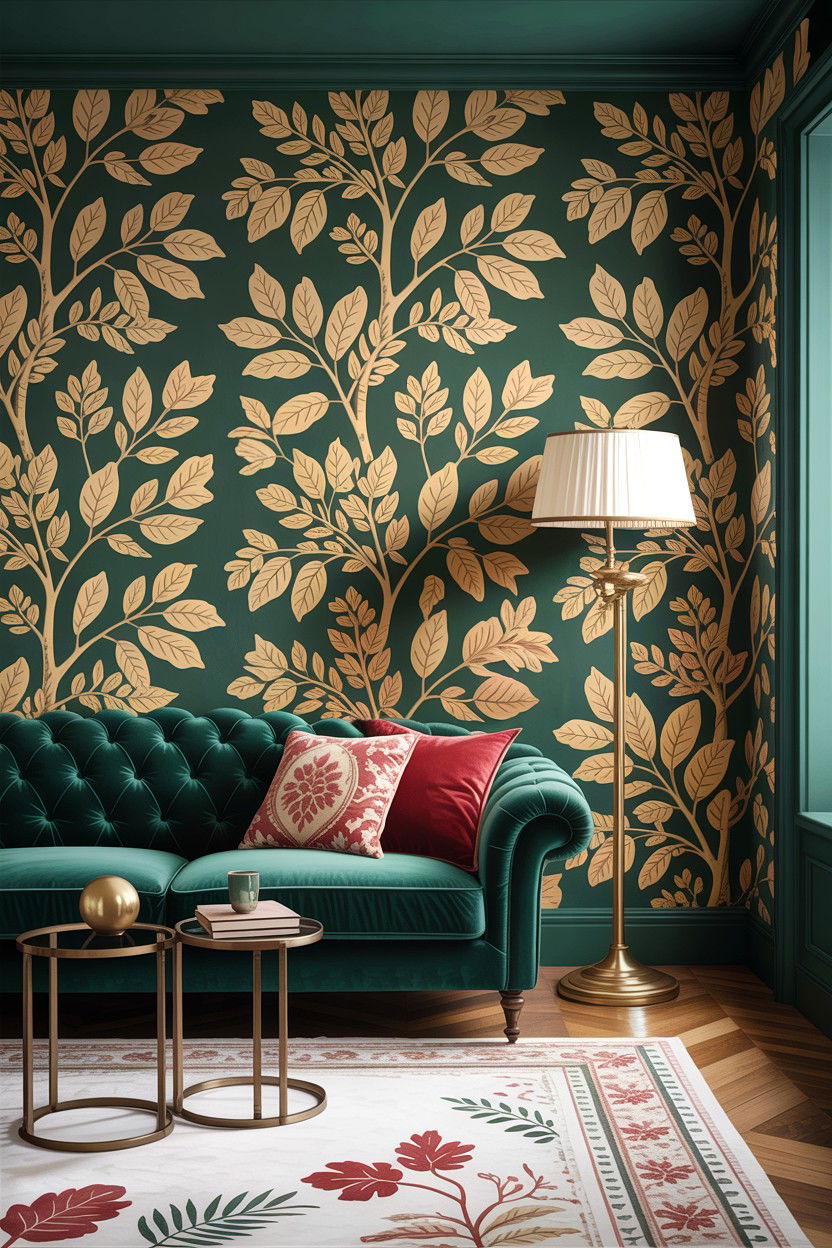
Have you ever considered how a single pattern can transform an entire atmosphere into a vintage garden retreat? A living room centered around bold botanical wallpaper uses intricate leaf and floral motifs to set a sophisticated, nature-inspired mood. This design works best when paired with velvet upholstery in deep forest green or muted gold to echo the colors found in the wall patterns. Decorative accents like brass lamps and dark wood side tables add a touch of classic elegance to the space. By keeping the ceiling white and the floors simple, the focus remains entirely on the lush, artistic walls, creating a cozy and immersive garden-themed environment for relaxation.
3. Sunroom lounge
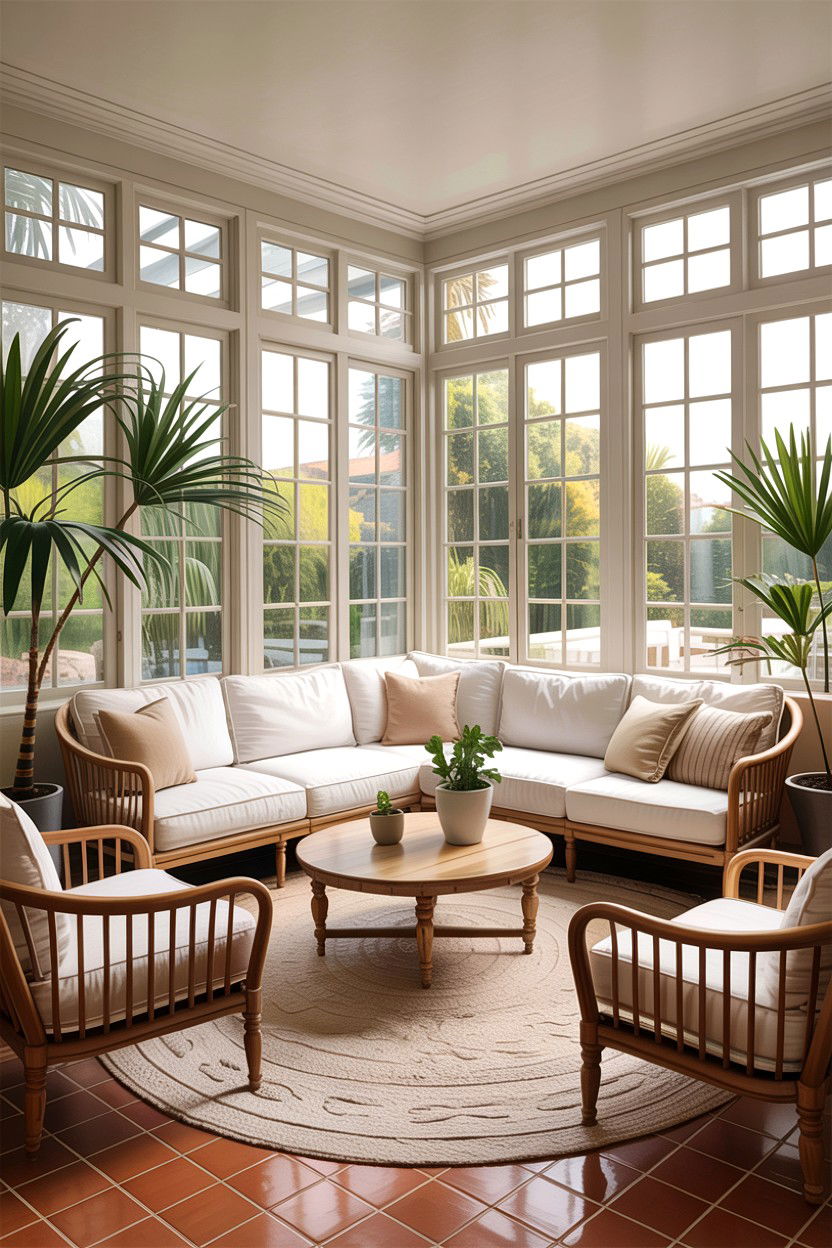
A sunroom-style living area maximizes the connection to the outdoors by utilizing expansive glass panels and a bright, airy layout. This design idea emphasizes natural light as the primary decorative element, making the space feel open and limitless. Light-colored linen sofas and sheer curtains enhance the breezy atmosphere, while multiple potted palms and ferns are scattered throughout to mimic a backyard patio. The use of light oak or bleached wood furniture keeps the aesthetic clean and modern. This setup is perfect for those who want to enjoy the feeling of being in a garden year-round, regardless of the weather outside, while maintaining indoor comfort.
4. Rattan furniture
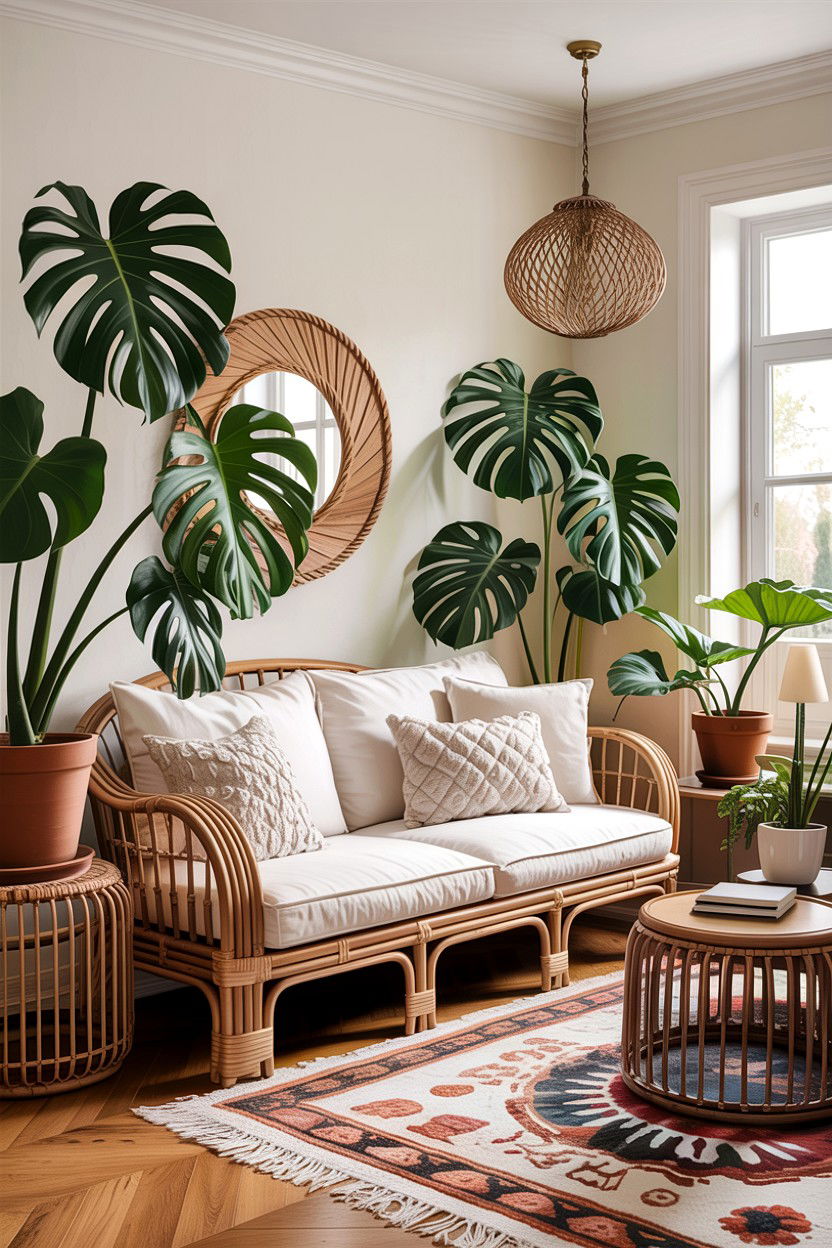
Integrating rattan furniture into your main seating area is an excellent way to achieve a relaxed, bohemian garden aesthetic within your home. This design concept features woven textures prominently, from the main sofa frame to the coffee table and accent chairs. To prevent the room from feeling too rustic, designers often incorporate plush white cushions and soft wool throws for added comfort. Surrounding the furniture with large-leafed tropical plants like Monstera or Bird of Paradise enhances the jungle-like vibe. The natural honey tones of the rattan pair beautifully with terracotta pots and woven jute rugs, resulting in a warm, inviting, and highly organic living space.
5. Large indoor tree
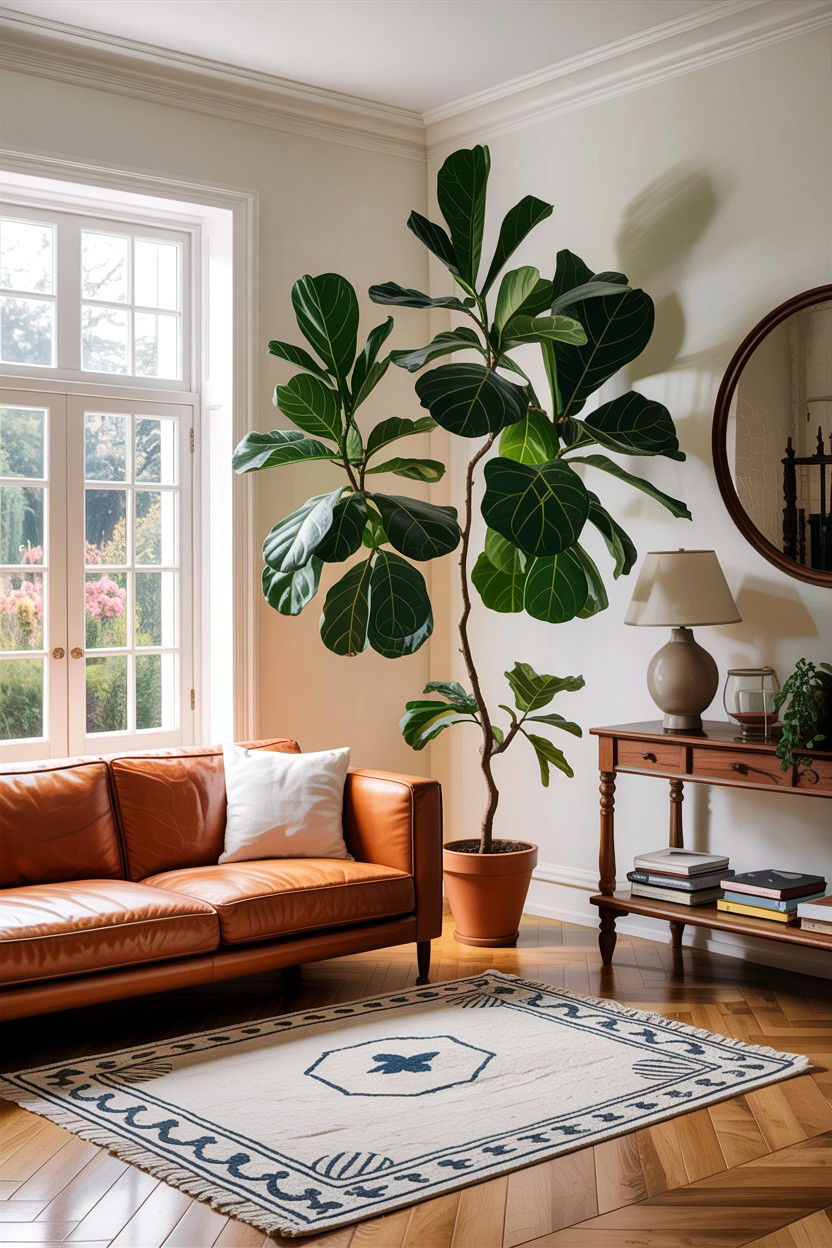
Centering a living room design around a singular, large indoor tree creates a dramatic focal point that feels both majestic and serene. Typically, a tall Fiddle Leaf Fig or an Olive tree is placed in a corner or near a large window to anchor the room's layout. The surrounding furniture is often kept low-profile to allow the tree’s canopy to take center stage. Soft, earthy textiles and a minimalist color palette ensure the space feels sophisticated rather than cluttered. This design choice brings a sense of permanence and life to the interior, making the living room feel like a quiet clearing in a peaceful, sun-drenched forest.
6. Moss wall
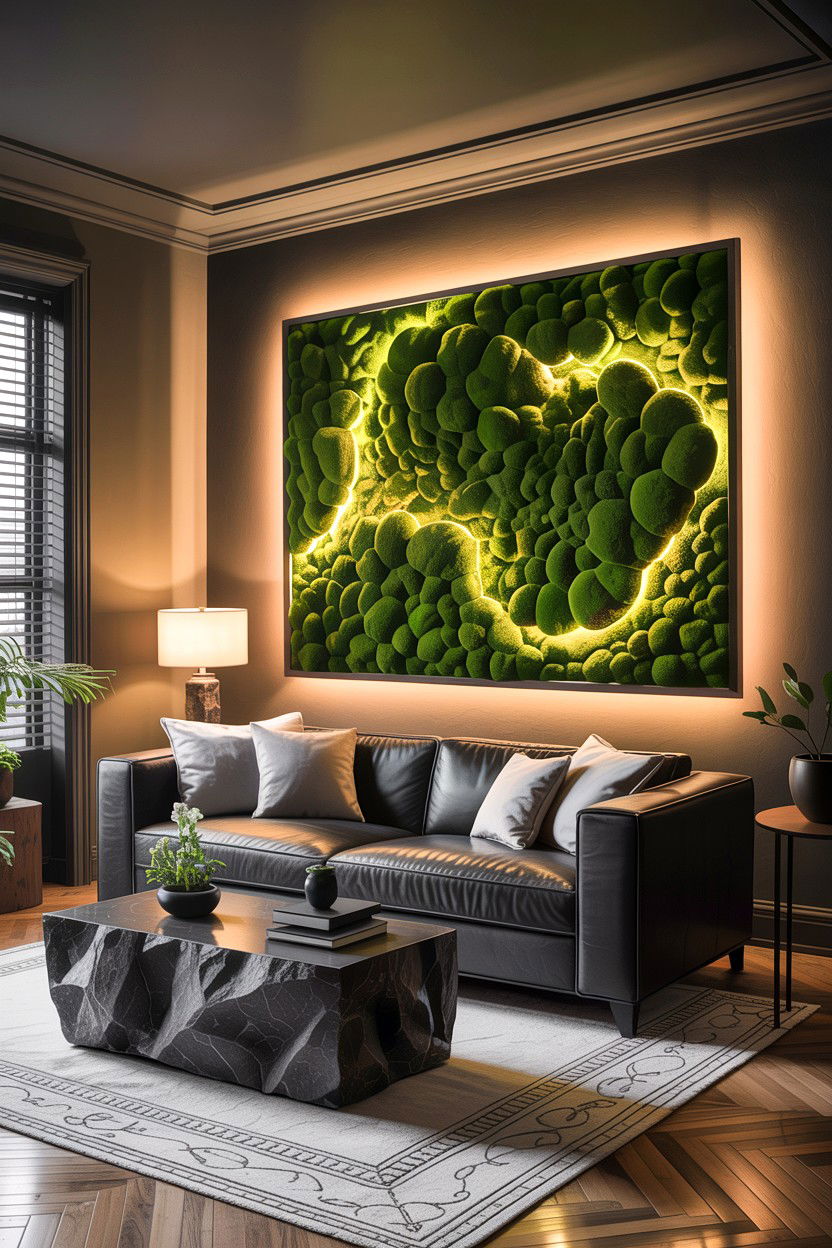
A moss wall installation offers a unique, low-maintenance way to bring a rich, velvety texture of the forest floor into a modern living room. This design idea often features a large framed panel of preserved moss as the primary art piece behind a sofa. To complement the deep green hues, the room might include stone-textured coffee tables and charcoal-colored upholstery for a moody, grounded feel. Soft, ambient lighting is used to highlight the various shades and dimensions of the moss, creating a tactile and visually soothing environment. This approach is ideal for urban dwellers who want a high-impact natural element without the need for constant watering.
7. Hanging plant
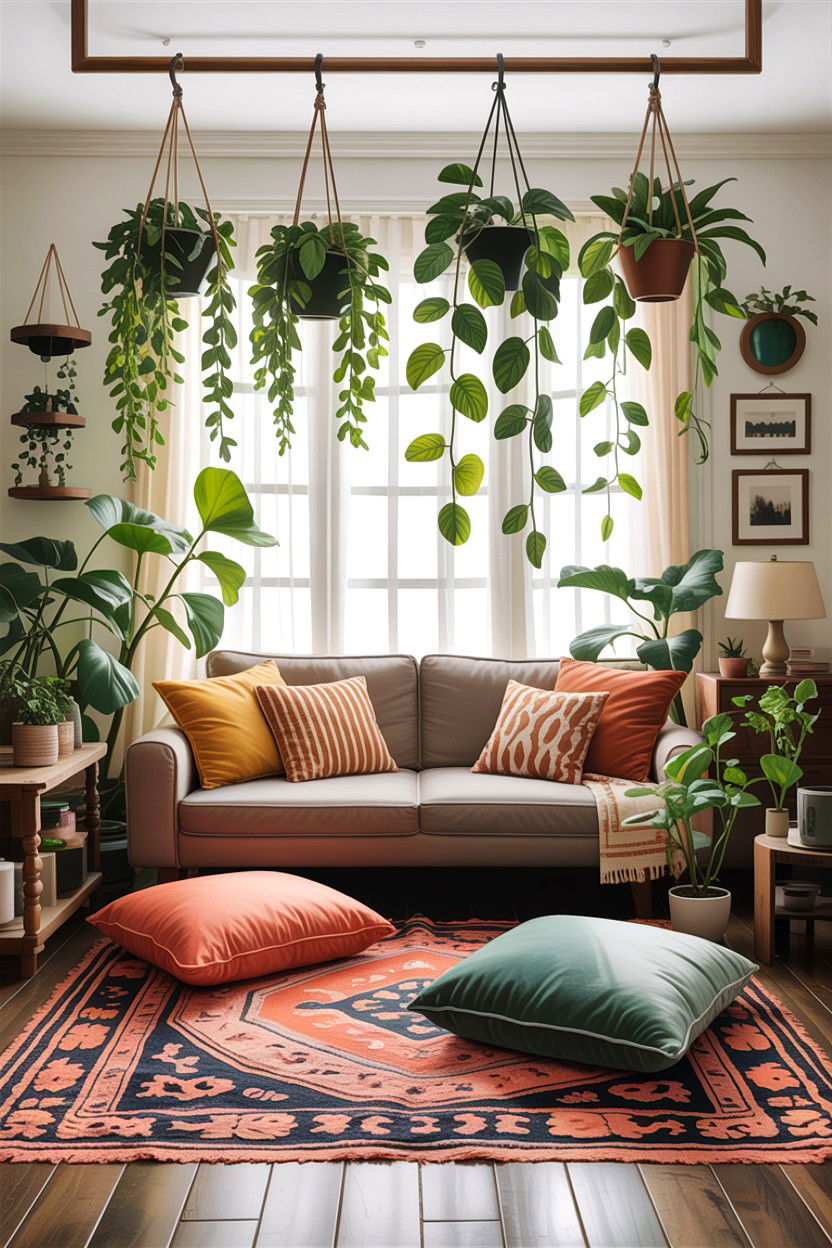
Utilizing vertical space with a variety of hanging plants can turn a standard living room into a cascading green canopy. This design focuses on installing sturdy ceiling hooks or wall-mounted brackets at different heights to display trailing species like Pothos or String of Pearls. The furniture below is typically arranged in a way that encourages looking upward, such as cozy floor cushions or a low-slung sectional sofa. By layering plants from the ceiling down to the floor, the room gains a sense of depth and enclosure. This "hanging garden" effect makes the space feel private, lush, and incredibly cozy, perfect for a quiet reading nook.
8. Sage green room
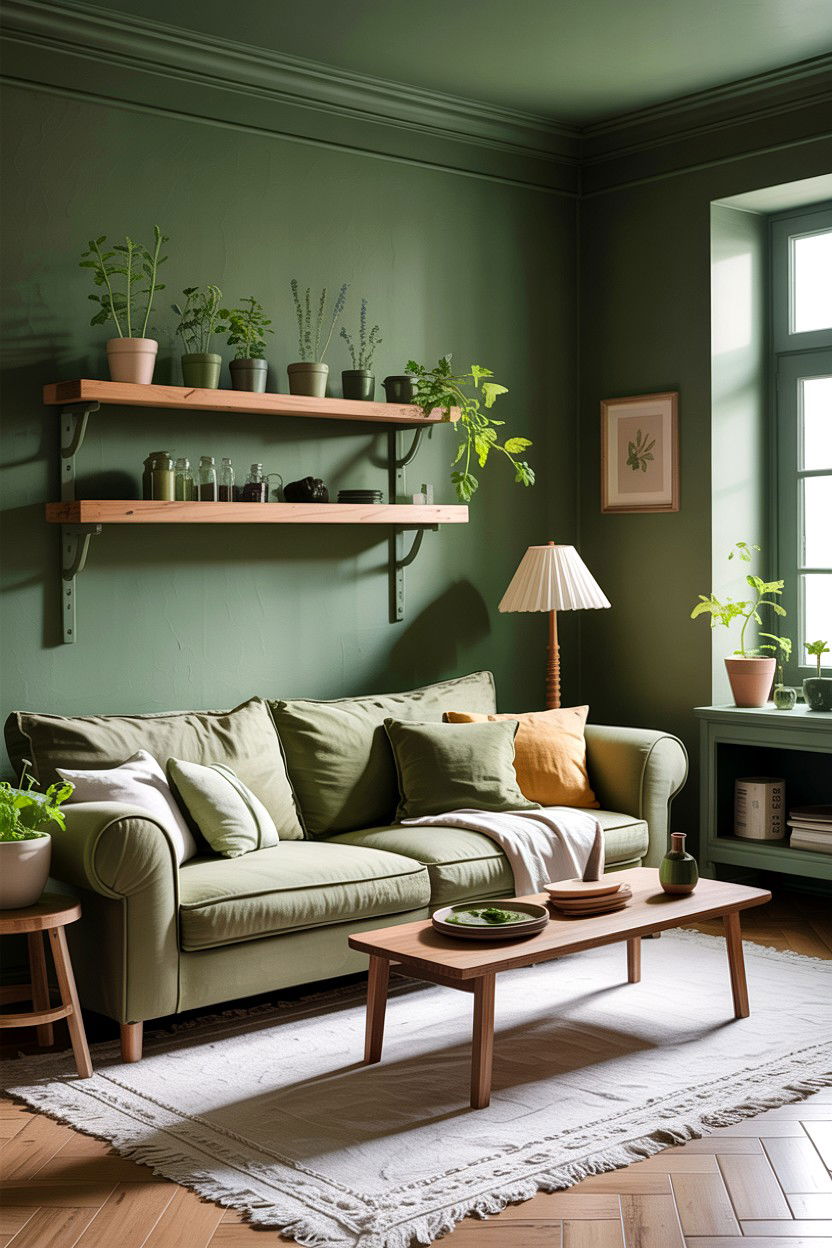
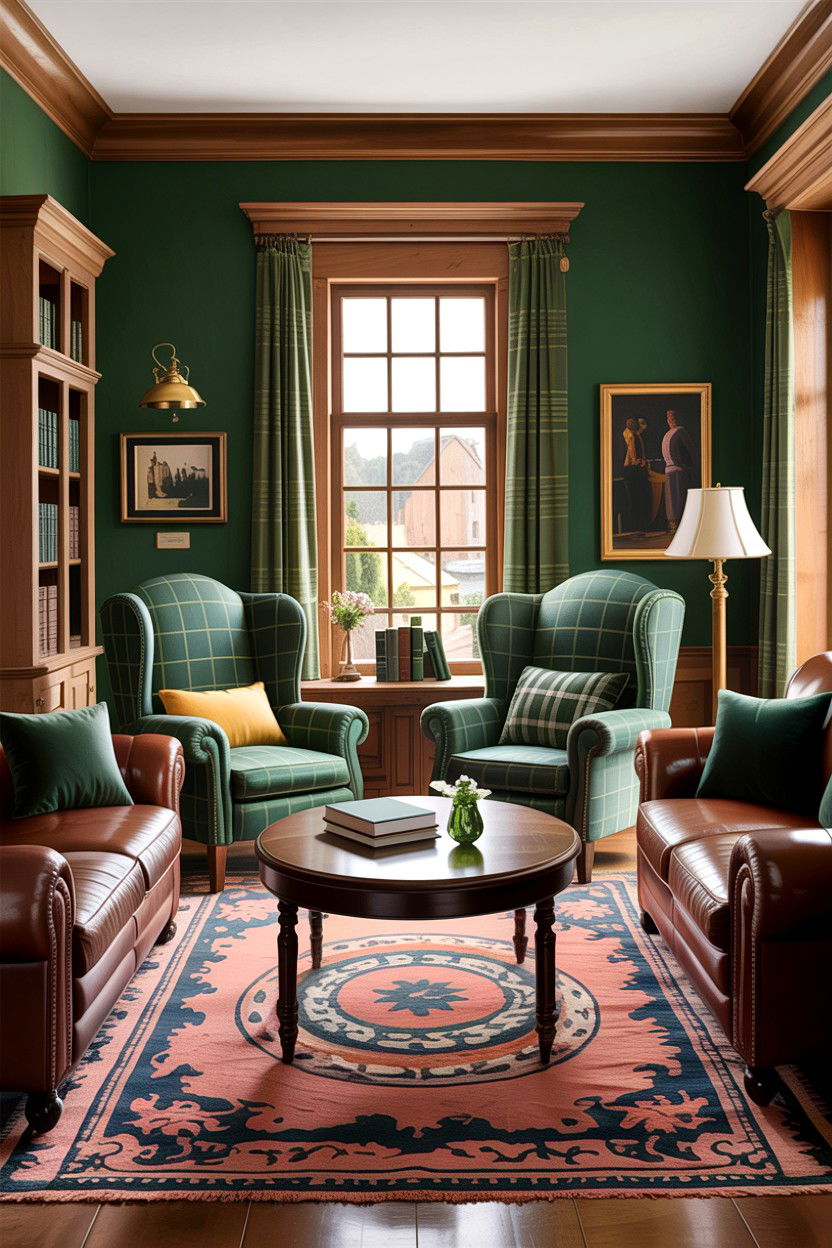
Using a sage green color palette as the foundation for a living room design provides a soft, sophisticated backdrop that mimics the colors of a herb garden. This approach involves painting the walls in a muted green and layering various textures like linen, cotton, and wool in similar shades. To add contrast, designers often include light wood furniture and cream-colored accents. The addition of several small potted herbs on windowsills or side tables reinforces the theme. This monochromatic yet textured look creates a calm and cohesive environment that feels naturally elegant and timeless, offering a subtle nod to garden aesthetics without being overly literal.
9. Floral sofa
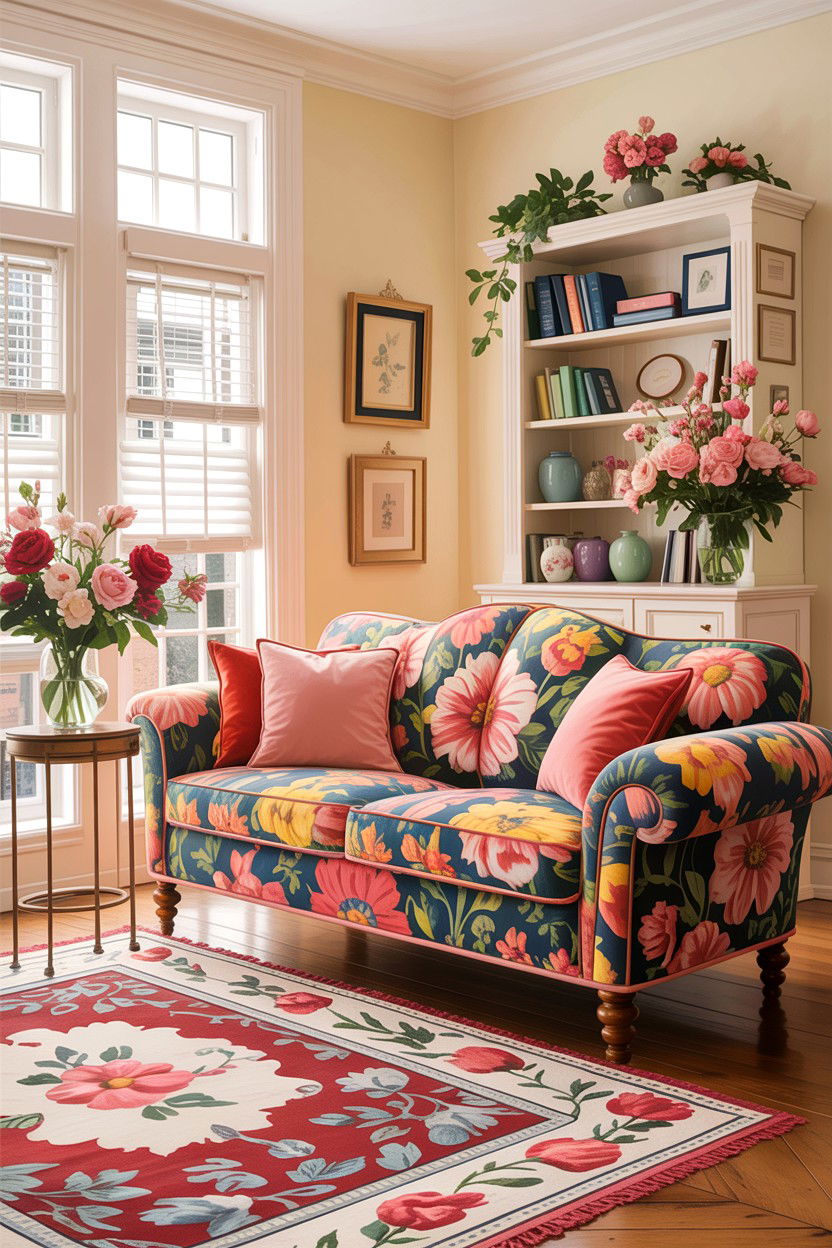
A floral-patterned sofa can serve as the vibrant heart of a garden-themed living room, bringing the beauty of a blooming meadow indoors. To make this bold piece work, the rest of the room is usually kept relatively neutral, with soft cream walls and natural wood flooring. Small accents, such as solid-colored throw pillows that match the hues in the floral print, help tie the look together. Decorative elements like botanical sketches in simple frames and fresh-cut flowers in glass vases further enhance the theme. This design creates a cheerful and feminine space that feels constantly in bloom, providing a bright and uplifting atmosphere for social gatherings.
10. Conservatory lounge
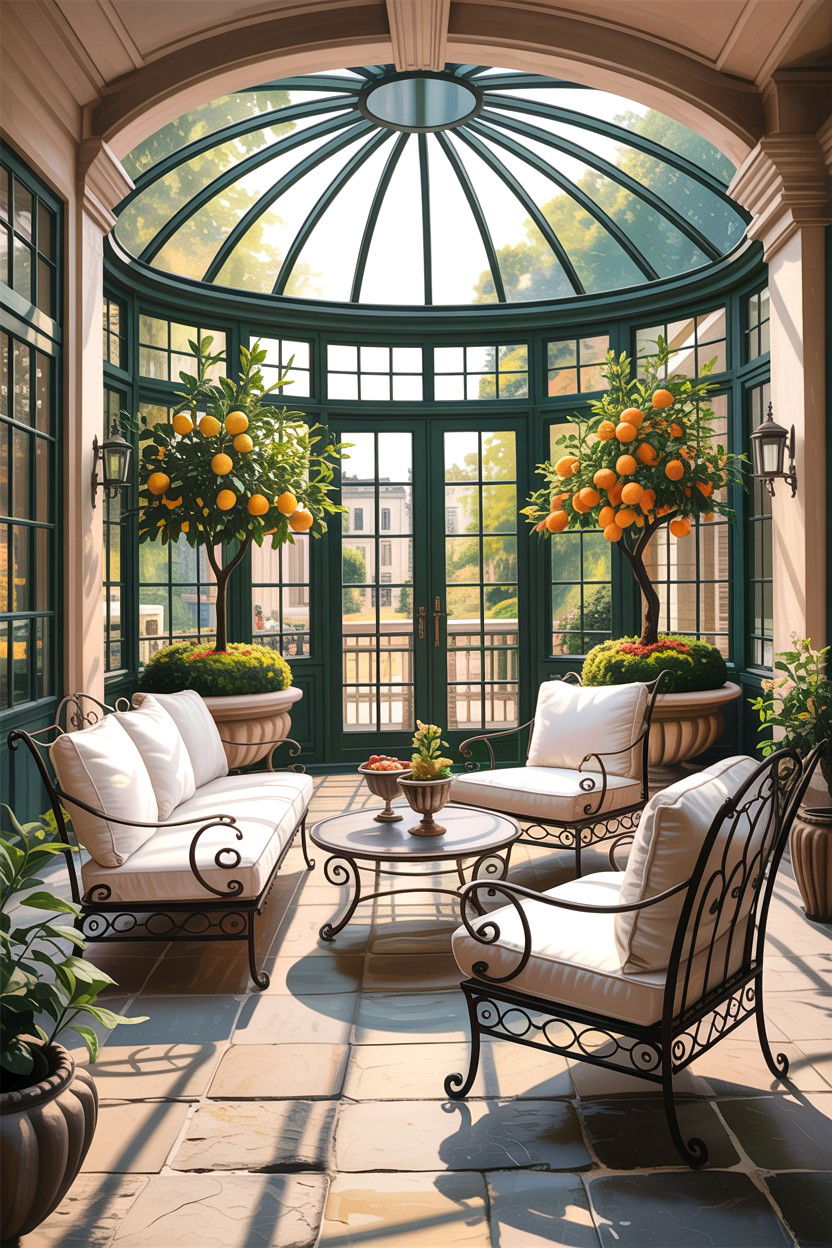
A conservatory-inspired lounge focuses on architectural details like iron-framed windows and stone flooring to create a classic, European garden feel. This design often incorporates traditional wrought iron furniture with comfortable weatherproof cushions, making the transition between indoor and outdoor living seamless. Large architectural plants, such as citrus trees or tall palms, are placed in oversized ceramic urns to add height and structure. The use of a neutral color palette with pops of blue or yellow creates a sophisticated and timeless look. This style is perfect for those who appreciate historical garden architecture and want to replicate that refined, airy feeling in their primary living area.
11. Terracotta floor
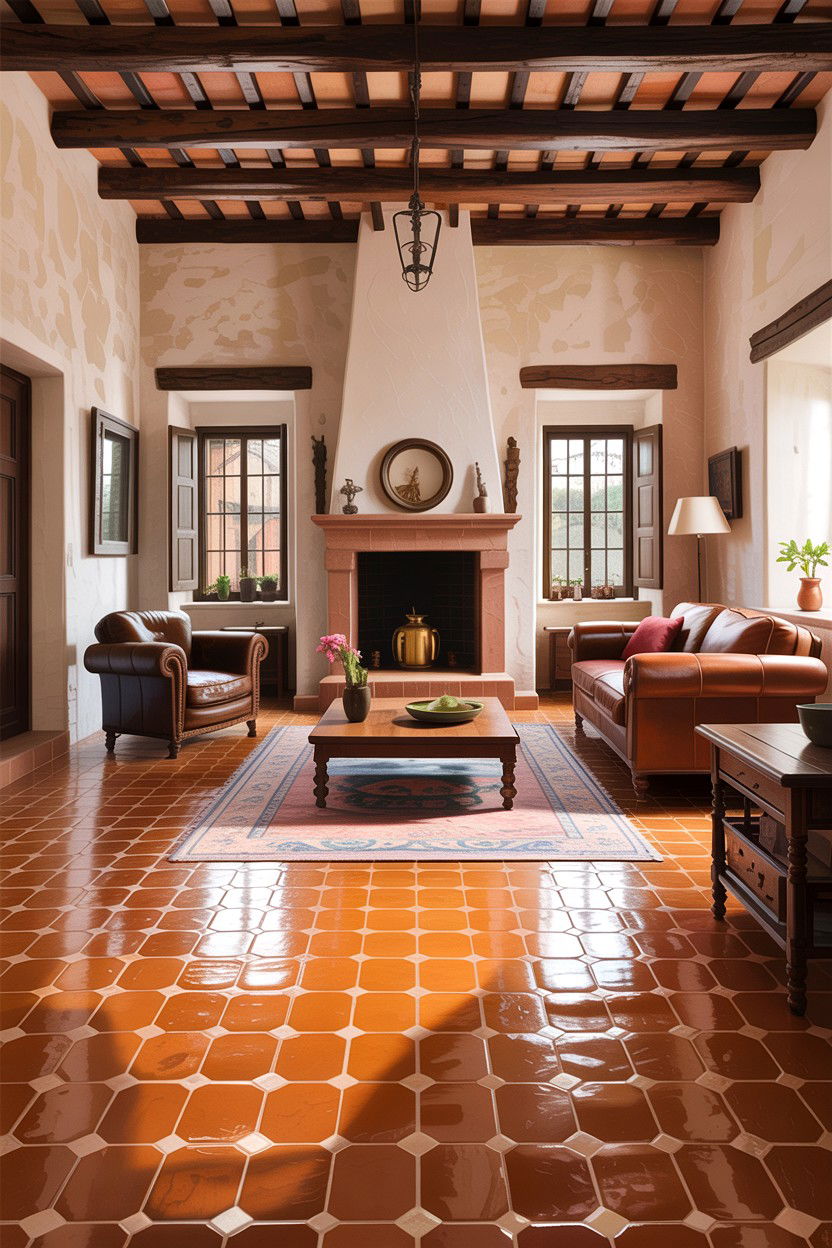
Terracotta floor tiles bring an immediate sense of warmth and Mediterranean charm to a garden-themed living area. This design concept uses the earthy, burnt-orange tones of the tiles as a base, which is then complemented by whitewashed walls and dark wood beams. To soften the hard surface, large area rugs with subtle organic patterns are often added. Furniture in natural materials like leather or heavy canvas adds to the rustic, grounded atmosphere. Large clay pots filled with succulents or lavender are placed strategically to enhance the garden feel. This look is incredibly durable and provides a sturdy, natural foundation that feels connected to the earth.
12. Large window
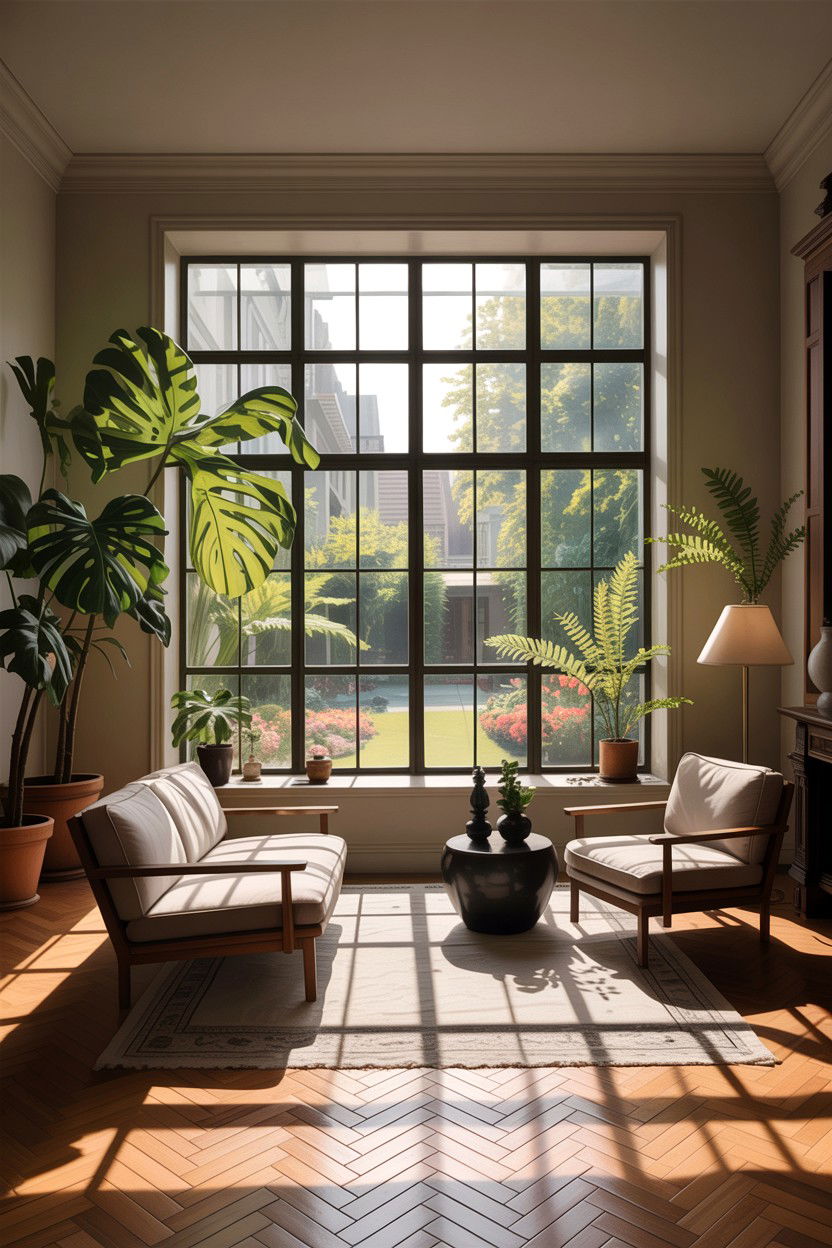
When a living room features a massive picture window, the outdoor garden itself becomes the primary decorative element of the interior. This design idea focuses on framing the view perfectly, often by keeping window treatments minimal or non-existent. The indoor furniture is positioned to face the window, turning the changing seasons into a living piece of art. To bridge the gap between inside and out, similar plants found in the backyard are brought indoors and placed near the glass. This creates a visual continuum that makes the room feel much larger and more integrated with the surrounding landscape, providing a serene and meditative living experience.
13. Wood beam
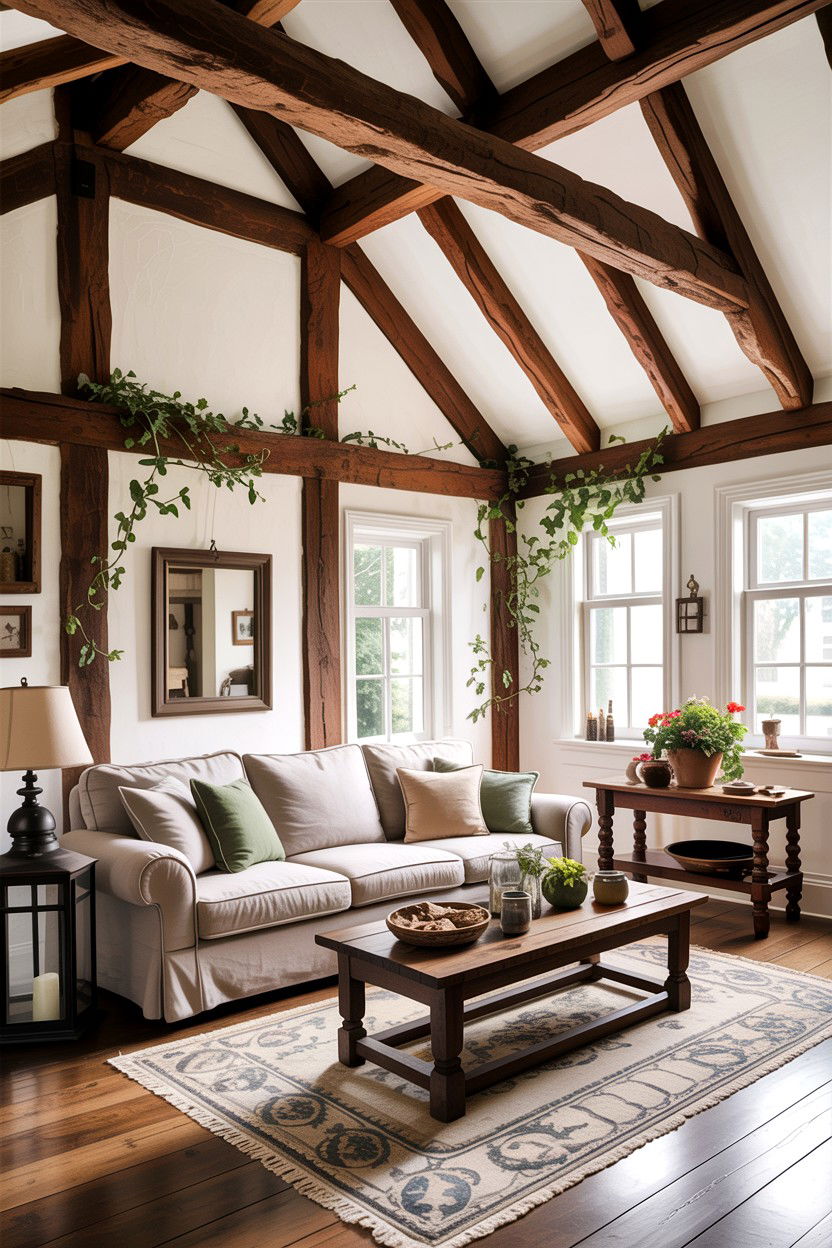
Exposed wood beams on the ceiling can give a living room the rustic, structural feel of an old garden shed or a traditional farmhouse. This design emphasizes natural materials and craftsmanship, with the dark wood providing a beautiful contrast against light-colored walls. To enhance the garden theme, trailing ivy can be trained to grow along the beams, or hanging lanterns can be suspended from them. The furniture is typically heavy and comfortable, featuring natural fabrics like burlap or thick linen. This combination of architectural strength and soft greenery creates a cozy, sheltered environment that feels like a permanent part of the natural world.
14. Nature rug
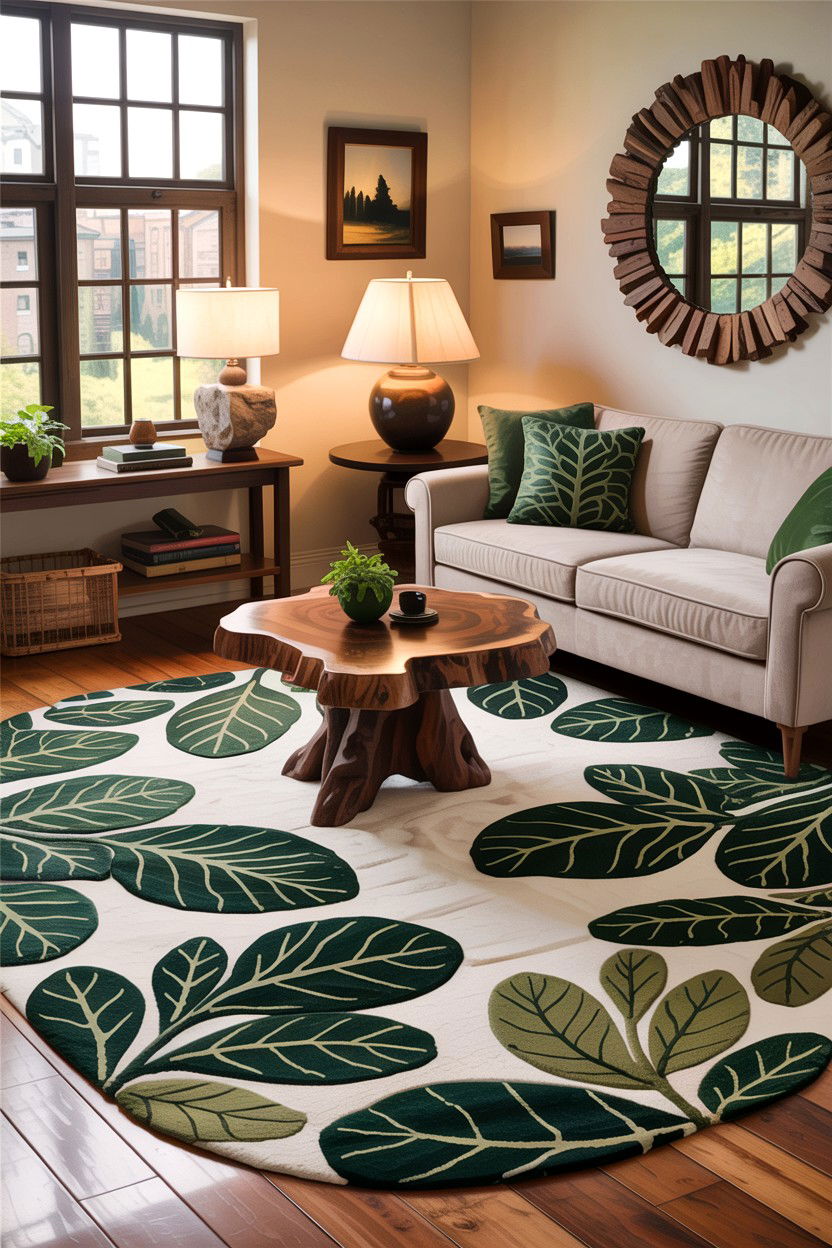
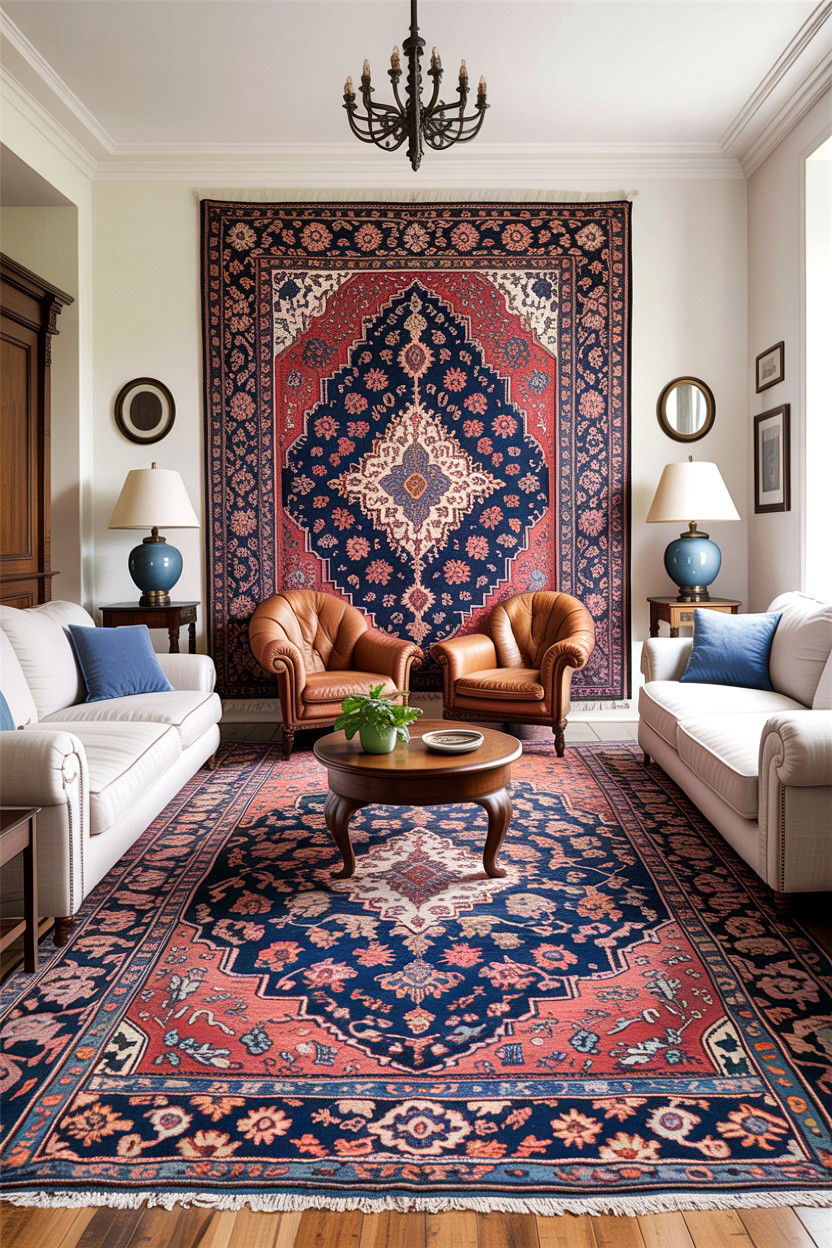
A nature-inspired rug with leaf patterns or a grass-like texture can instantly define the theme of a garden-style living room. This design uses the floor as a canvas to introduce organic shapes and colors, such as deep forest greens or earthy browns. To complement the rug, the furniture is often kept in solid, neutral tones to avoid visual clashing. Wooden coffee tables with live edges and stone-based lamps add to the geological and botanical feel of the space. By centering the room around a high-quality themed rug, you create a tactile experience that mimics walking through a forest, making the entire area feel more immersive.
15. Wicker basket
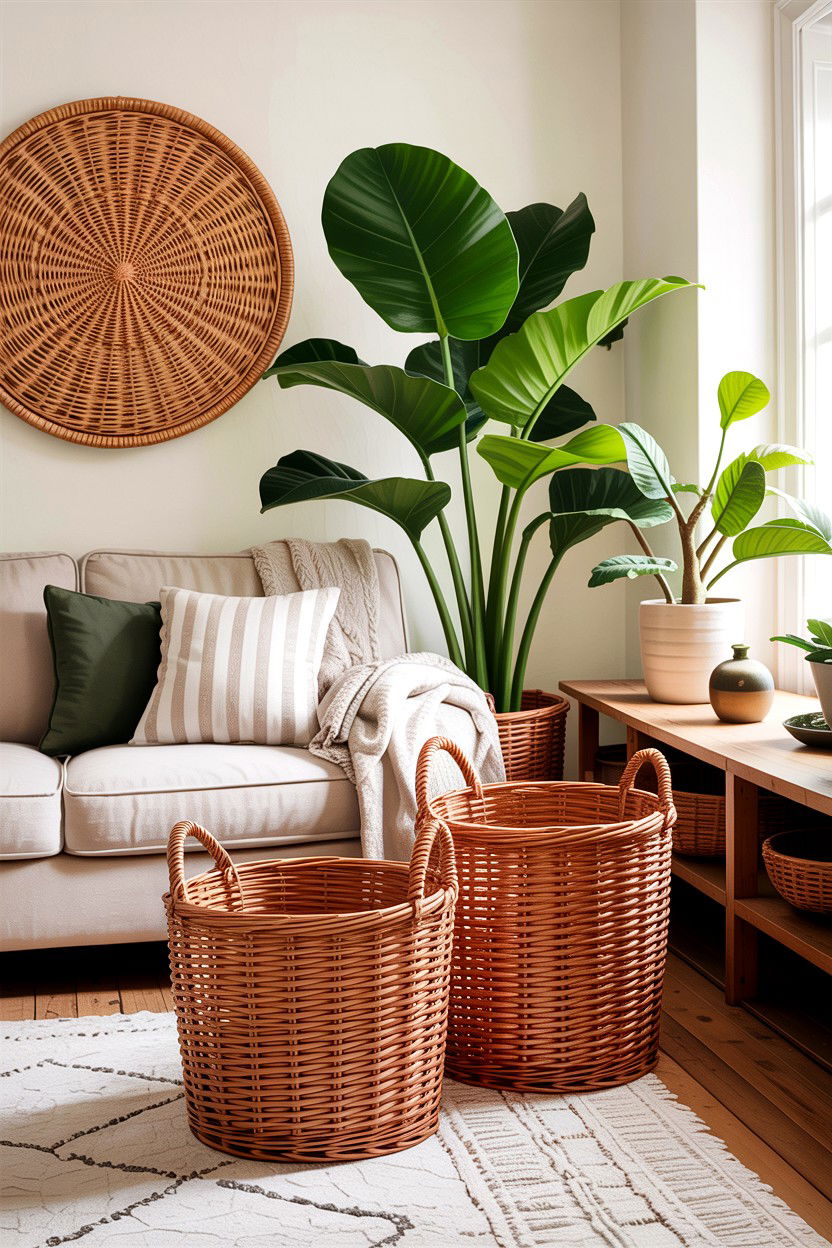
Using wicker baskets as a primary storage and decorative element adds a layer of artisanal, garden-like texture to any living space. This design idea involves using large baskets to hold extra blankets, magazines, or even large potted trees. The honey-colored weave of the wicker provides a warm contrast to green foliage and soft upholstery. To create a cohesive look, other woven elements like blinds or wall hangings are often included. This approach is both practical and aesthetic, offering a way to keep the room organized while maintaining a relaxed, outdoor-inspired vibe that feels unpretentious and deeply comfortable for the whole family.
16. Potted plant
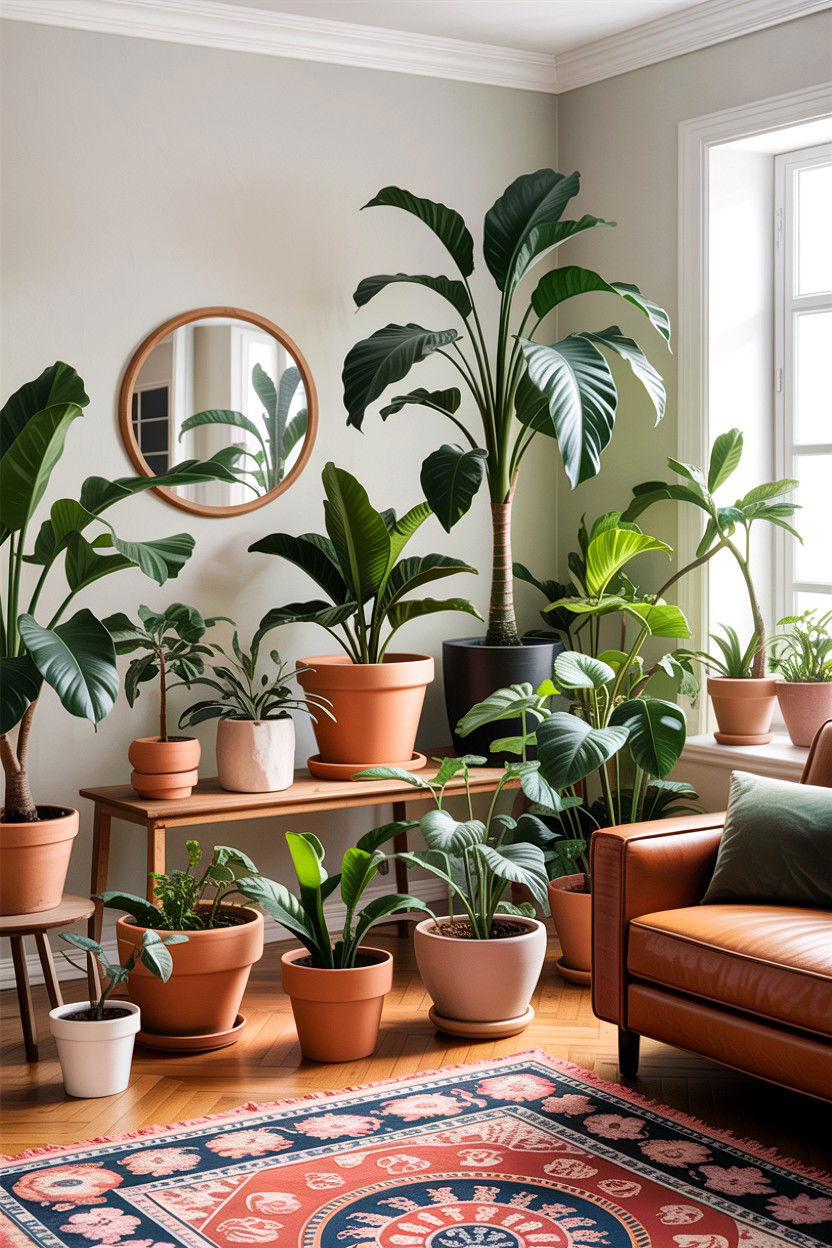
A living room filled with a curated collection of potted plants of various sizes creates a lush, layered environment that feels like a private nursery. This design focuses on using different types of containers, from sleek ceramic to rustic terracotta, to add visual interest. Plants are placed at varying heights on stools, tables, and the floor to create a sense of abundance. The furniture is often minimalist to allow the diverse textures of the leaves to shine. This approach allows for great flexibility, as the plants can be moved and rearranged to change the room's dynamic, making it a living, breathing space that grows with you.
17. Glass wall
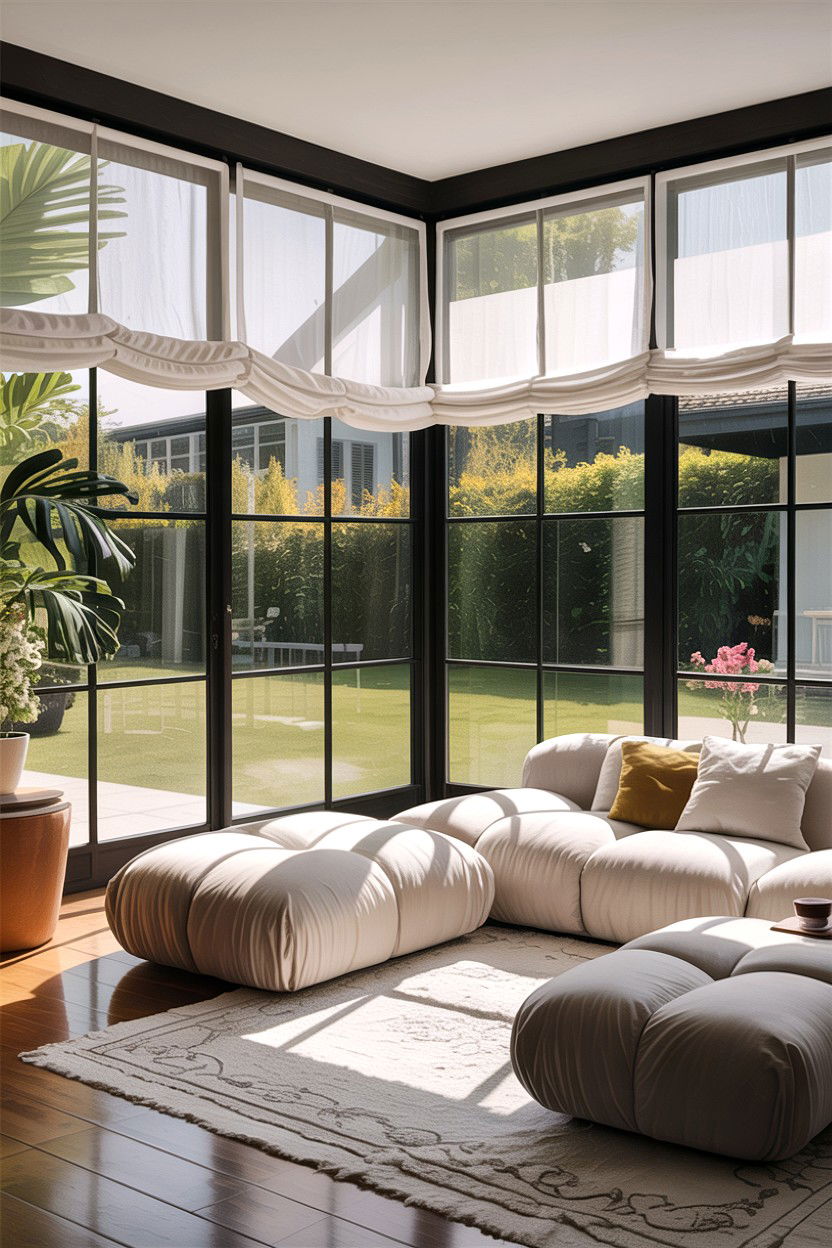
A full glass wall effectively erases the boundary between the living room and the garden, creating an incredibly bright and expansive atmosphere. This design is best suited for homes with private courtyards or lush backyards, as the exterior greenery becomes the room's wallpaper. To maintain a sense of coziness, designers often use soft area rugs and comfortable, oversized seating. Motorized sheer shades can be added for privacy without completely blocking the light. The interior decor often mirrors the outdoor landscaping in color and style, resulting in a sophisticated and modern living area that feels like it is floating in the middle of a beautiful garden.
18. Natural light
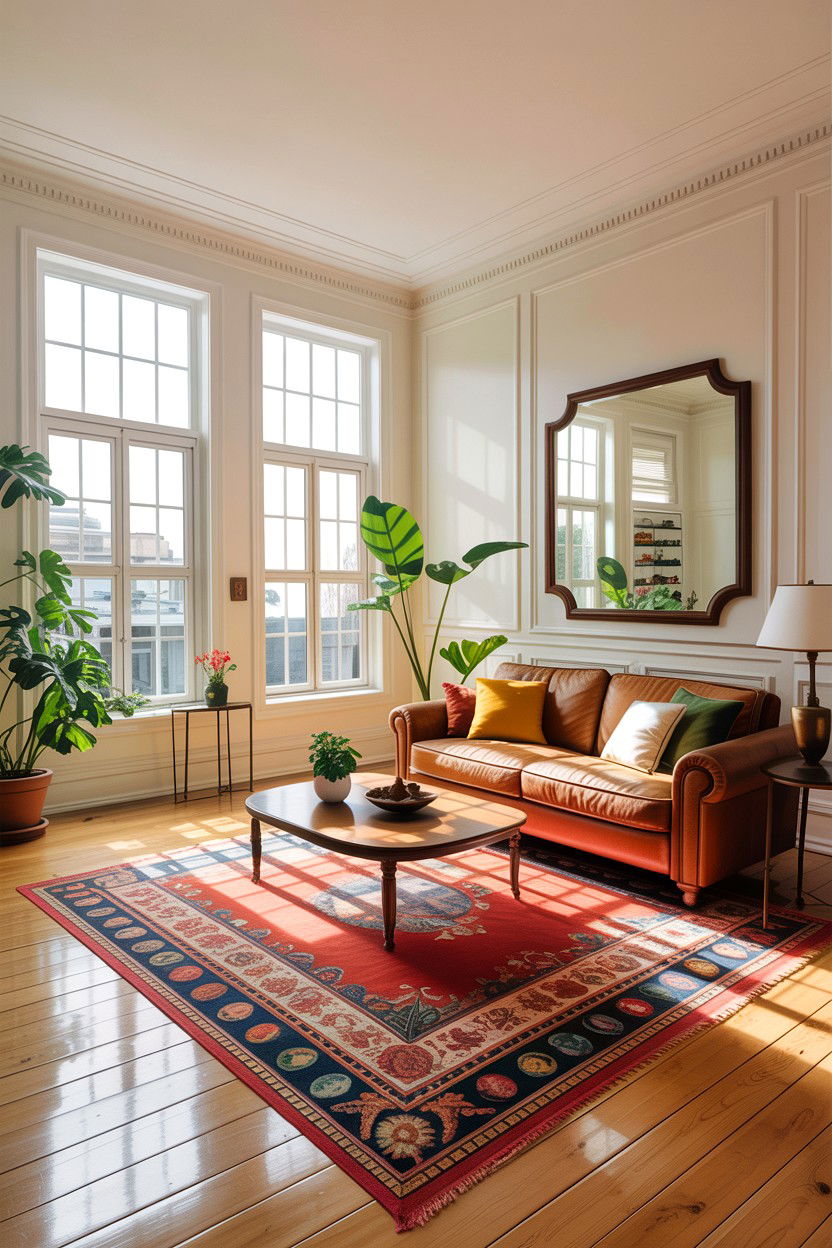
Designing a living room to maximize natural light is the most fundamental way to support a garden theme and promote plant health. This concept involves using light-reflecting surfaces, such as white walls and polished wood floors, to bounce sunlight throughout the space. Furniture is kept away from windows to prevent blocking the rays, and mirrors are strategically placed to enhance the brightness. The result is a vibrant, high-energy room where both people and plants can thrive. This airy atmosphere makes even small rooms feel larger and more connected to the rhythms of the day, creating a space that feels naturally revitalizing and cheerful.
19. Herb shelf
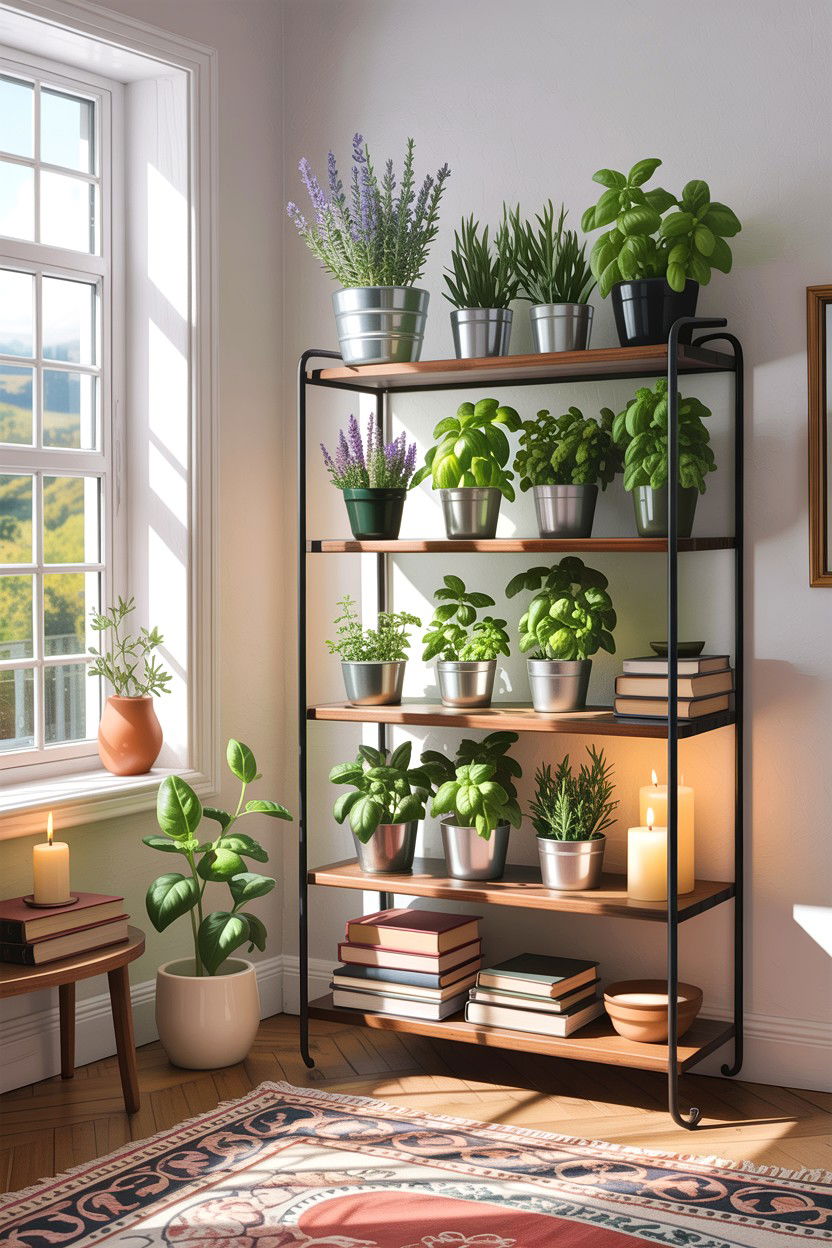
An indoor herb shelf brings the functionality and fragrance of a kitchen garden directly into the living room environment. This design features a multi-tiered wooden or metal shelving unit placed near a sunny window, filled with pots of basil, rosemary, and mint. The scent of fresh herbs adds a sensory layer to the room that traditional decor cannot provide. To integrate the shelf into the living area, it is often styled with books, candles, and small garden-themed sculptures. This creates a practical yet beautiful focal point that encourages a hands-on connection with nature, making the living room feel like a productive and aromatic sanctuary.
20. Leaf curtain
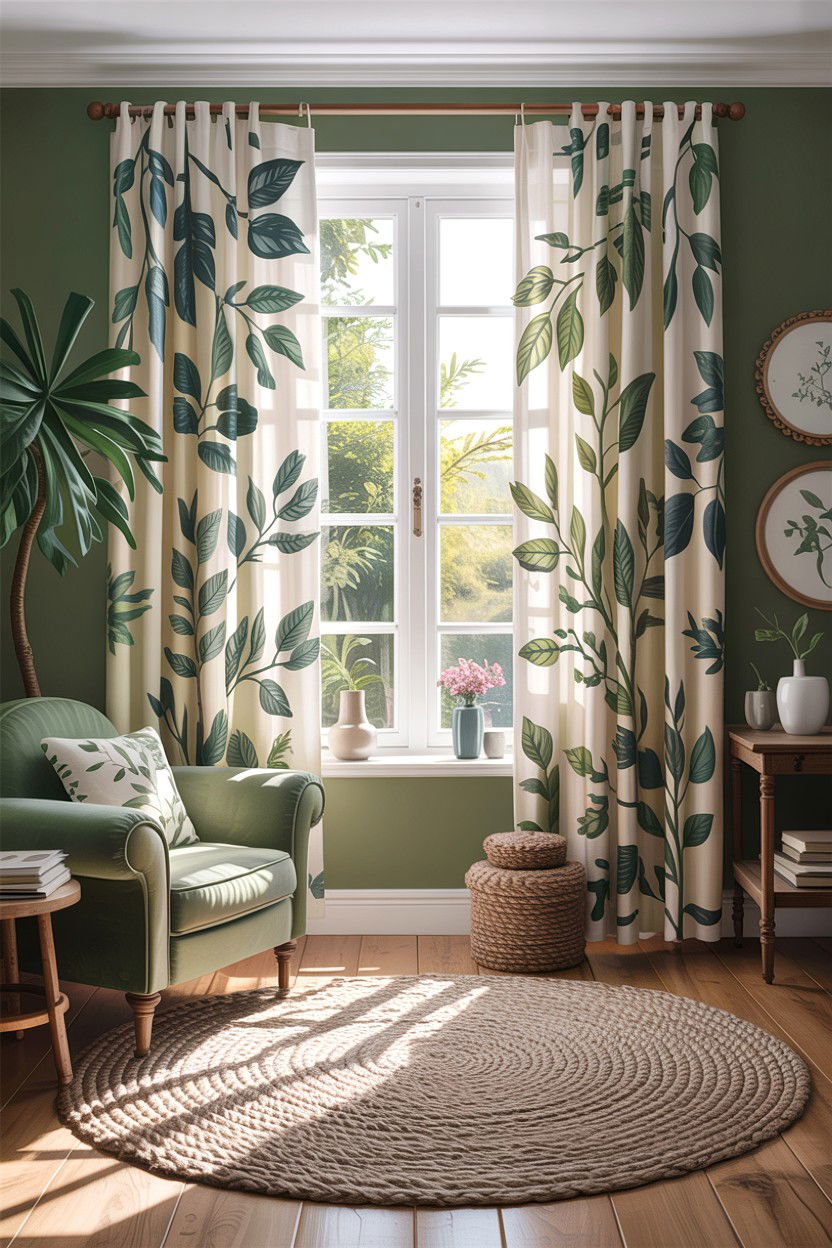
Curtains featuring delicate leaf prints or organic textures can soften the lines of a living room while reinforcing a garden-inspired aesthetic. This design uses window treatments to filter light in a way that mimics sunlight dapples through a forest canopy. To complement the curtains, the room might include furniture in soft greens or browns and accessories made from natural fibers like hemp or jute. The movement of the fabric in a breeze adds a dynamic, life-like quality to the space. This approach is a simple yet effective way to introduce botanical elements without the maintenance of live plants, making it perfect for busy homeowners.
21. Stone wall
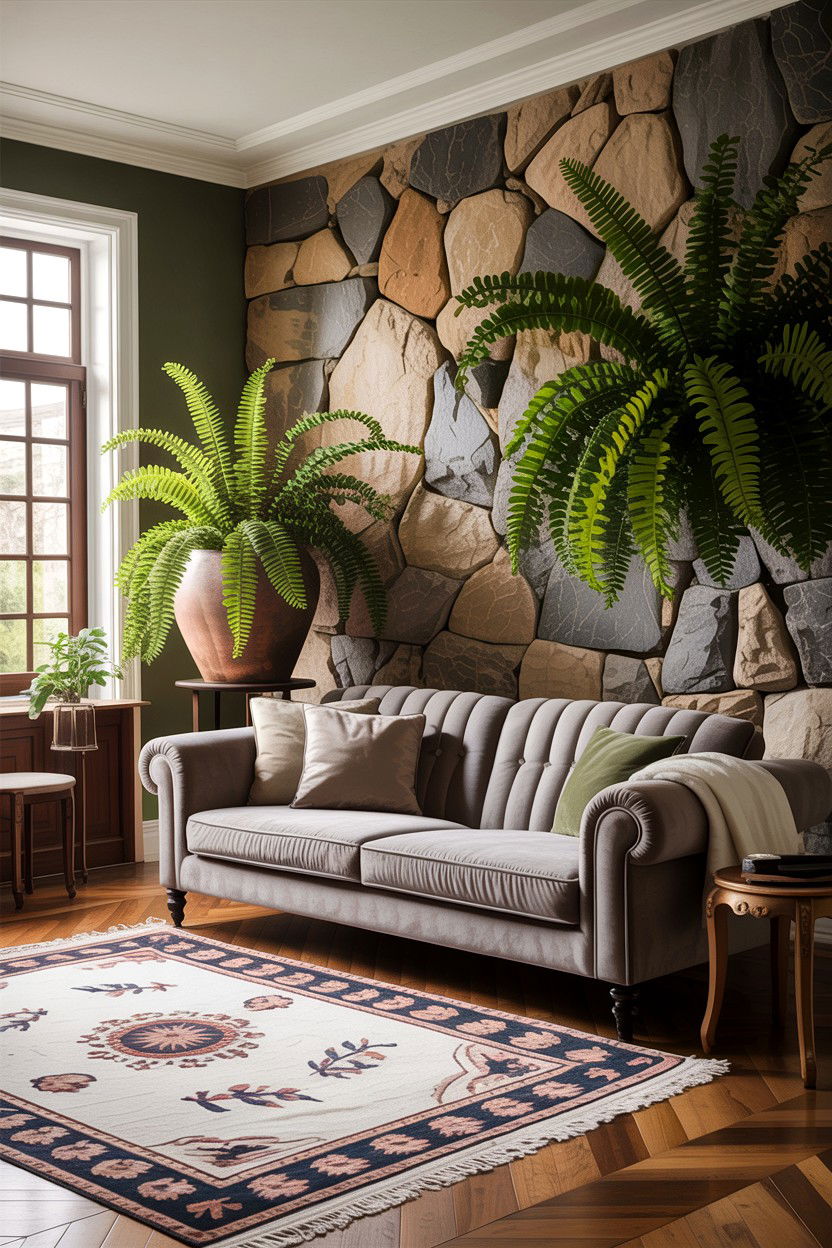
Incorporating a natural stone accent wall gives a living room a rugged, permanent feel reminiscent of a walled garden or a mountain retreat. This design uses the cool gray or warm beige tones of the stone to create a textured backdrop for the seating area. To balance the hardness of the stone, plush velvet sofas and soft wool rugs are often used. Large potted ferns or ivy are placed against the wall to allow the greenery to pop against the neutral mineral tones. This combination of stone and plants creates a timeless and sophisticated environment that feels incredibly grounded and connected to the geological beauty of the earth.
22. Bamboo furniture
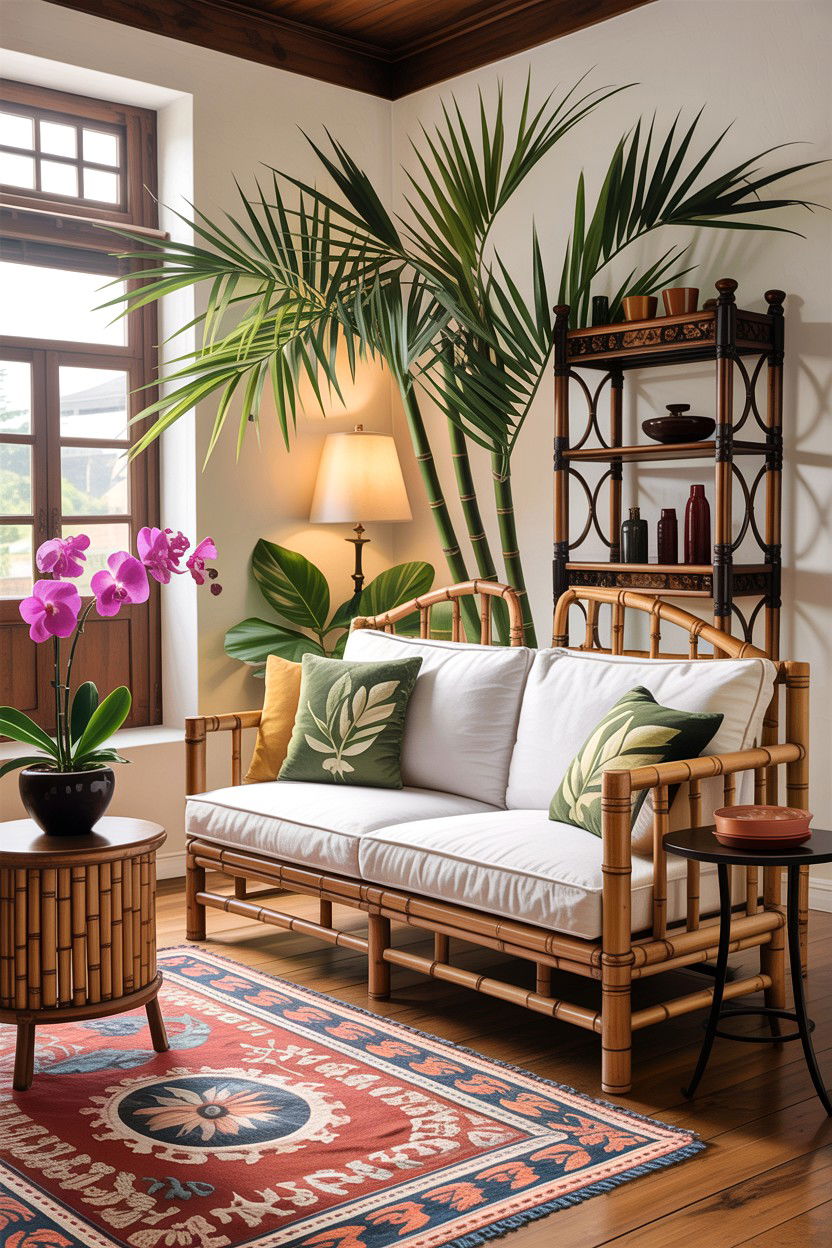
Bamboo furniture offers a lightweight, sustainable, and distinctly tropical feel to a garden-themed living room. This design concept features the slender, light-colored stalks of bamboo in everything from the sofa frame to the shelving units. To keep the look modern, it is often paired with crisp white linens and black metal accents. Large tropical plants like bamboo palms or orchids enhance the exotic atmosphere. The use of bamboo creates a sense of casual elegance and environmental consciousness, resulting in a space that feels both stylish and responsible. This aesthetic is particularly effective in warm climates where a breezy, open feel is highly desired.
23. Butterfly decor
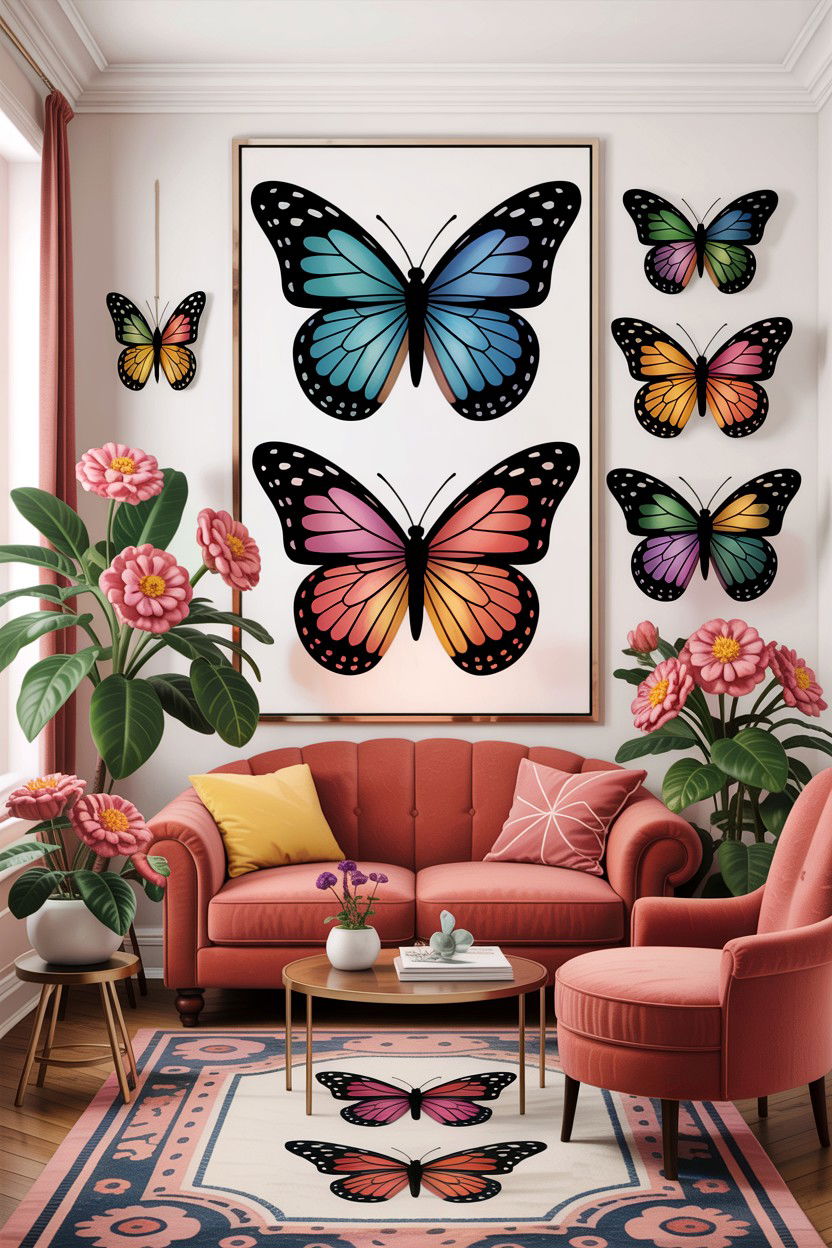
A living room inspired by a butterfly garden uses whimsical and colorful accents to create a playful, nature-filled atmosphere. This design might feature framed butterfly specimens, botanical prints with winged insects, and soft textiles in vibrant, iridescent colors. To keep the look sophisticated, these elements are often balanced with classic furniture pieces in neutral tones and plenty of real flowering plants. The addition of small brass or glass butterfly sculptures on coffee tables adds a touch of magic and movement. This approach creates a cheerful and imaginative space that celebrates the delicate beauty of garden wildlife, making the room feel like a summer day.
24. Skylight room
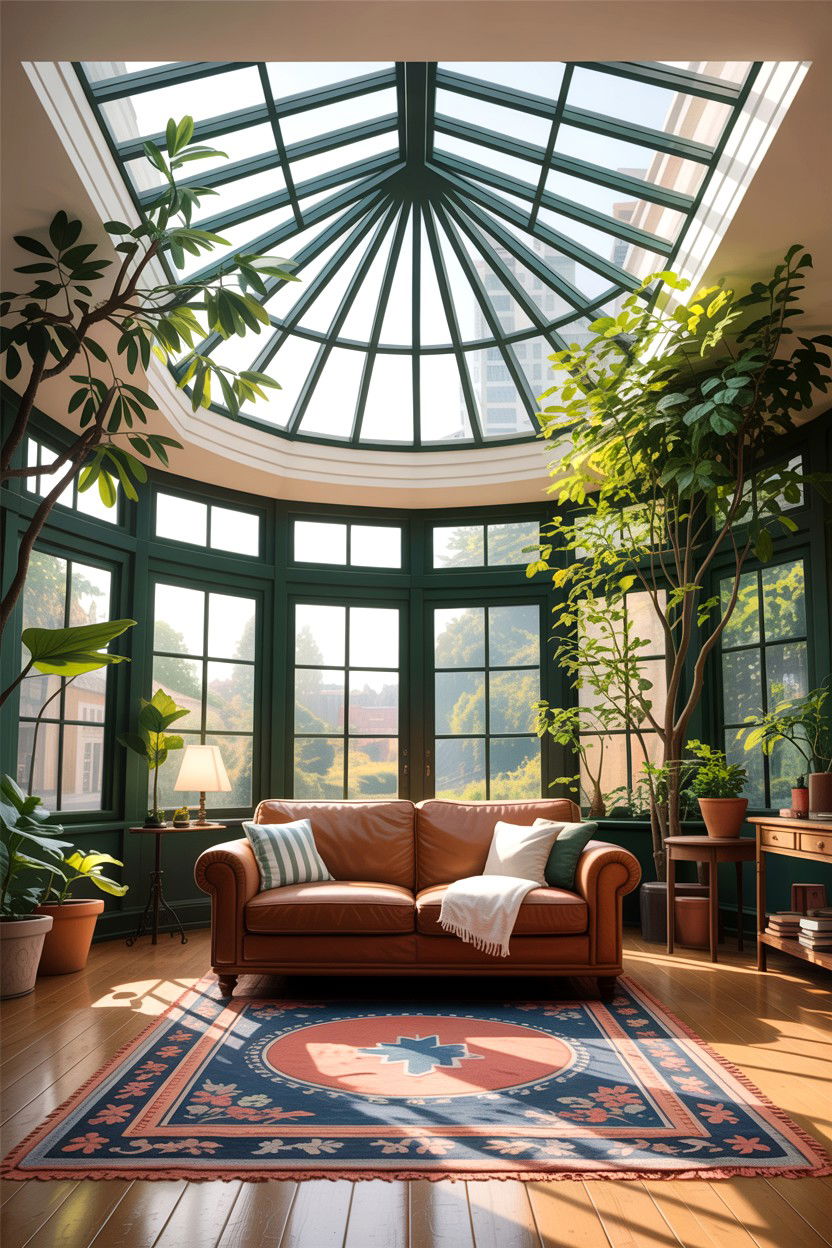
Installing a skylight in a living room provides a direct view of the sky and a constant source of overhead natural light, much like a greenhouse. This design allows for the growth of tall indoor trees and sun-loving plants that might struggle in standard rooms. The furniture is often arranged directly under the skylight to create a bright and uplifting seating area. During the day, the space is flooded with sunshine, while at night, it offers a view of the stars. This architectural feature transforms the living room into a high-ceilinged, airy sanctuary that feels completely open to the elements while remaining cozy and protected.
25. Earthy decor
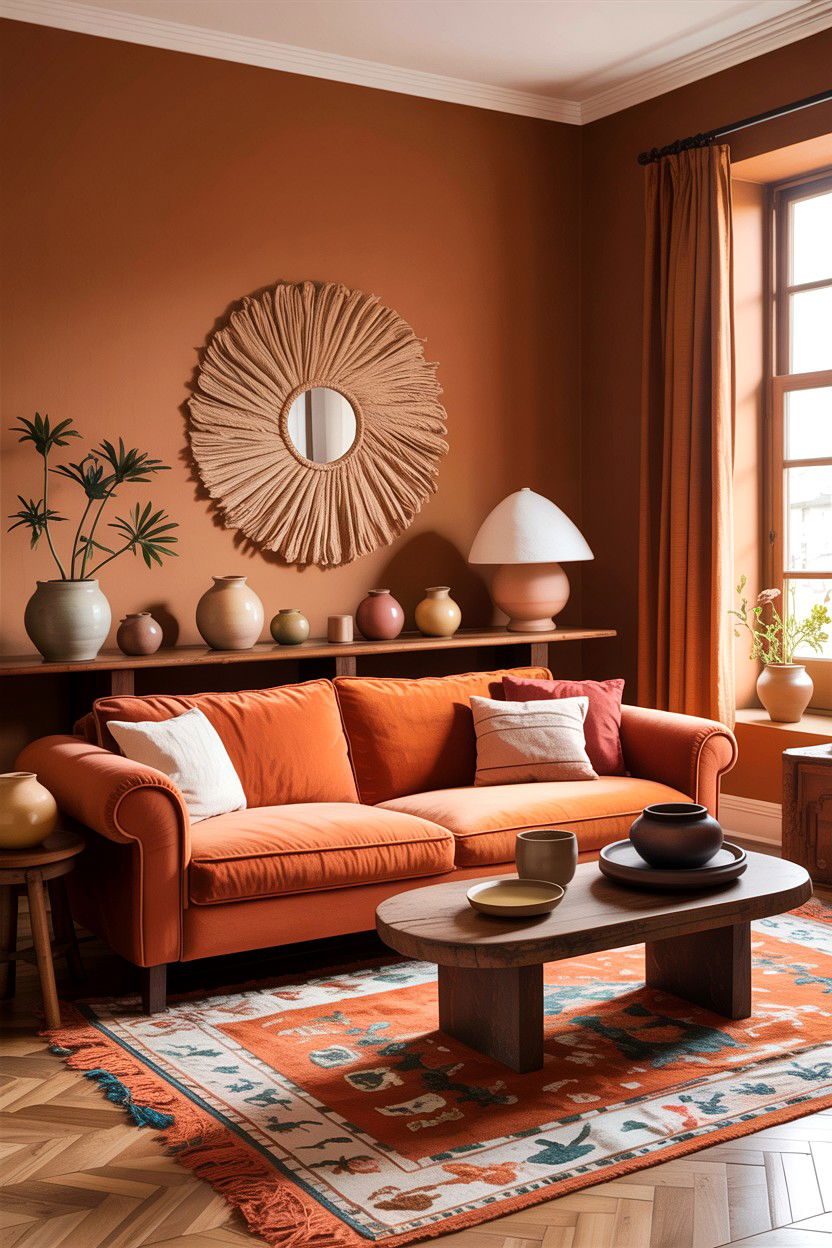
Focusing on earthy decor involves using materials and colors that are directly inspired by the soil, clay, and minerals found in a garden. This living room design features a palette of terracotta, ochre, and deep brown, accented by natural wood and hand-thrown ceramic pieces. Furniture is often upholstered in heavy, textured fabrics like tweed or raw silk to provide a tactile experience. Decorative bowls filled with river stones or dried seed pods add to the organic feel. This approach creates a warm, cocoon-like environment that feels incredibly stable and nurturing, providing a perfect space for quiet reflection and grounding after a long, busy day.
26. Wildflower arrangement
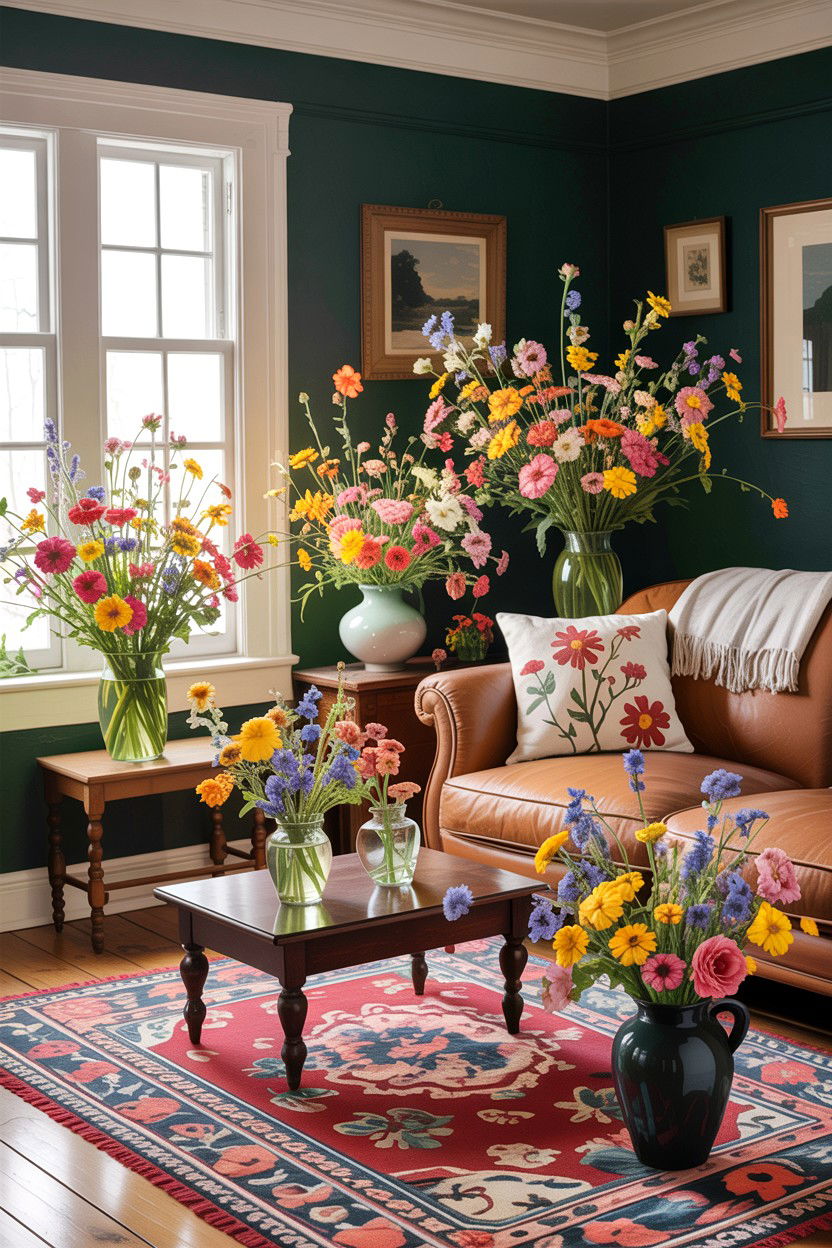
A living room designed around the concept of a wildflower meadow emphasizes a relaxed, informal, and colorful aesthetic. This approach features several vases of varying sizes filled with seasonal wildflowers, creating a burst of color and fragrance throughout the space. The furniture is often a mix of vintage and modern pieces, giving the room a lived-in and unpretentious feel. Soft, floral-print throw pillows and light, breezy fabrics like muslin or lace add to the meadow-like atmosphere. This design is perfect for those who love a bit of organized chaos and want their home to feel like a vibrant, ever-changing extension of the natural world.
27. Jute rug
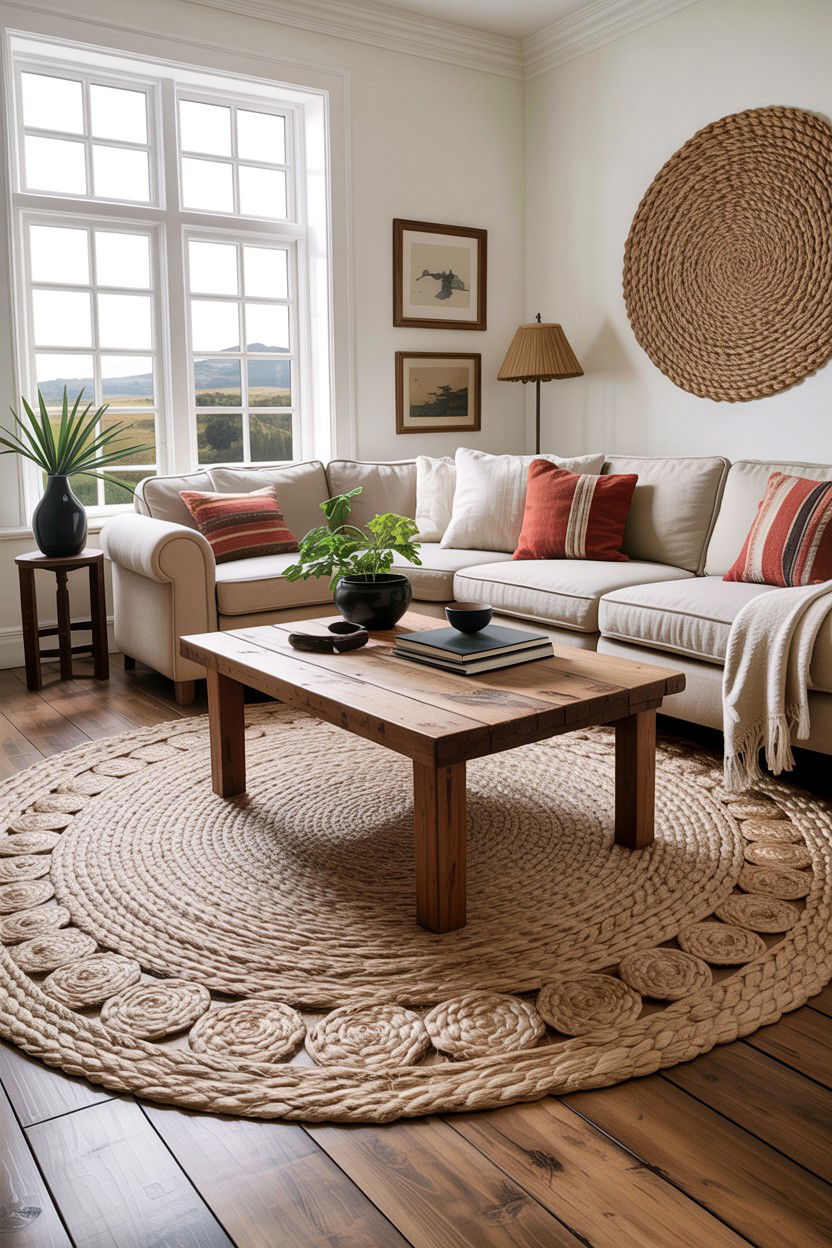
The use of a large jute rug provides a coarse, natural texture that mimics the feeling of dry garden paths or thatched roofs. This design idea uses the neutral, tan color of the jute to anchor the room and allow other botanical elements to stand out. Furniture made from reclaimed wood or distressed metal complements the rug’s rustic appeal. To add comfort, layered rugs—such as a smaller soft wool rug over the jute—are often used in the main seating area. This combination of rugged and soft textures creates a balanced and inviting living space that feels both durable and stylish, perfect for a high-traffic garden-themed home.
28. Tree table
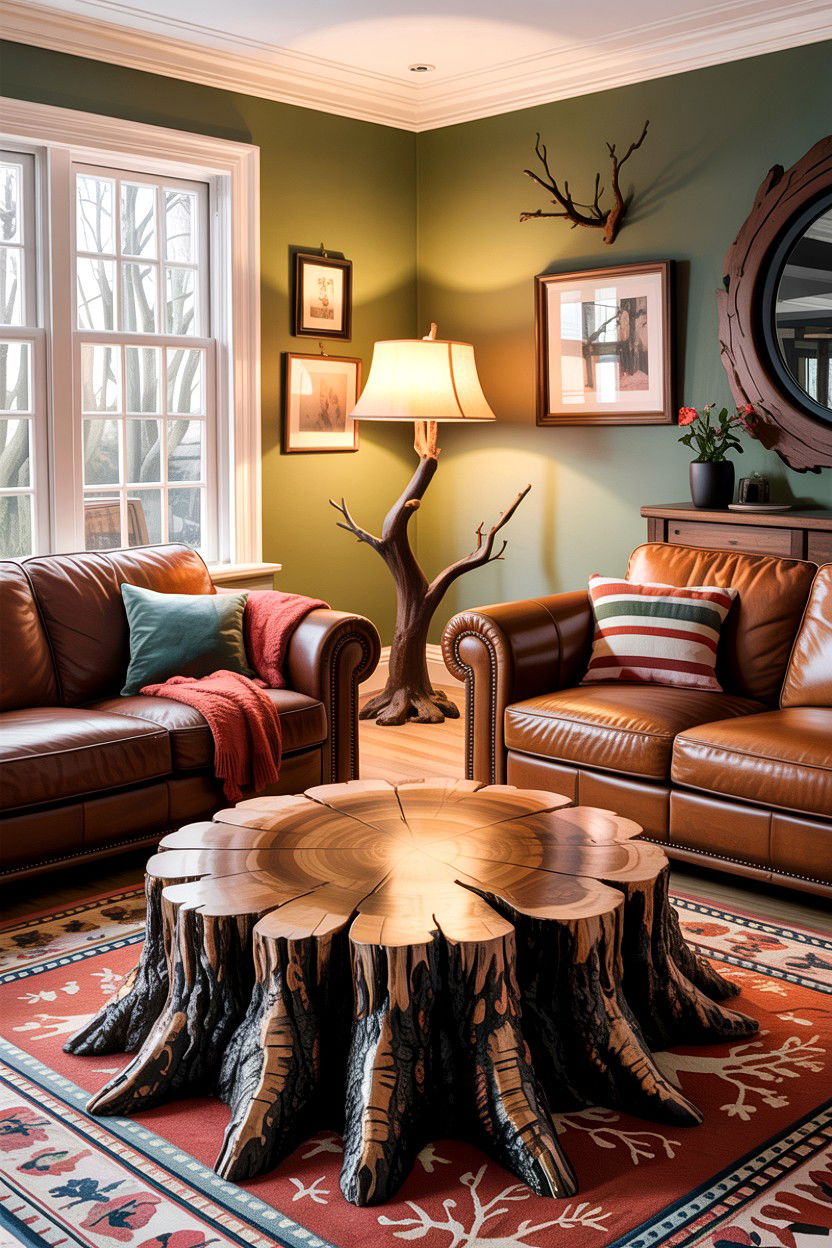
A coffee table made from a large tree trunk slice or a "live edge" slab brings a piece of the forest directly into the center of the living room. This design highlights the unique rings and textures of the wood, serving as a functional piece of art. The surrounding furniture is typically chosen to complement the wood’s natural tones, featuring leather or heavy canvas upholstery. To enhance the theme, the room might include other wooden elements like carved bowls or branch-style lamps. This focus on raw, unrefined wood creates a strong sense of connection to nature, making the living room feel like a sophisticated woodland retreat.
29. Garden bench
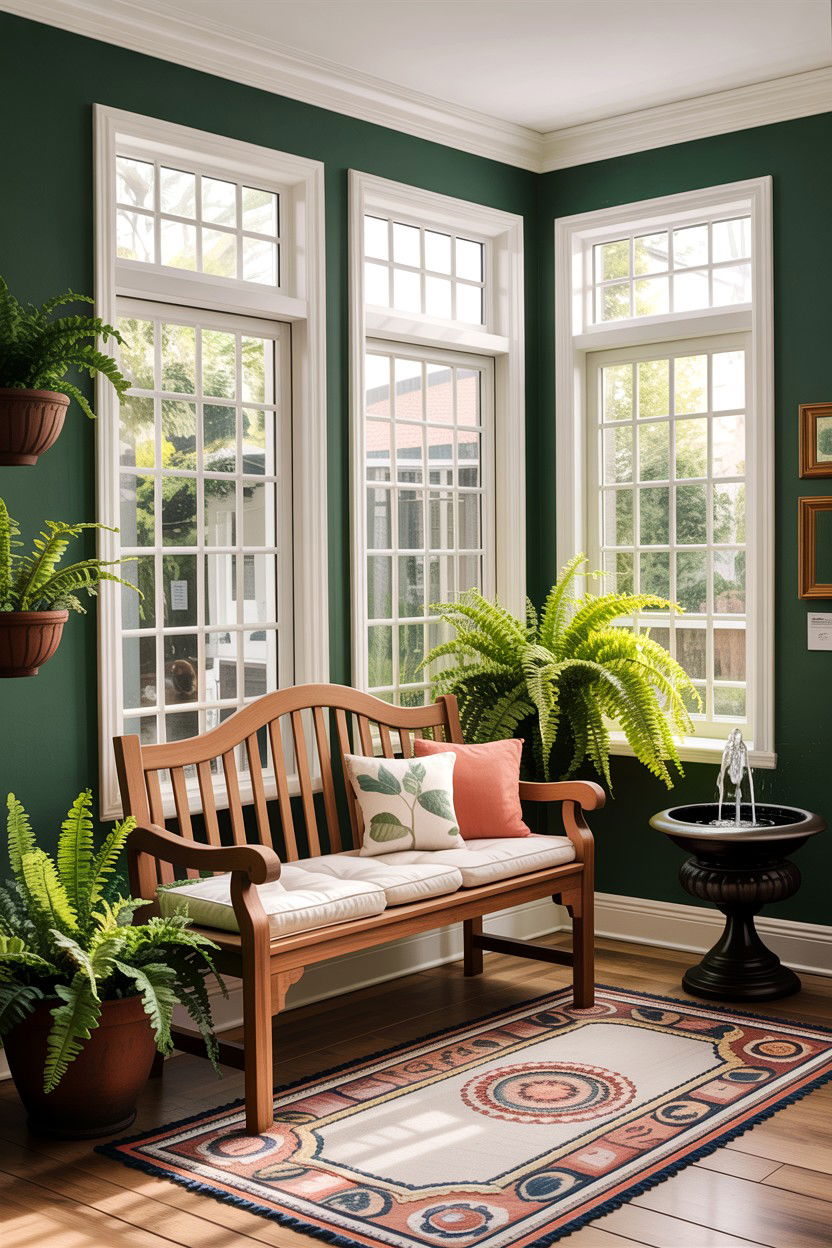
Incorporating a classic garden bench as an alternative seating option can give a living room a unique, park-like atmosphere. This design often features a wooden or wrought iron bench placed against a wall or under a window, layered with plush cushions for comfort. To complete the look, the bench is surrounded by large potted plants and perhaps a small indoor fountain to provide the soothing sound of water. The rest of the furniture is kept casual and low-profile to maintain the "outdoor" feel. This creative use of garden furniture indoors creates a charming and unexpected focal point that encourages a slower, more relaxed pace of life.
30. Greenhouse room
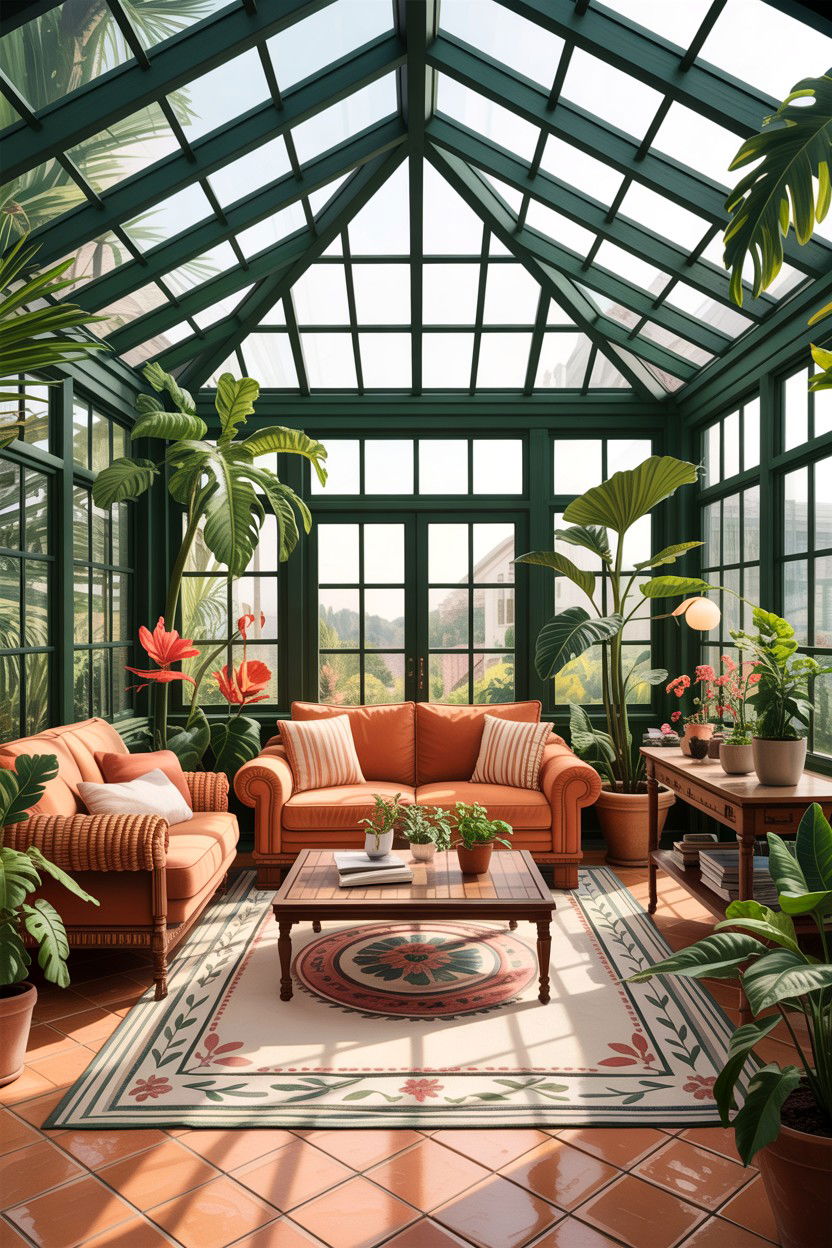
A greenhouse-inspired living room is the ultimate expression of the garden theme, featuring glass ceilings, tile floors, and an abundance of plant life. This design prioritizes the needs of the plants, with built-in irrigation systems and specialized lighting often integrated into the architecture. The furniture is typically made from weather-resistant materials like metal or treated wood, but with high-end cushions for maximum indoor comfort. This space functions as both a living area and a thriving ecosystem, providing a year-round tropical escape. It is a bold and immersive design choice that truly brings the majesty of the botanical world into the very heart of the home.
Conclusion:
Creating a garden-inspired living space is a wonderful way to foster a deeper connection with the natural world while enhancing your home’s aesthetic appeal. By incorporating elements like lush greenery, organic textures, and botanical patterns, you can transform any standard room into a peaceful sanctuary that promotes relaxation and well-being. These design choices do more than just look beautiful; they improve air quality and provide a visual escape from the stresses of modern life. Whether you prefer a subtle touch of nature or a full greenhouse atmosphere, these concepts offer endless possibilities for personalization and creative expression in your interior design. Embracing biophilic principles ensures your living room remains a vibrant and restorative heart of your home.
Related posts:
Leave a Reply