

Creating a sophisticated and cozy atmosphere starts with embracing the bold allure of deeper color palettes in your main gathering space. While light and airy designs have dominated for years, there is a growing trend toward moody, intimate environments that offer a sense of refuge and luxury. Dark living rooms utilize rich pigments like charcoal, navy, and forest green to create a cocoon-like effect that feels both modern and timeless. By carefully balancing textures, lighting, and furniture, you can transform a standard room into a high-end sanctuary. This guide explores thirty unique ways to master the dark aesthetic, ensuring your home feels inviting, stylish, and full of character.
1. Charcoal living room
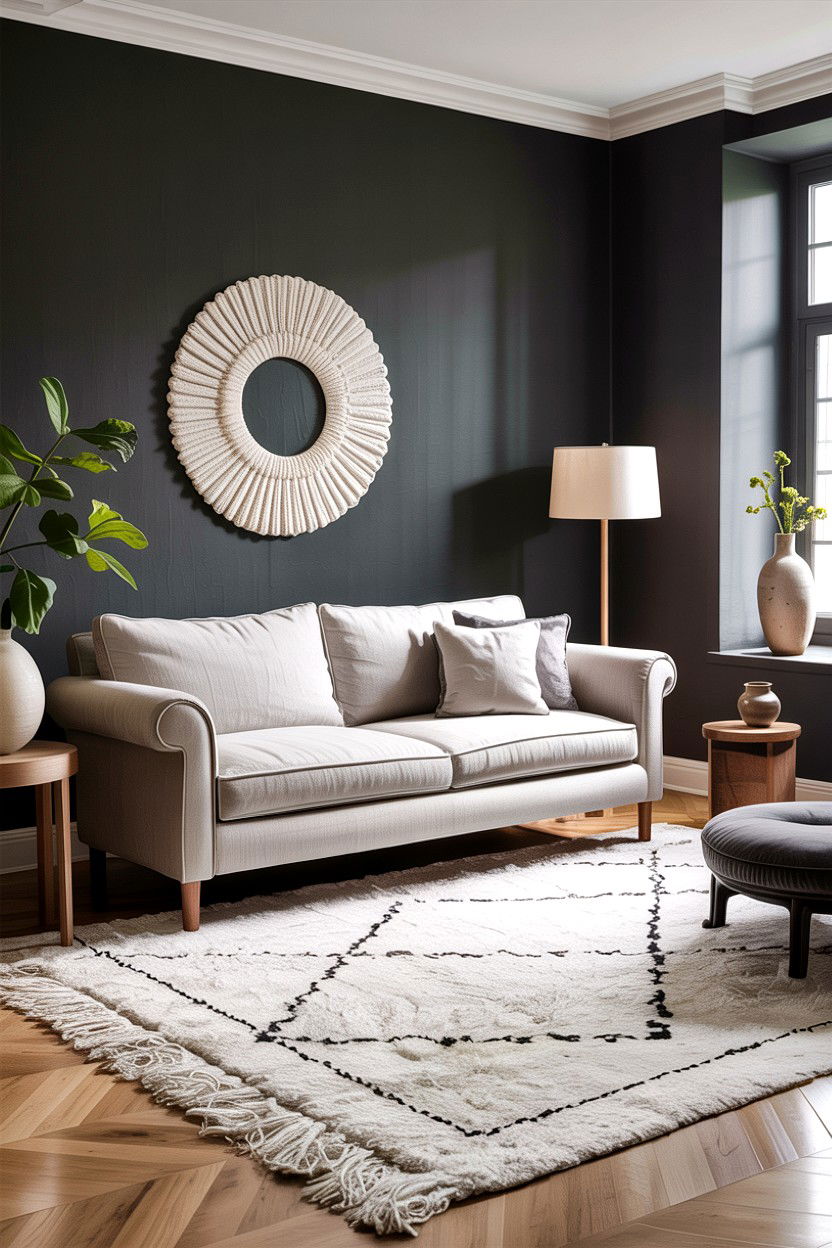
A charcoal living room provides a perfect middle ground for those who want to experiment with dark tones without committing to pure black. This deep, smoky grey creates a neutral yet dramatic backdrop that allows furniture and artwork to stand out with striking clarity. To keep the space from feeling cold, it is essential to layer in various textures like wool rugs, linen curtains, and soft cotton throws. Incorporating light-colored flooring or a large cream area rug can provide the necessary contrast to keep the room balanced. Charcoal works exceptionally well with both modern minimalist furniture and more traditional, ornate pieces, making it a versatile choice.
2. Navy blue living room
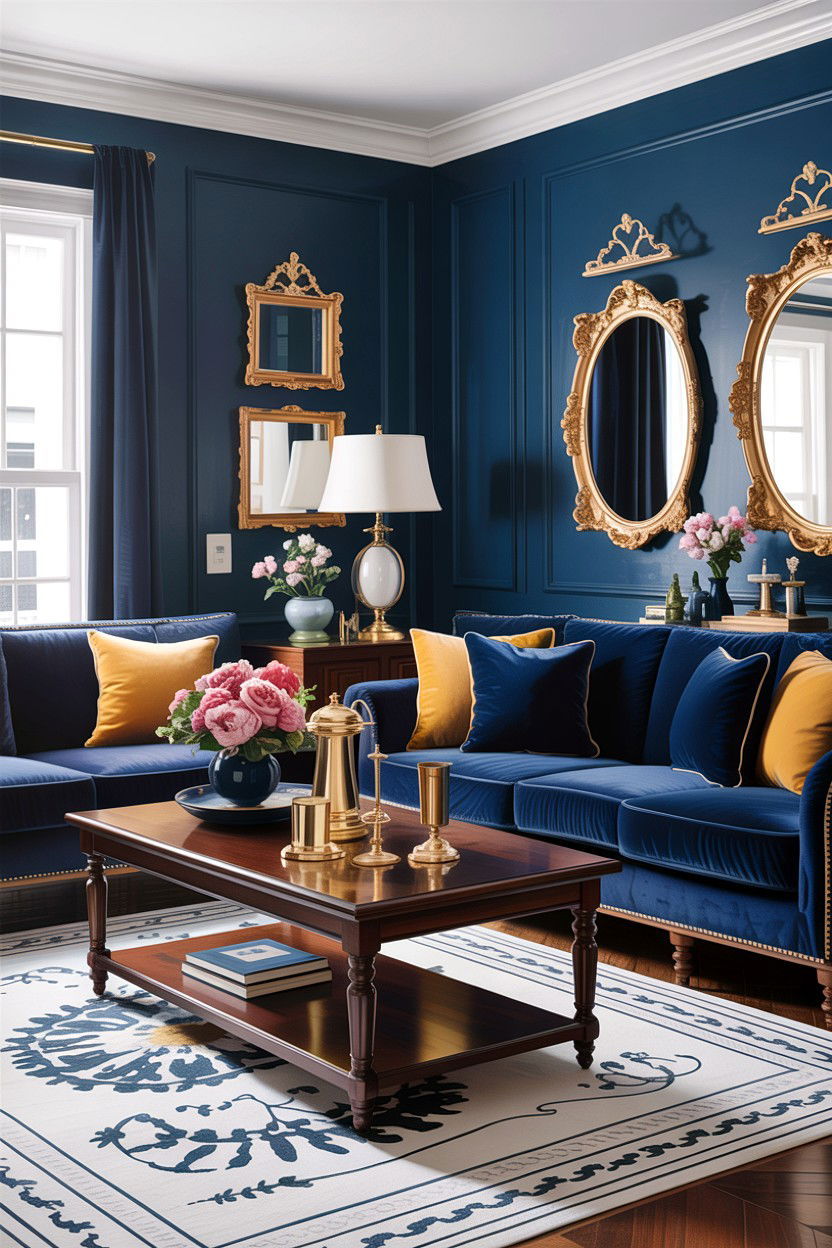
Choosing a navy blue living room design offers a timeless sense of elegance that feels both regal and approachable. This deep oceanic hue acts as a sophisticated neutral, pairing beautifully with warm wood tones and various metallic finishes. To maximize the impact of navy walls, consider using white trim or crown molding to create a crisp, tailored look that prevents the room from feeling too heavy. Navy also serves as an excellent foundation for nautical or coastal-inspired decor when mixed with lighter textiles. The depth of the blue adds a layer of calmness, making it an ideal choice for a room meant for relaxation.
3. Forest green living room
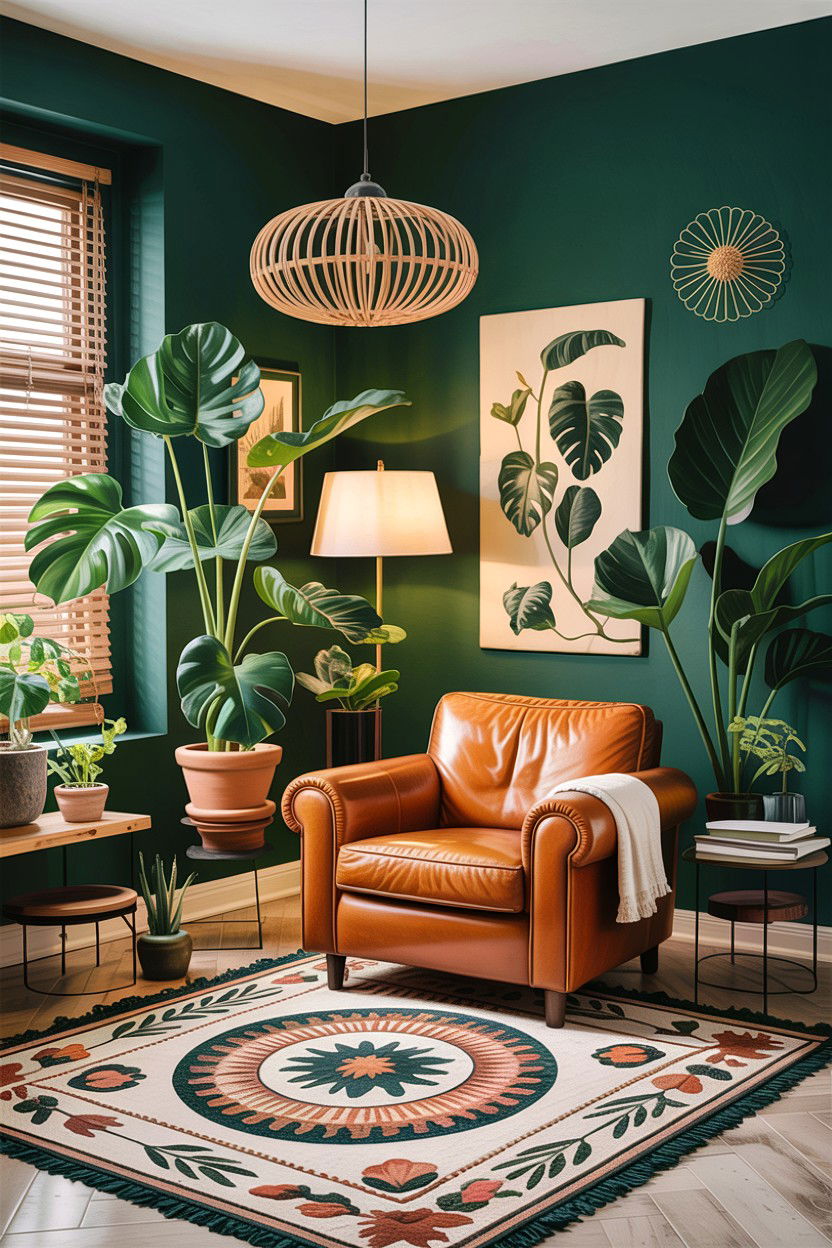
A forest green living room brings the soothing essence of nature indoors, creating an organic and grounded atmosphere. This rich, verdant shade works wonders in spaces with large windows, as the natural light enhances the complexity of the green pigment. To enhance the earthy vibe, pair these dark walls with natural materials like rattan, light oak, or stone. Adding plenty of indoor plants will further emphasize the botanical theme, creating a lush and vibrant environment. Forest green is particularly effective at making a room feel more intimate and "enveloped," which is perfect for creating a cozy reading nook or a dedicated conversation area.
4. Black accent wall living room
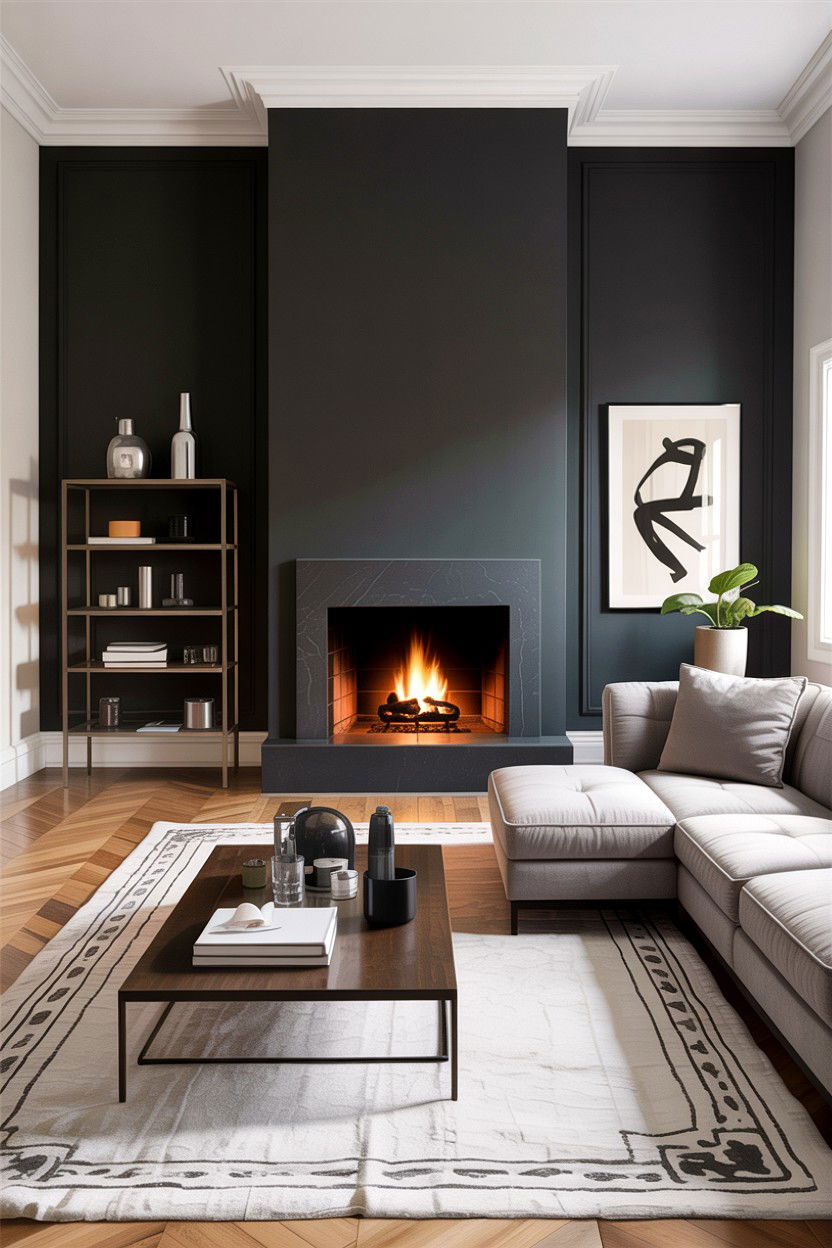
If you are hesitant about painting an entire room in a dark shade, a black accent wall living room is a fantastic compromise. This design choice creates a powerful focal point that draws the eye and adds immediate architectural interest to the space. It is the perfect backdrop for a television or a fireplace, as the dark color helps these elements blend in seamlessly. To keep the room feeling bright, ensure the remaining walls are painted in a soft off-white or light grey. This high-contrast look is inherently modern and provides a sophisticated edge that can be softened with plush furniture and warm lighting.
5. Moody velvet living room
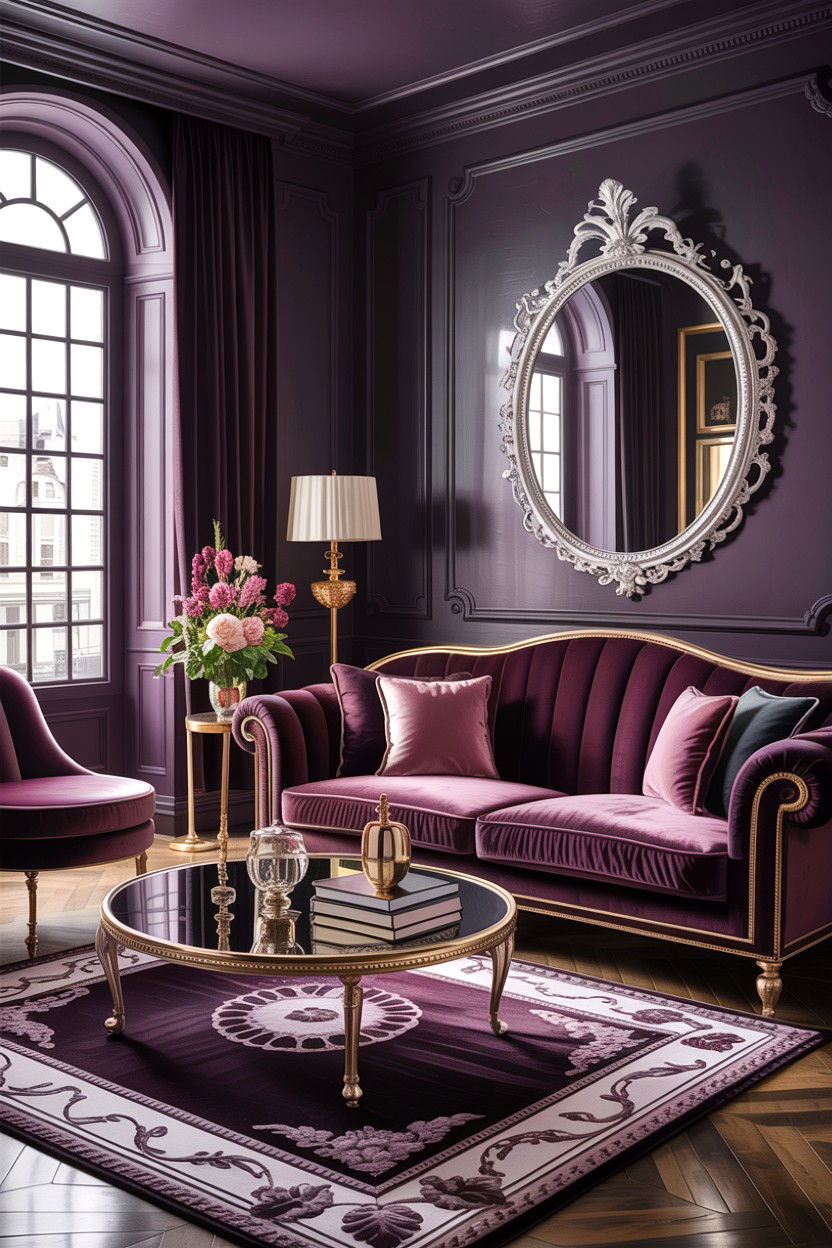
Designing a moody velvet living room is all about prioritizing tactile luxury and comfort. Velvet fabrics have a unique way of catching the light, which adds a sense of movement and depth to dark-colored furniture. A deep plum or navy velvet sofa can serve as a stunning centerpiece against dark-painted walls, creating a monochromatic yet textured appearance. Because velvet is such a heavy material, it is important to balance it with sleeker elements like glass coffee tables or slim metal floor lamps. This combination of "hard" and "soft" materials ensures the room feels curated and high-end rather than overwhelming or dated.
6. Dark wood paneling living room
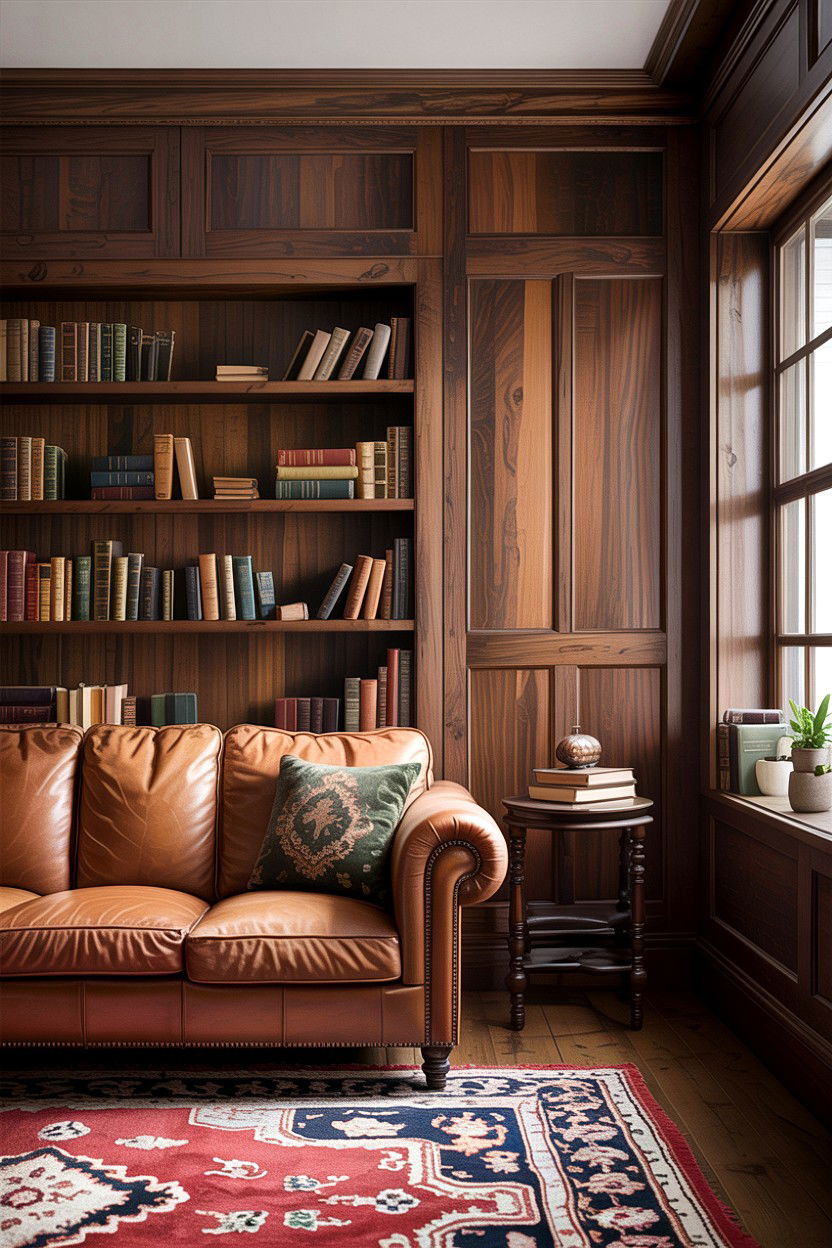
A dark wood paneling living room evokes a sense of traditional library charm and historical prestige. Whether you use reclaimed wood or modern walnut slats, the natural grain of the wood adds a layer of warmth that paint simply cannot replicate. This style works best when paired with leather seating and vintage-inspired rugs to lean into the "old-world" aesthetic. To modernize the look, you can use vertical slats or geometric patterns in the woodwork. Lighting is crucial here; use warm-toned lamps and wall sconces to highlight the texture of the wood and create a glow that makes the room feel incredibly inviting.
7. Industrial dark living room
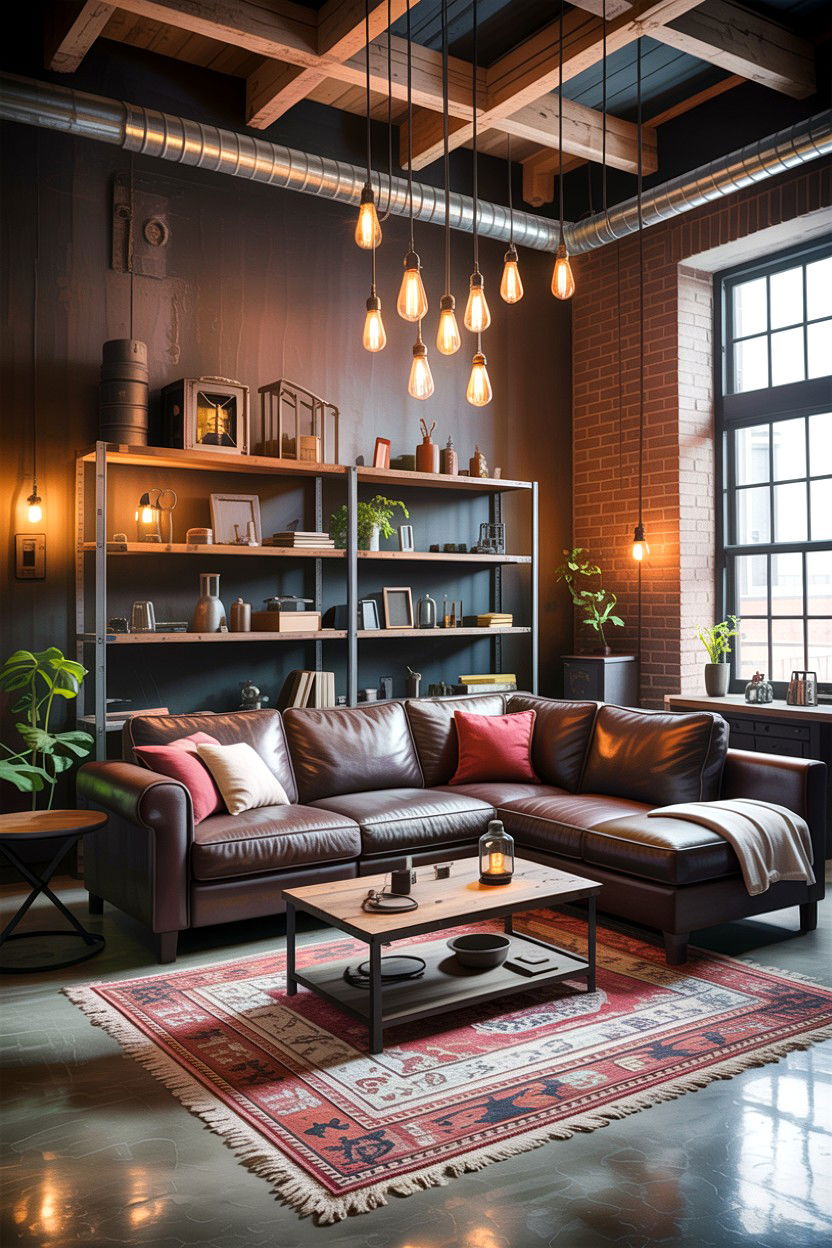
The industrial dark living room style focuses on raw materials and a "warehouse" aesthetic, utilizing shades of black, grey, and deep brown. Exposed brick walls, concrete floors, and metal beams are the hallmarks of this design, providing a rugged yet sophisticated foundation. To make this style work in a residential setting, it is important to introduce soft elements like oversized sectional sofas and thick knit blankets to counter the hardness of the architecture. Large-scale artwork and Edison-bulb light fixtures further enhance the urban vibe. This approach is perfect for open-concept spaces where you want to create a clear, moody identity for the seating area.
8. Gothic modern living room
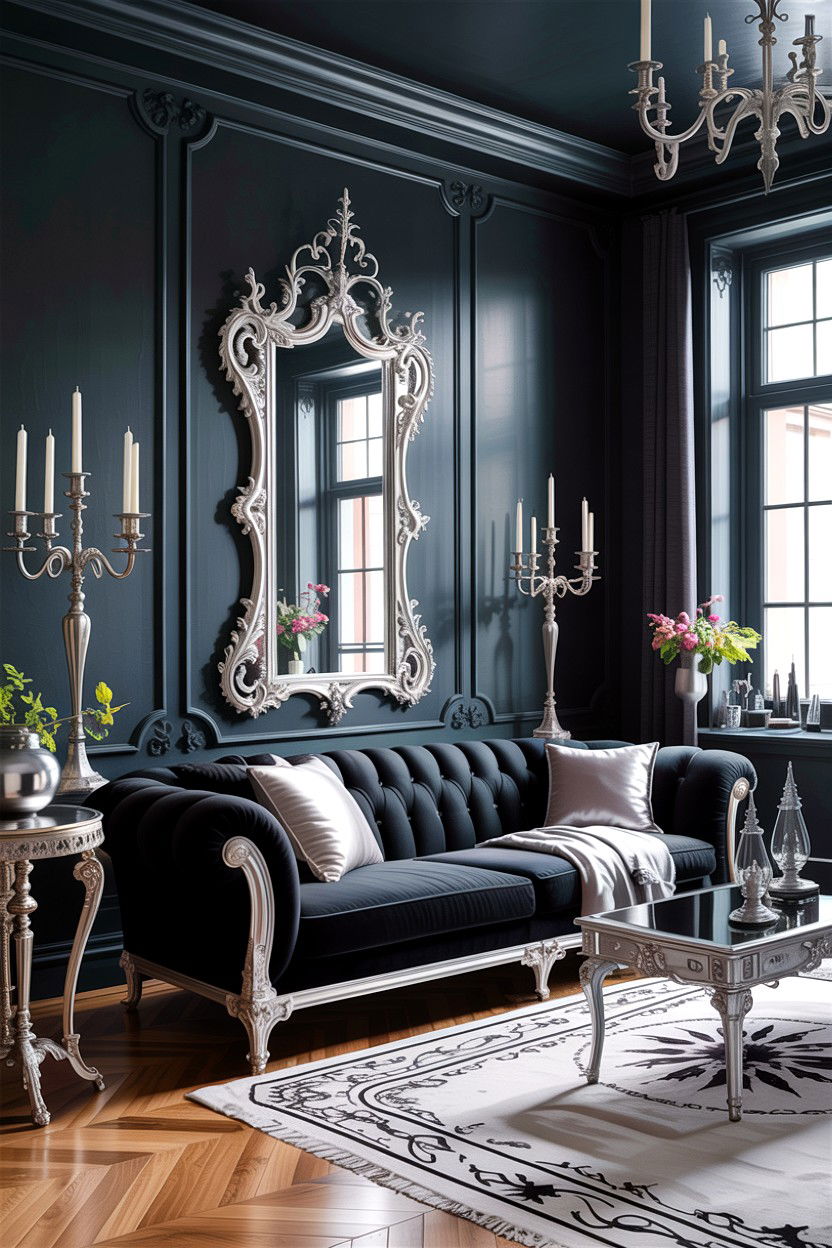
Creating a gothic modern living room involves blending dramatic historical elements with clean, contemporary lines. Think of pointed arches, ornate mirrors, and black candelabras paired with sleek, low-profile furniture. The key to this look is using a strictly dark palette—blacks, deep purples, and charcoals—while maintaining a clutter-free environment. Incorporating metallic accents like silver or pewter can add a touch of "cool" luxury to the space. This design style is perfect for those who enjoy a theatrical and mysterious atmosphere that still feels functional for everyday living. It is a bold choice that prioritizes mood and artistic expression above all else.
9. Dark maximalist living room
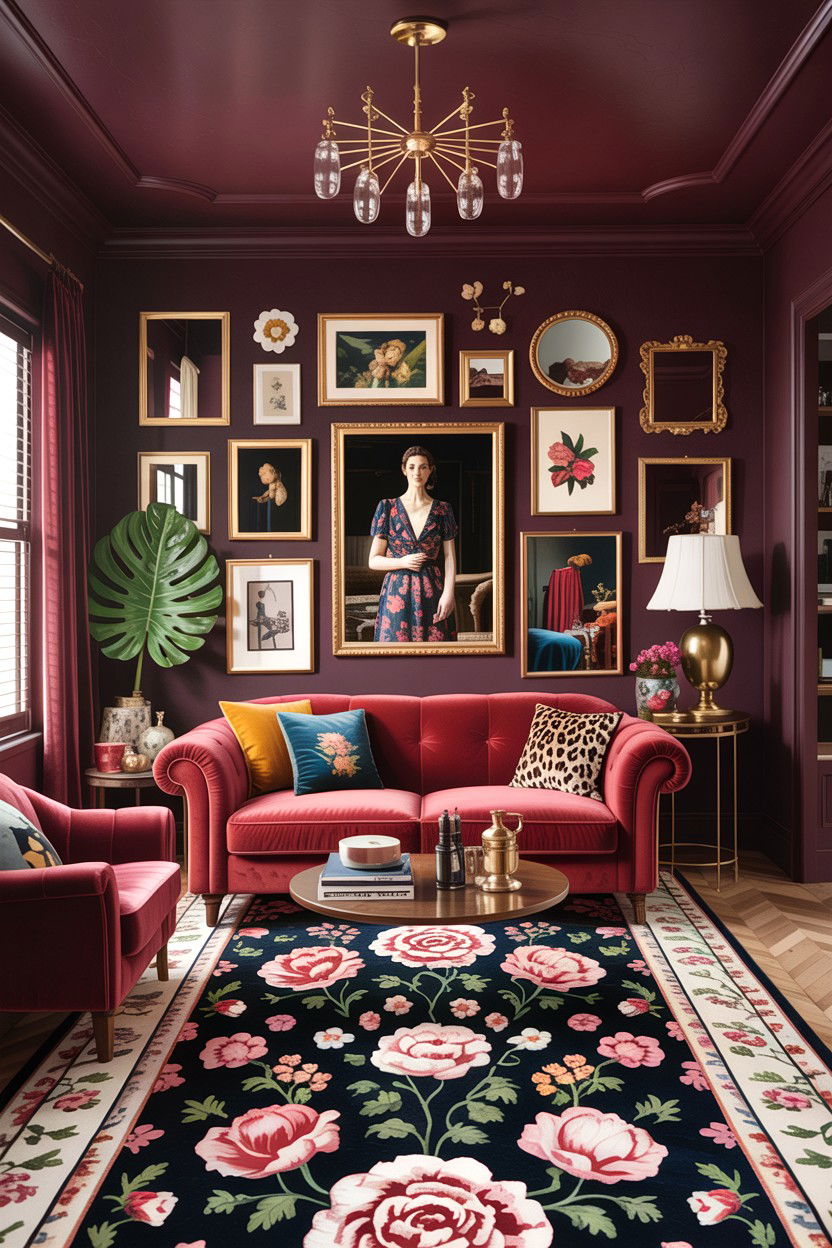
A dark maximalist living room is a celebration of "more is more," where deep wall colors serve as a canvas for eclectic collections. This style encourages the layering of patterns, from leopard print pillows to floral rugs, all set against a moody background like burgundy or emerald. The darkness of the walls helps to ground the various colors and textures, preventing the space from feeling chaotic. It is an excellent way to showcase personal treasures, books, and art in a way that feels intentional and curated. By using a dark base, even the most vibrant accessories appear more sophisticated and integrated into the overall design.
10. Minimalist black living room
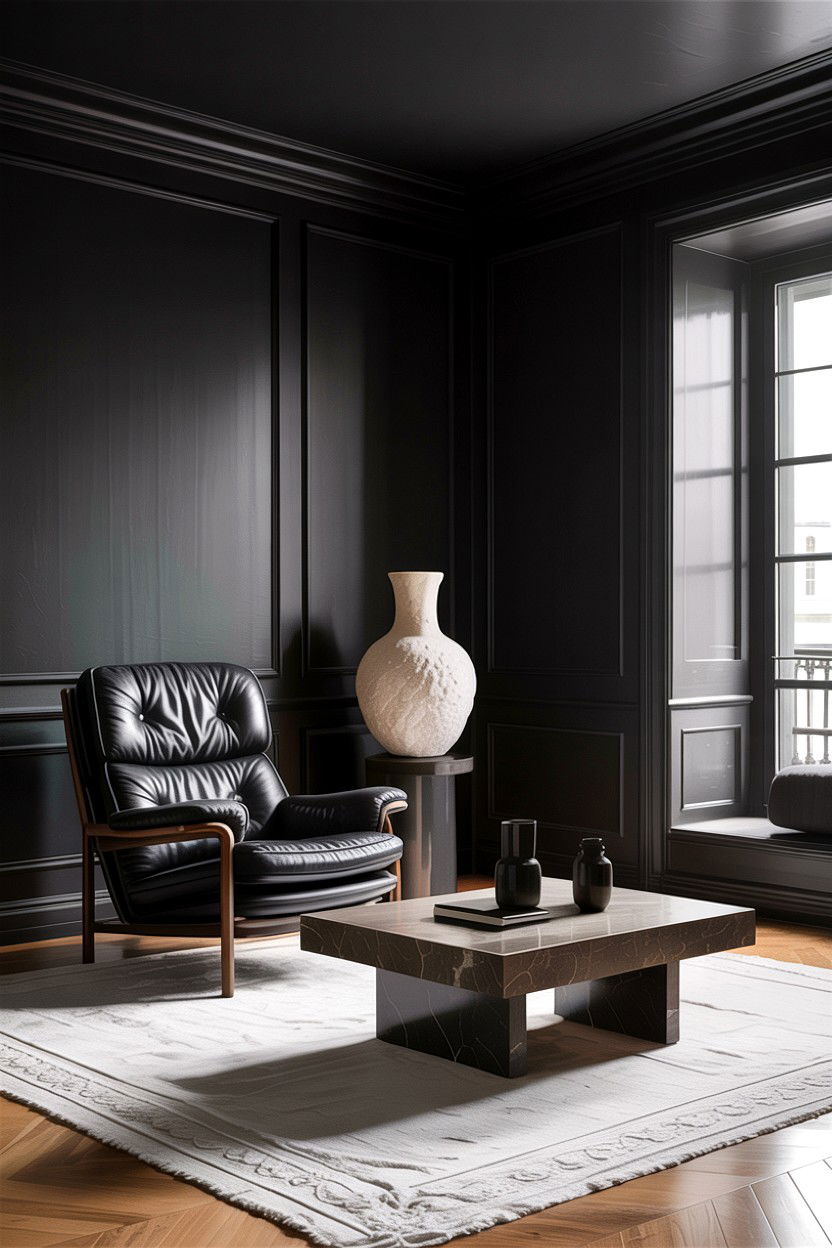
The minimalist black living room is the epitome of modern sophistication, focusing on form and silhouette rather than excessive decoration. In this design, different shades and finishes of black—matte, glossy, and satin—are used to create subtle contrast. The lack of color allows the eye to focus on the quality of the materials, such as a high-end leather chair or a polished stone coffee table. To keep the space from feeling like a void, it is vital to incorporate plenty of natural light and varying textures. This aesthetic is incredibly calming and provides a sleek, high-fashion look that is sure to impress any guest.
11. Dark ceiling living room
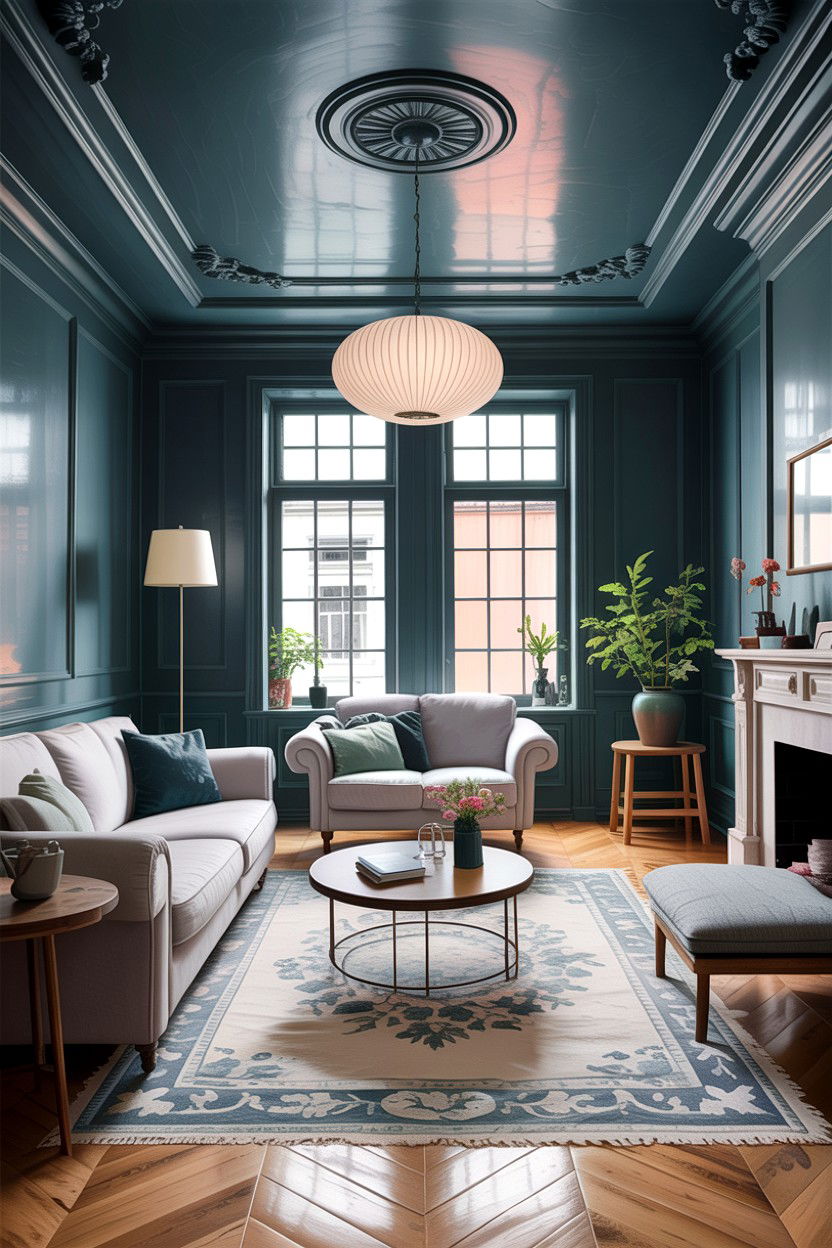
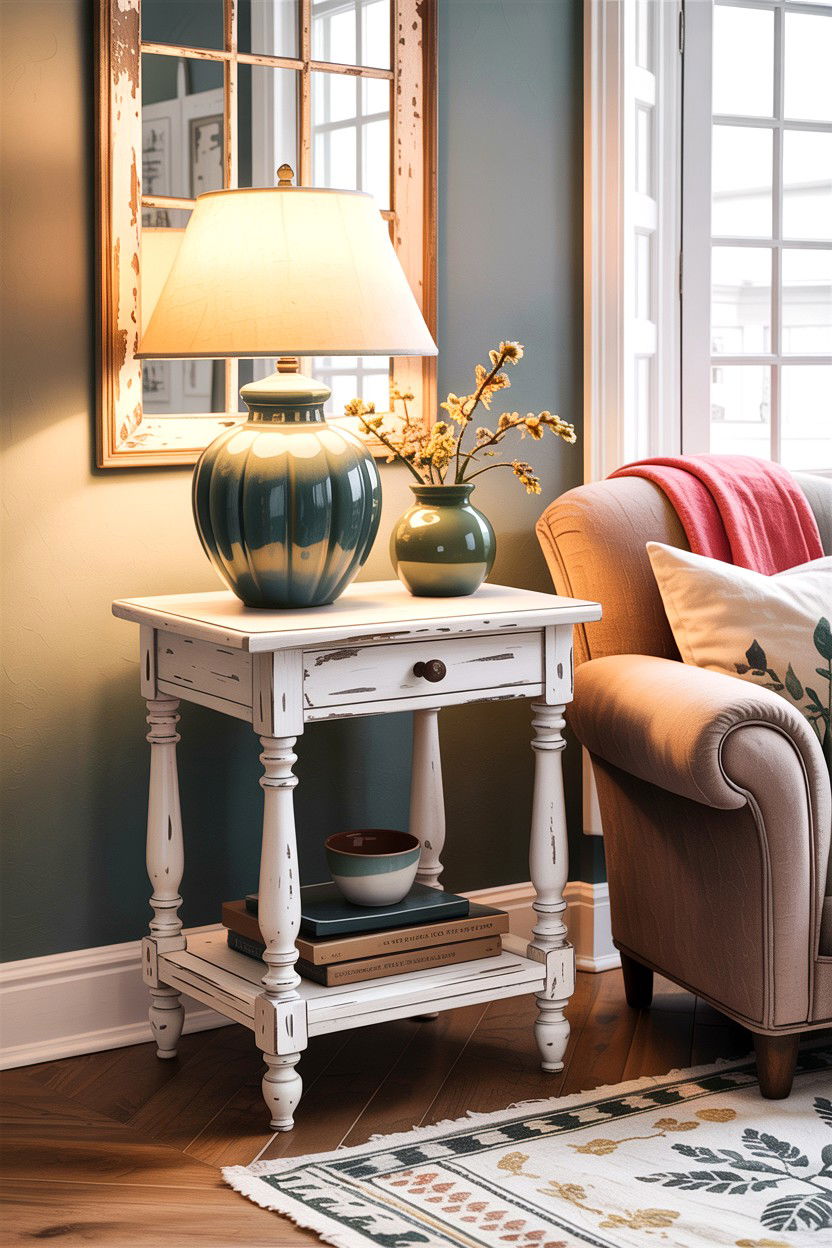
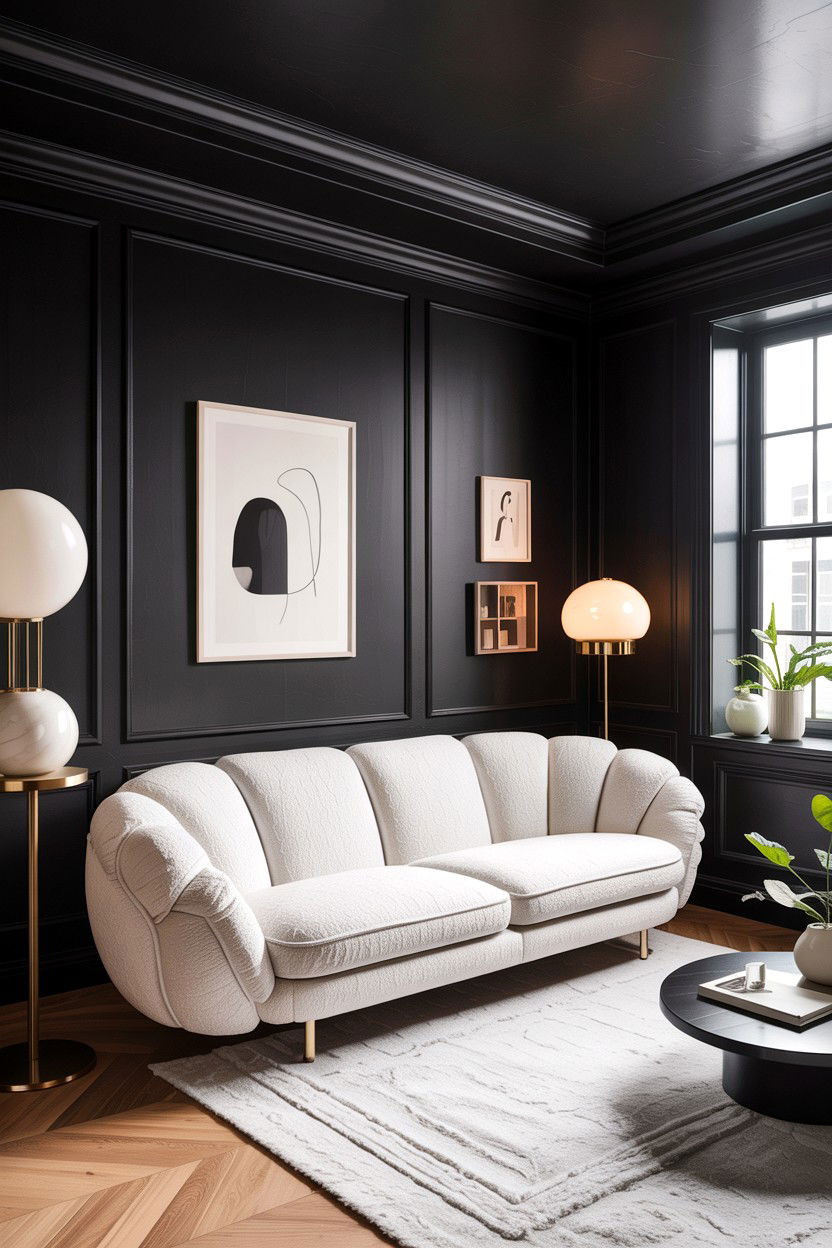
Painting a dark ceiling living room is a bold design move that can make a large space feel much more intimate and cozy. Often referred to as the "fifth wall," a dark ceiling in a shade like midnight blue or black can create a "sky-like" effect that draws the eye upward. This technique works particularly well in rooms with high ceilings or interesting architectural details like coffers or beams. To ensure the room doesn't feel cramped, keep the walls a slightly lighter shade or use large mirrors to bounce light around the space. This approach adds an unexpected layer of drama that feels very designer-inspired.
12. Dark floor living room
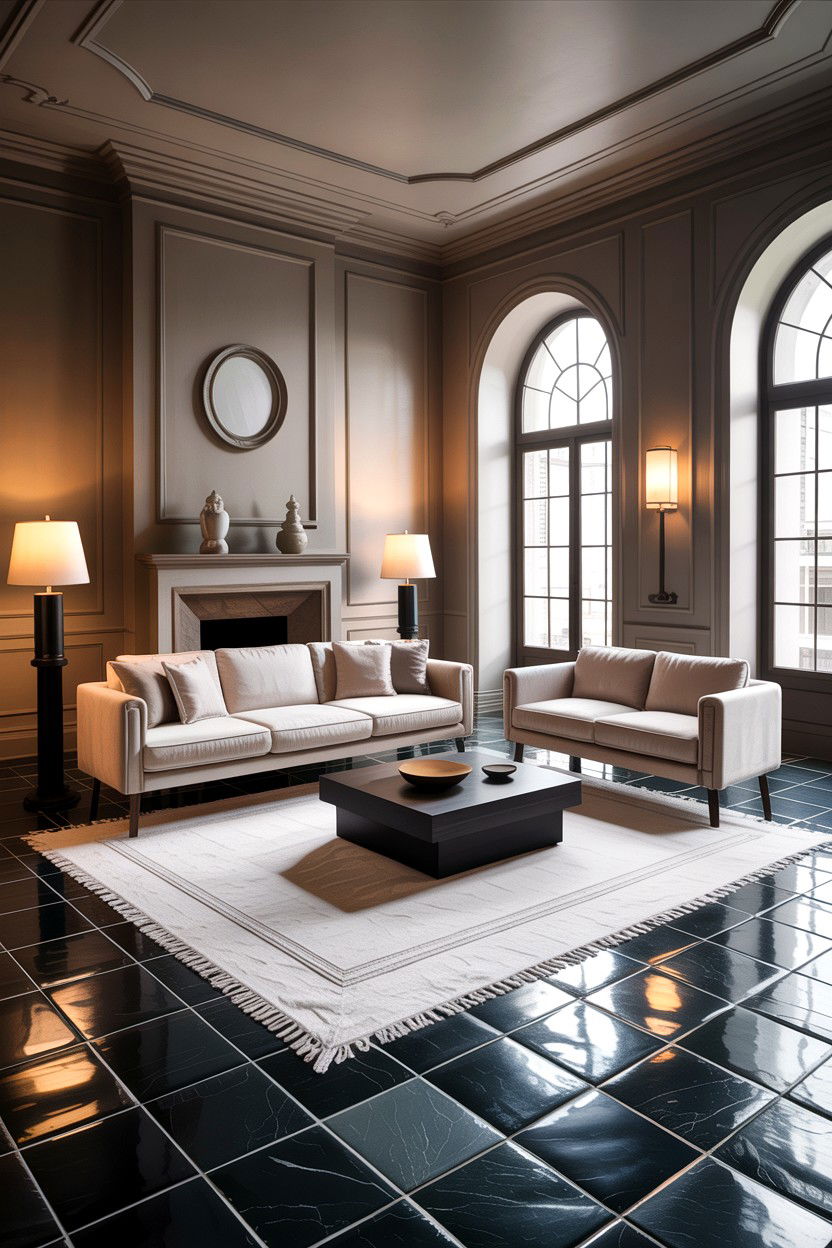
A dark floor living room provides a solid, grounded foundation that makes every piece of furniture look more prominent. Whether you choose dark-stained hardwood, black slate tiles, or deep charcoal carpeting, the effect is one of immediate luxury. Dark floors are excellent for hiding minor imperfections, but they do require regular cleaning to stay looking sharp. To prevent the room from feeling too heavy, use light-colored area rugs and furniture with legs to create a sense of "air" above the floor. This contrast between the dark ground and lighter furnishings creates a dynamic and visually interesting space that feels balanced and well-planned.
13. Gallery wall on dark wall
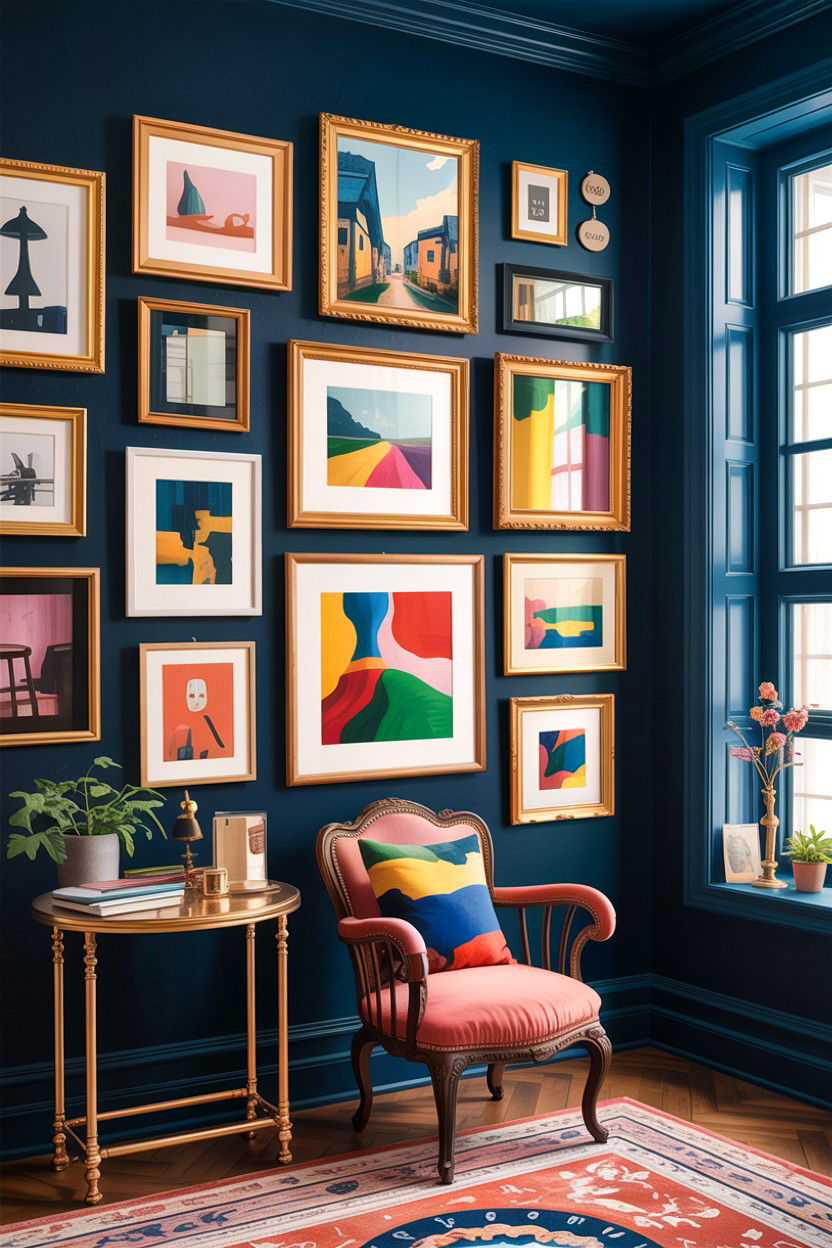
Creating a gallery wall on dark wall surfaces is one of the most effective ways to make your art collection "pop." The deep background acts like a professional museum mat, allowing the colors and frames of your pictures to stand out with incredible intensity. Whether you use a mix of vintage gold frames or sleek black ones, the dark backdrop provides a cohesive look that ties disparate pieces together. To make the gallery wall feel dynamic, vary the sizes and orientations of the art. This setup is perfect for adding a personal touch to a moody living room while maintaining a high-end, artistic vibe.
14. Metallic accent dark living room
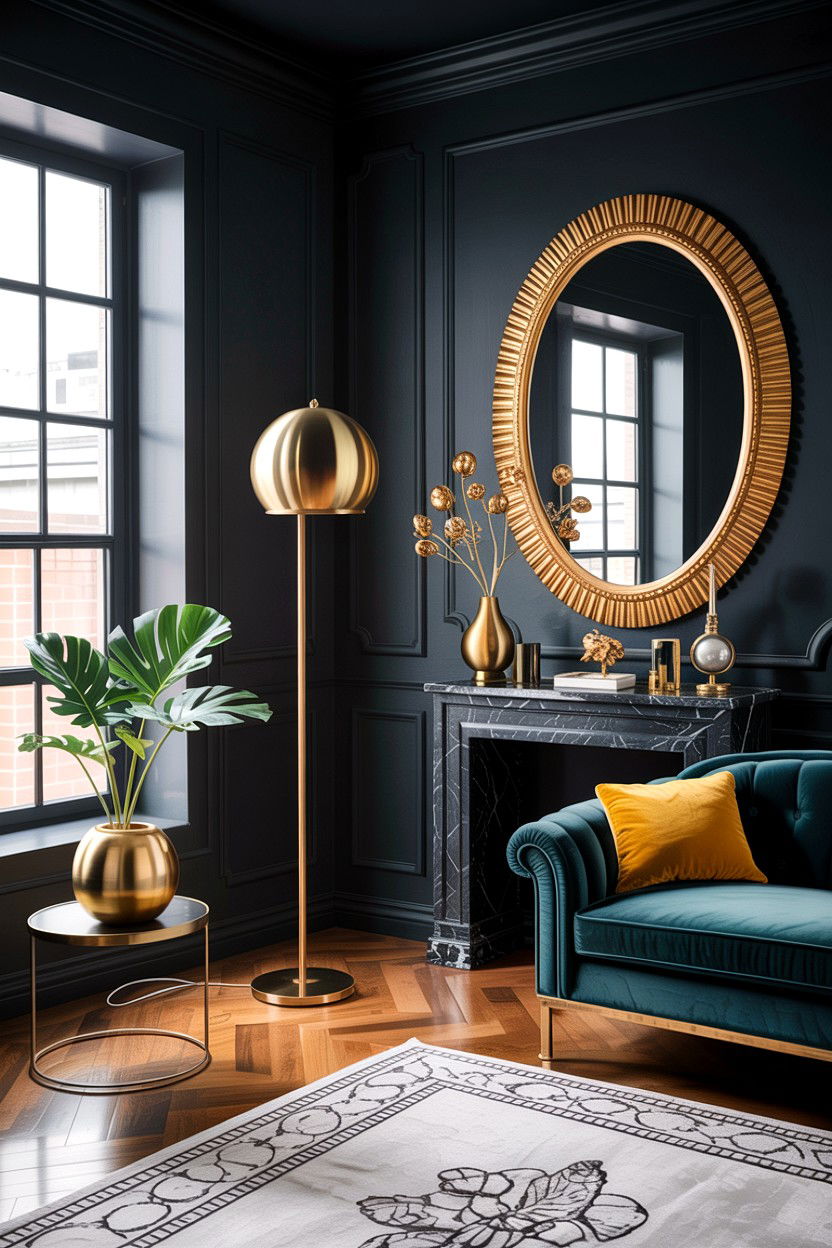
A metallic accent dark living room utilizes the reflective properties of gold, silver, and brass to break up the heaviness of deep colors. When placed against a dark navy or black wall, a brass floor lamp or a gold-framed mirror will glow with a warmth that is truly captivating. These shiny surfaces act as "jewelry" for the room, adding a touch of glamour and luxury. It is best to stick to one or two metal finishes to keep the look cohesive. The interplay between the matte dark walls and the shimmering metallic details creates a sophisticated balance that feels both modern and incredibly expensive.
15. Emerald green living room
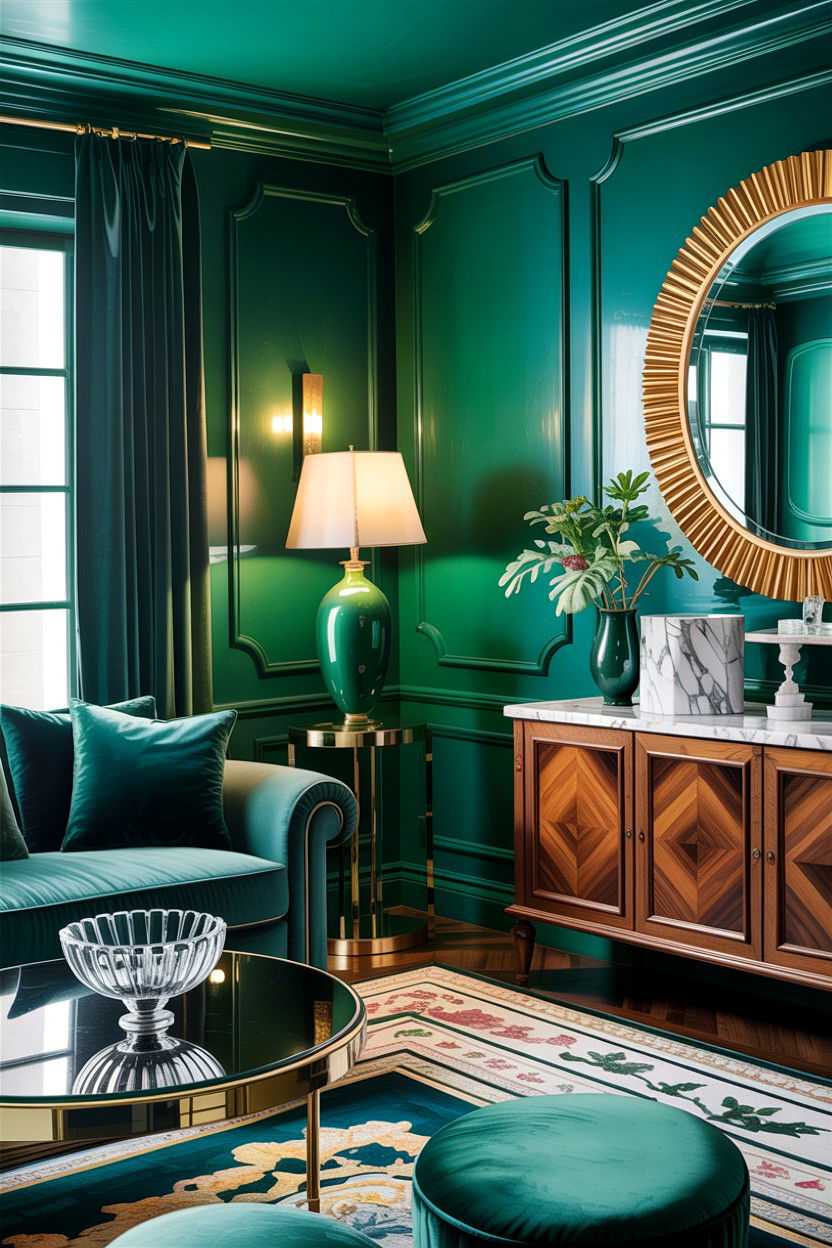
An emerald green living room offers a rich, jewel-toned aesthetic that feels incredibly opulent and regal. This specific shade of green has a natural brightness to it, which prevents it from feeling as "flat" as some other dark colors. It pairs exceptionally well with velvet upholstery and marble accents, creating a space that feels like a high-end hotel lounge. To ground the look, incorporate dark wood furniture and black metal accents. Emerald green is also a great color for color-drenching, where you paint the walls, trim, and even the doors in the same shade for a fully immersive and luxurious "cocoon" experience.
16. Matte black living room
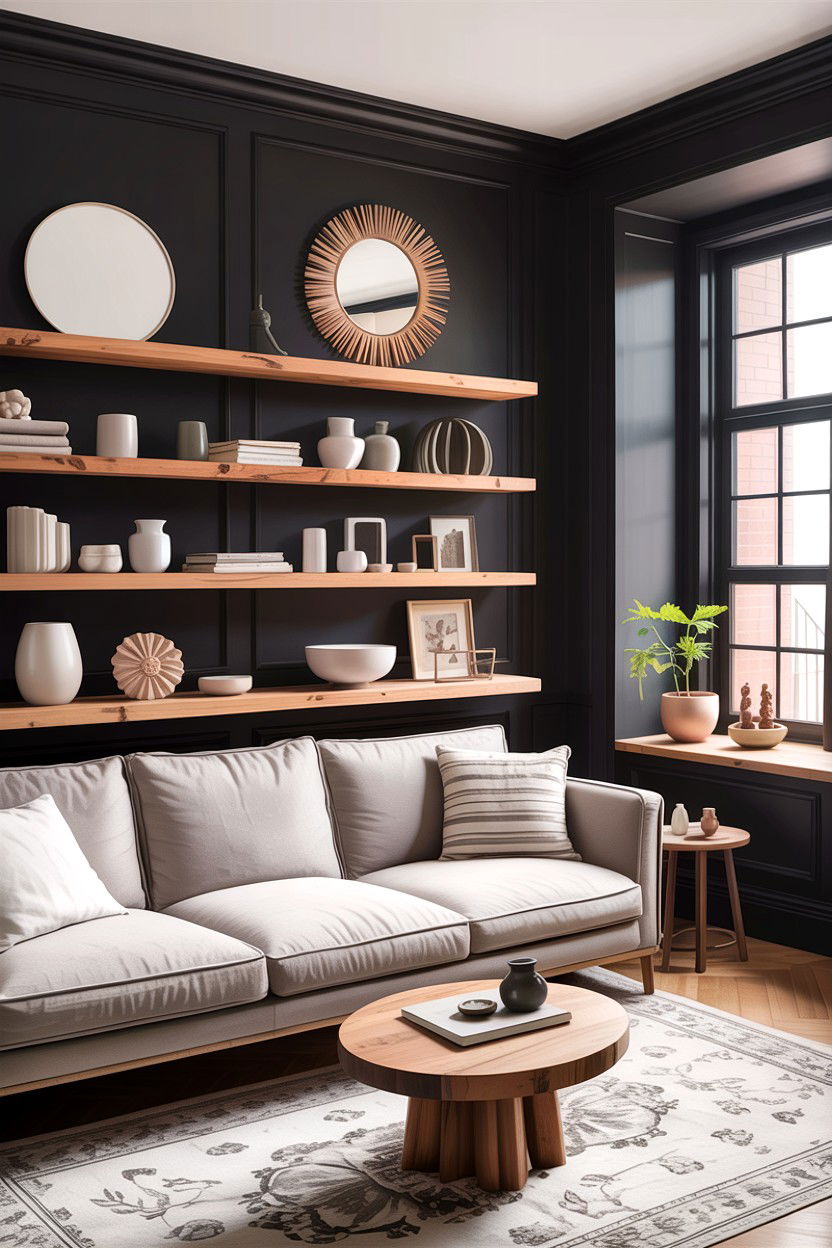
The matte black living room is a contemporary favorite because it absorbs light in a way that creates a soft, velvety appearance on the walls. Unlike glossy finishes, matte black hides wall imperfections and provides a flat, sophisticated backdrop that is perfect for minimalist or industrial styles. To keep the room from feeling too dark, it is essential to use warm lighting and natural wood elements to provide a sense of life and warmth. Large-scale white artwork or light grey furniture can also provide the necessary contrast to make the black feel intentional and stylish rather than depressing or overly heavy.
17. Dark brown leather living room
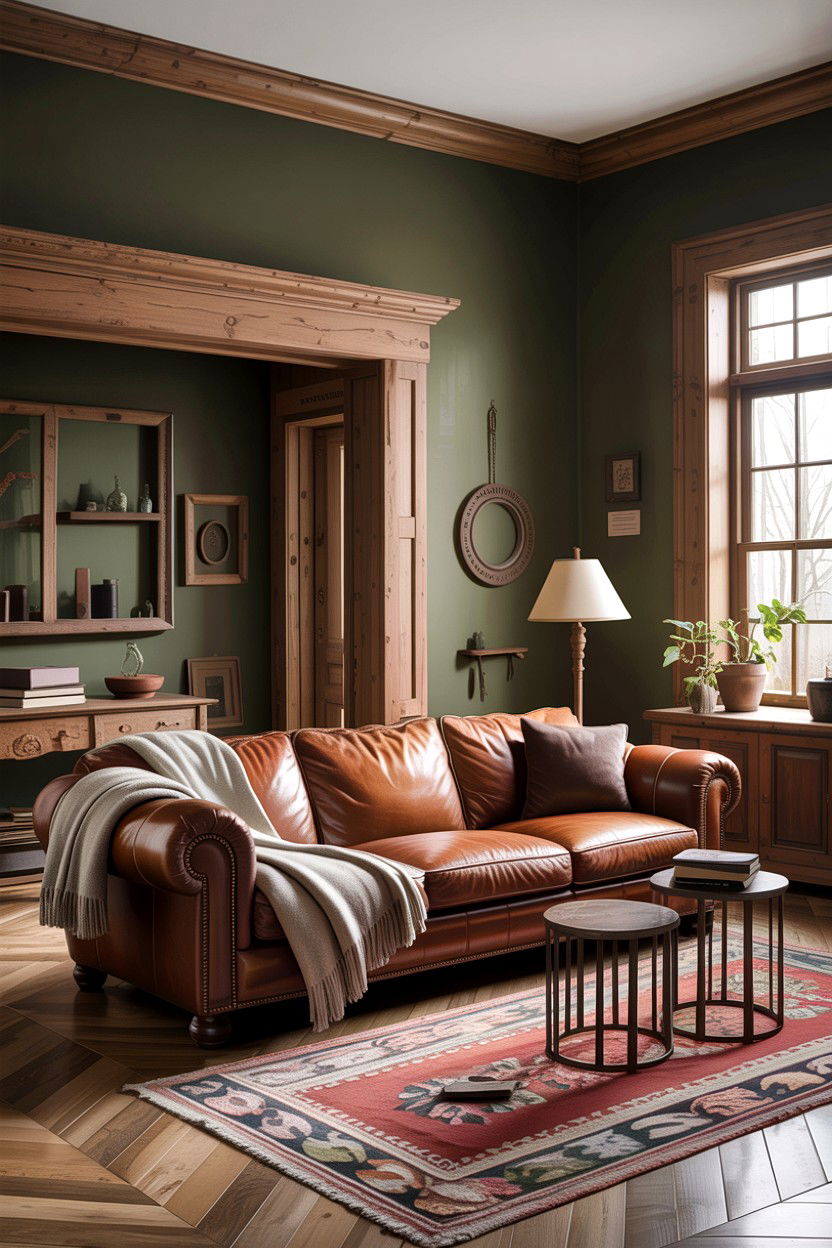
A dark brown leather living room focuses on the rich, masculine appeal of high-quality upholstery and warm, chocolatey tones. A large, worn-in leather sofa is the perfect centerpiece for a moody space, offering both comfort and a sense of history. This look works best when paired with walls in shades of olive green, charcoal, or deep navy. To keep the leather from looking too heavy, mix in other materials like wool, linen, and metal. The natural variations in the leather add a layer of texture that makes the room feel lived-in and inviting, which is perfect for a cozy family gathering spot.
18. Deep plum living room
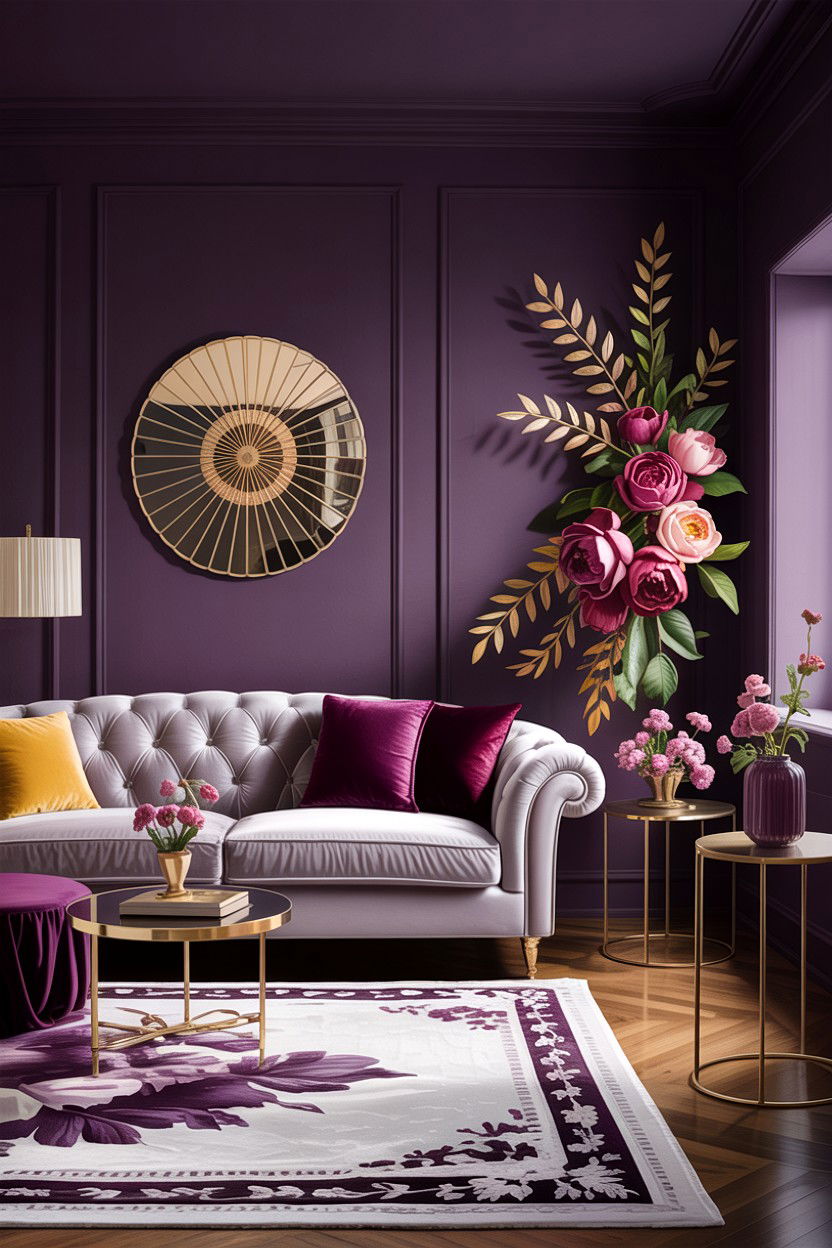
The deep plum living room is a sophisticated and slightly mysterious choice that offers a warmer alternative to navy or grey. This rich purple hue has a regal quality that feels incredibly cozy in the evening under soft lamp lighting. Plum pairs beautifully with gold accents and light grey textiles, creating a balanced and feminine-leaning dark aesthetic. To prevent the room from feeling too "theatrical," keep the furniture lines clean and modern. Using plum as a wall color provides a unique and unexpected backdrop that is sure to be a conversation starter while remaining a very comfortable and relaxing space.
19. Dark monochromatic living room
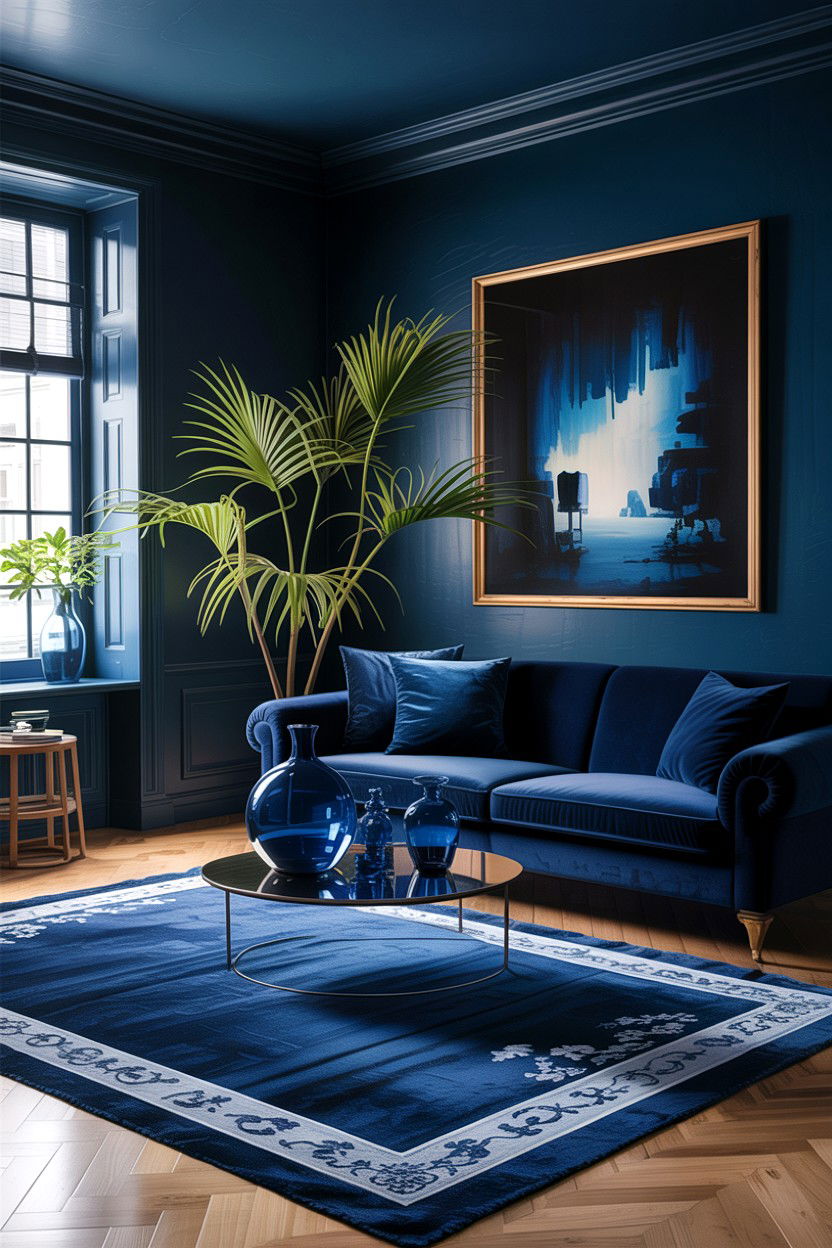
A dark monochromatic living room uses various shades of the same color to create a seamless and highly curated environment. For example, you might use a deep navy on the walls, a slightly lighter blue for the sofa, and an inky blue for the rug. This approach is incredibly soothing to the eye because there are no jarring color breaks. To make a monochromatic room successful, you must vary the textures—think silk pillows, wool rugs, and matte-painted walls. This depth of texture ensures the room feels rich and interesting rather than flat. It is a masterclass in sophisticated, high-end interior design.
20. Midnight blue living room
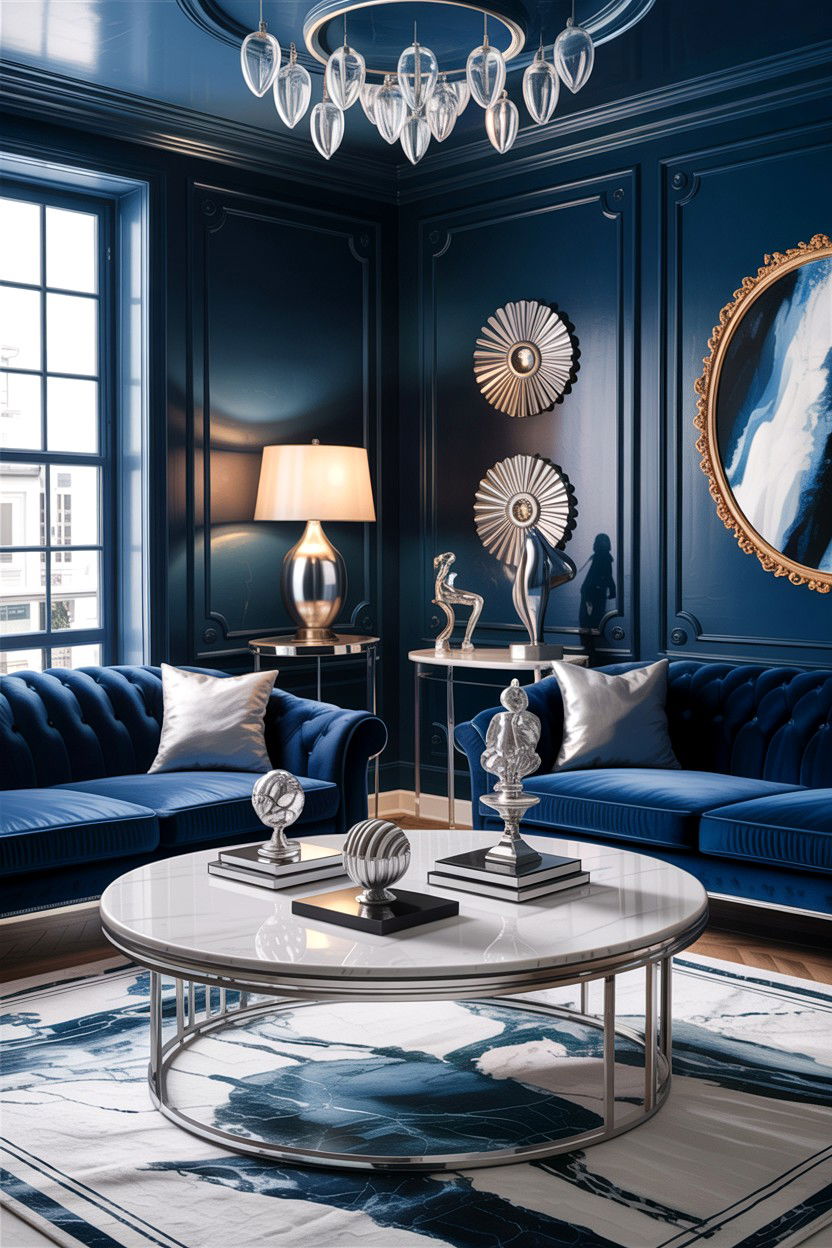
A midnight blue living room is the ultimate choice for those who want a space that feels like a quiet, starry night. This color is so dark it almost appears black in certain lights, but it retains a subtle coolness that is very calming. It is an excellent choice for a media room or a space meant for late-night lounging. Pair midnight blue with silver accents and white marble to create a "cool" luxury look, or use warm wood and gold to make it feel more traditional. This deep hue provides a sense of endless depth, making the walls seem to recede.
21. Dark rustic living room
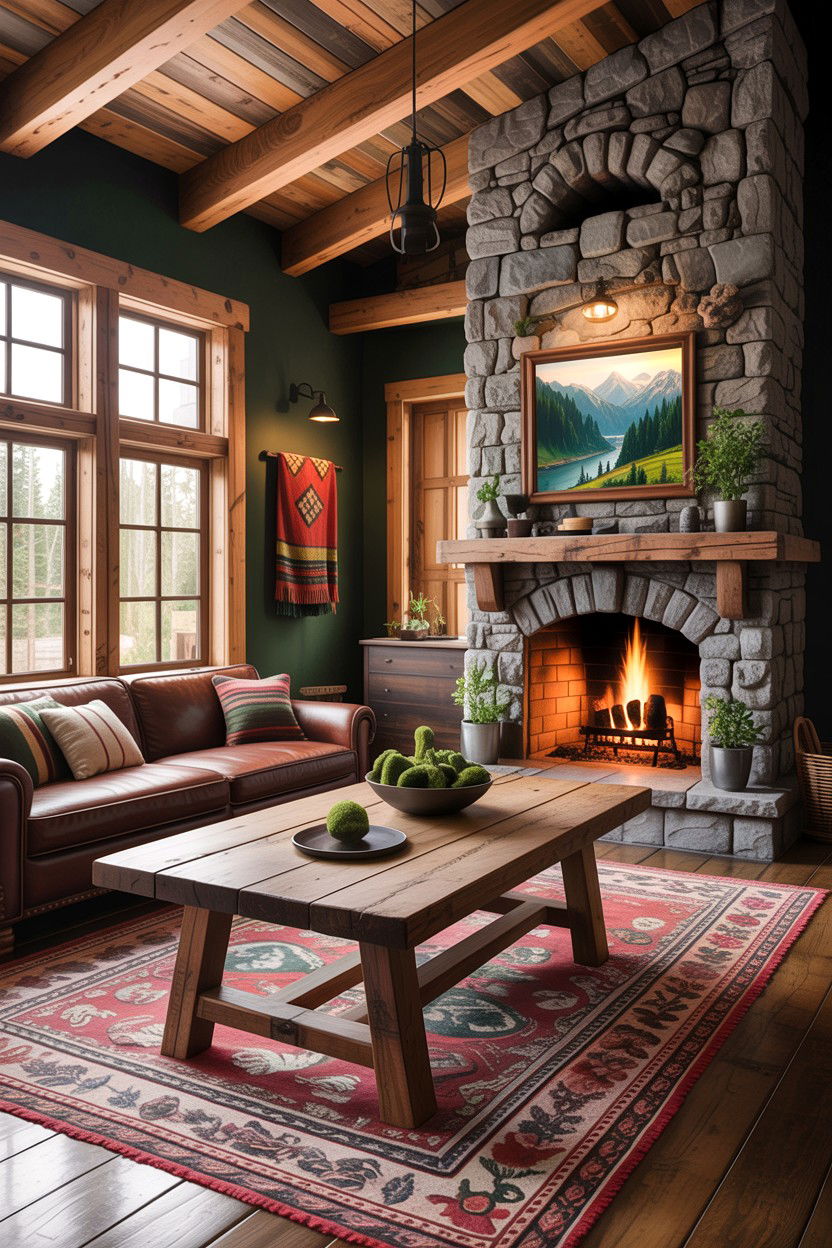
The dark rustic living room combines the ruggedness of mountain cabin style with a moody, modern color palette. Instead of the typical light pine, this look utilizes dark-stained timbers, black iron hardware, and stone fireplaces. The walls might be a deep forest green or charcoal, providing a dramatic backdrop for reclaimed wood coffee tables and heavy wool blankets. This style is all about "hygge" and creating a space that feels incredibly secure and warm during the colder months. It is a perfect way to bring a sense of the outdoors inside while maintaining a very sophisticated and adult-oriented aesthetic.
22. Dark mid century modern living room
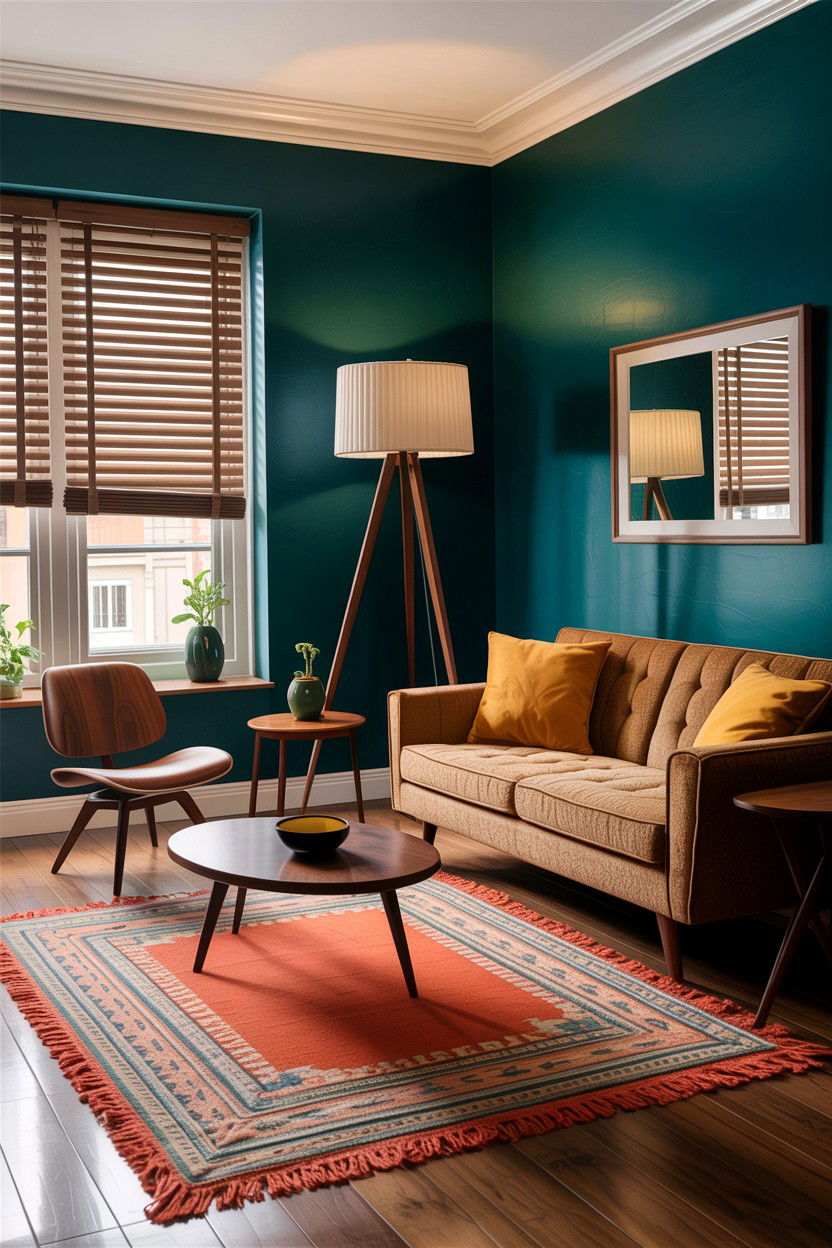
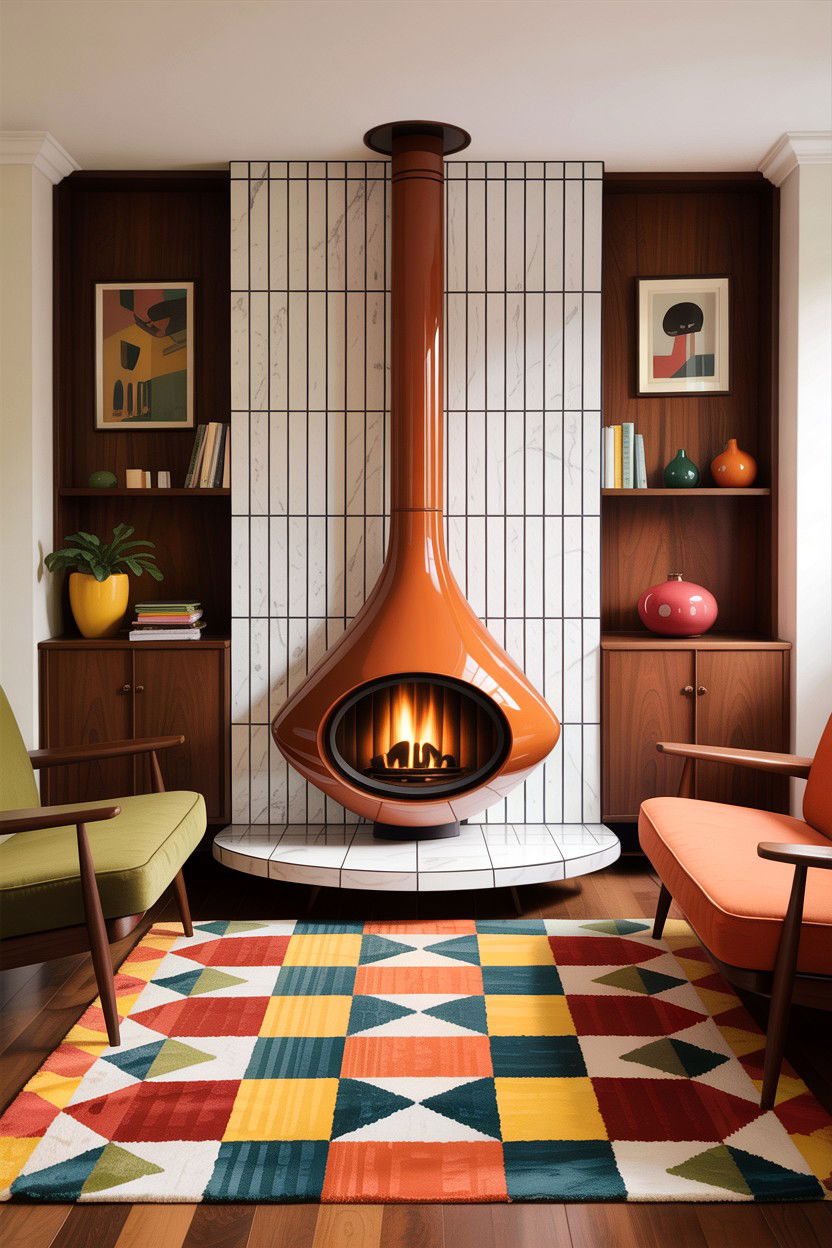
Updating the classic 1950s aesthetic, a dark mid century modern living room uses iconic furniture silhouettes against a moody background. Imagine a walnut Eames chair or a tapered-leg sofa set against a deep teal or charcoal wall. The dark colors make the sleek lines of the furniture stand out more prominently than they would against white walls. To stay true to the era, incorporate pops of "burnt" colors like mustard yellow or orange through pillows and art. This combination of vintage charm and modern moodiness creates a space that feels both nostalgic and completely up-to-date with current design trends.
23. Dark bohemian living room
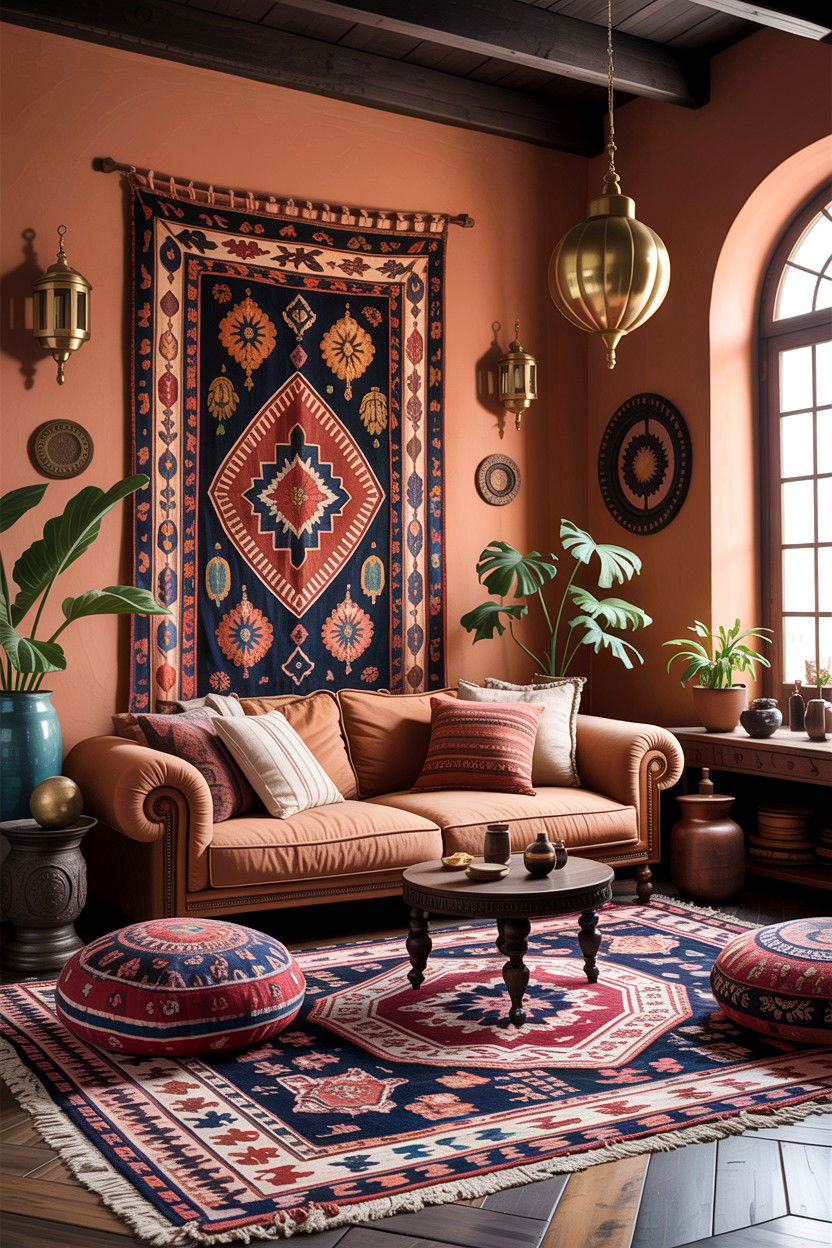
A dark bohemian living room takes the free-spirited "boho" look and gives it a sophisticated, evening-ready makeover. Instead of bright white walls and light macramé, this style features dark terracotta or navy walls as a base for layered rugs, floor cushions, and global textiles. The darkness adds a layer of mystery and maturity to the bohemian aesthetic, making it feel less like a dorm room and more like a high-end curated space. Incorporating brass lanterns, carved wood furniture, and plenty of oversized leafy plants will complete the look. It is a cozy, eclectic, and deeply personal way to design a living area.
24. Dark small living room
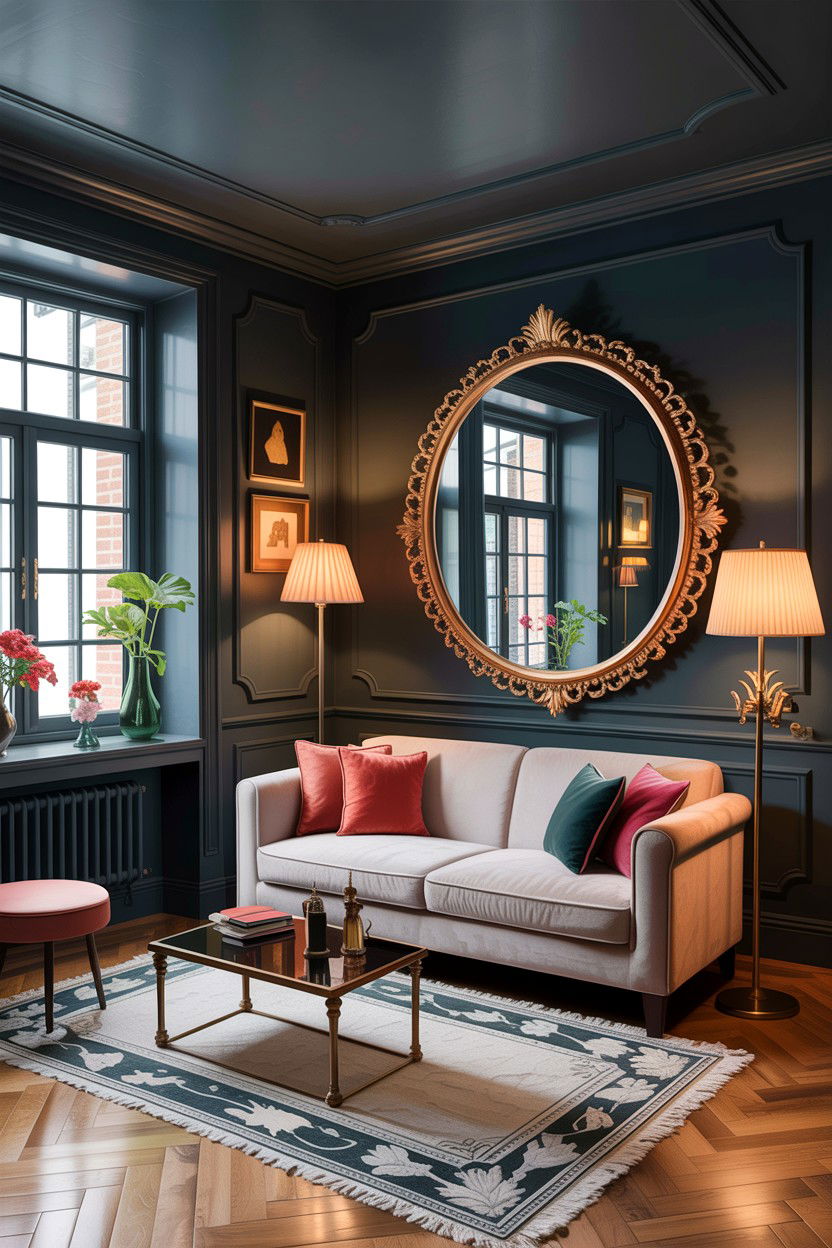
Many people fear that a dark small living room will feel cramped, but the opposite is often true; dark colors can blur the corners of a room, making it feel more expansive and "infinite." By painting the walls, trim, and ceiling the same dark shade, you eliminate visual breaks, which creates a seamless and cozy environment. To make this work, use furniture with slim profiles and incorporate at least one large mirror to reflect what little light is available. A small, moody room feels like a luxurious "jewel box" and is often much more inviting than a small, stark white room.
25. Dark open concept living room
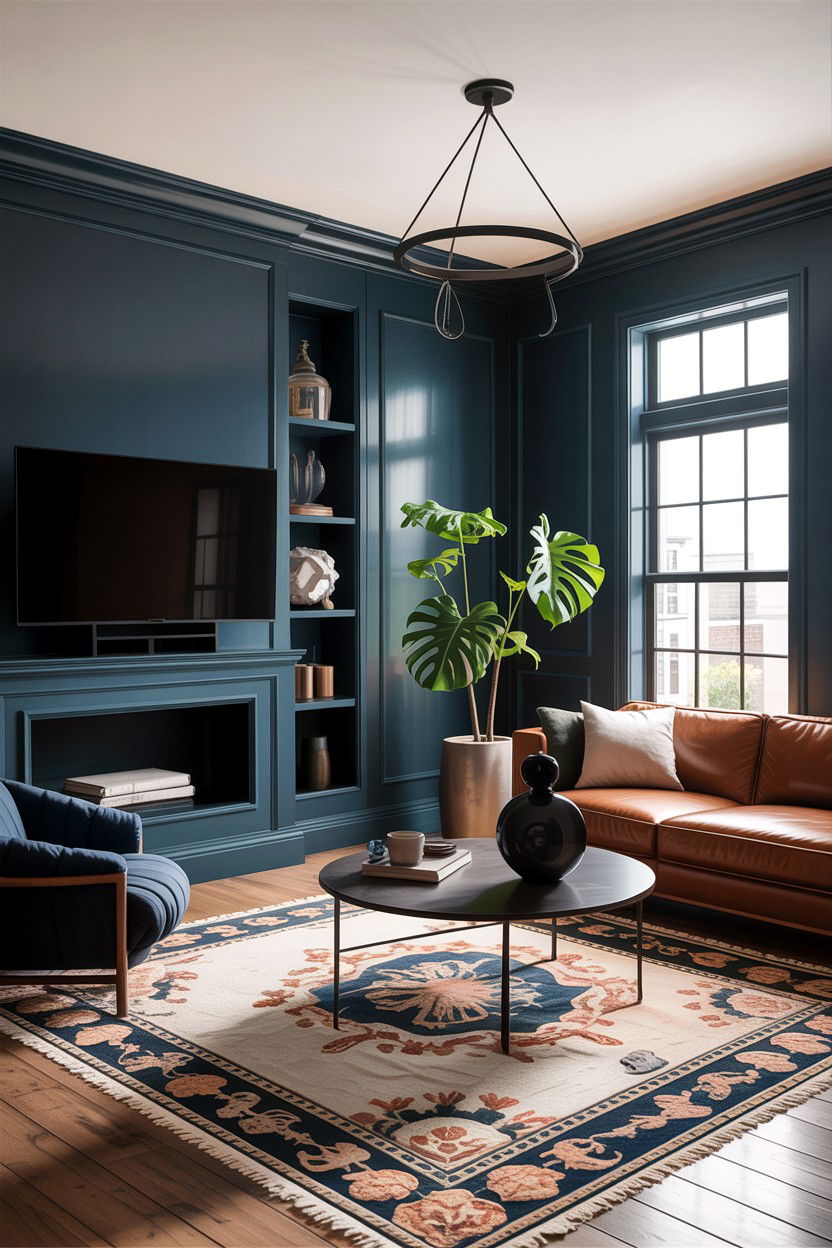
In a dark open concept living room, the challenge is to define the seating area without making it feel disconnected from the rest of the house. Using a dark color on just the living room walls can create a "zone" that feels distinct and intimate within a larger floor plan. To ensure flow, carry small accents of that dark color—like black hardware or navy dining chairs—into the adjacent kitchen or dining areas. This creates a cohesive look while giving the living room its own moody identity. It is a great way to add architectural depth to a modern, wide-open home.
26. Dark library living room
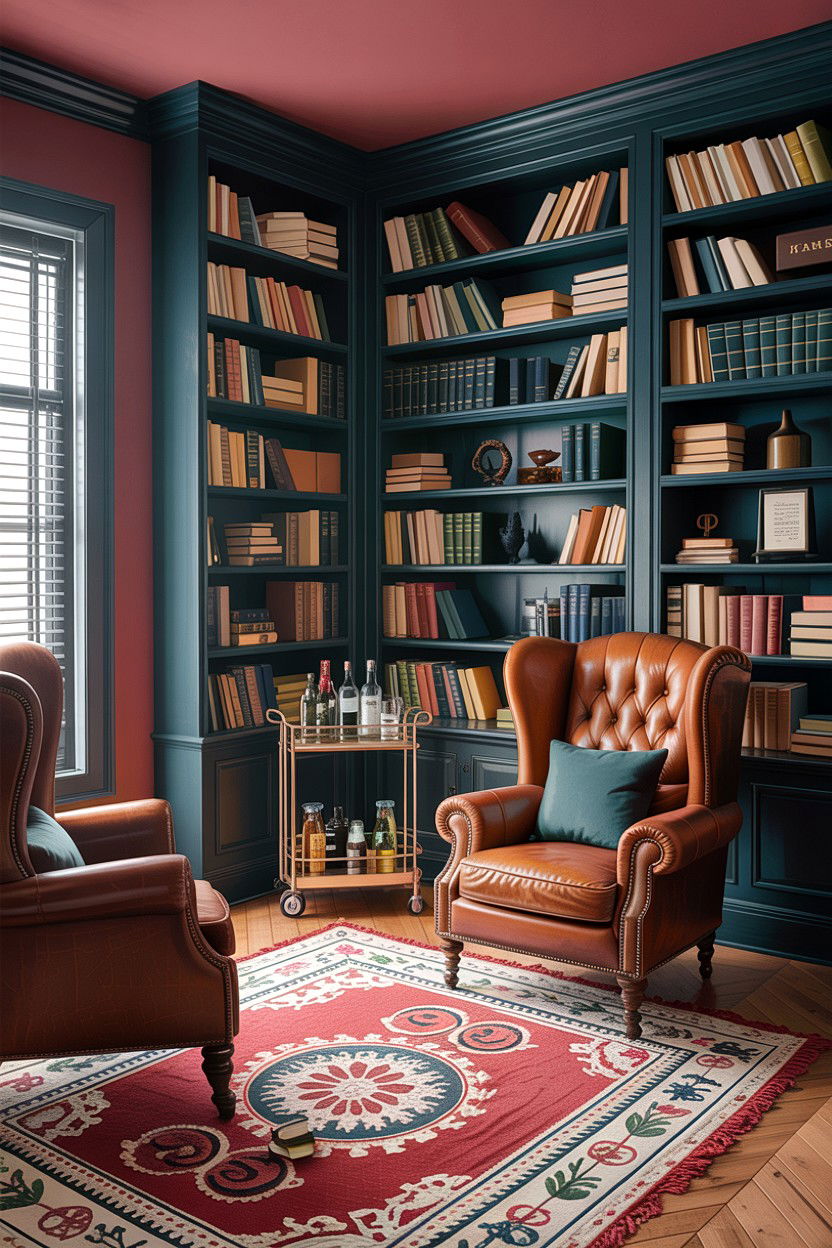
Designing a dark library living room is about creating the ultimate sanctuary for reading and reflection. Floor-to-ceiling bookshelves painted in a deep shade like burgundy or black create a stunning visual impact and provide a sense of architectural weight. A pair of comfortable wingback chairs and a small rolling bar cart can turn the space into a sophisticated entertaining area as well. The darkness of the room helps the colorful book spines become a decorative element in their own right. This style is perfect for those who want a room that feels quiet, intellectual, and incredibly high-end in its execution.
27. Dark stone fireplace living room
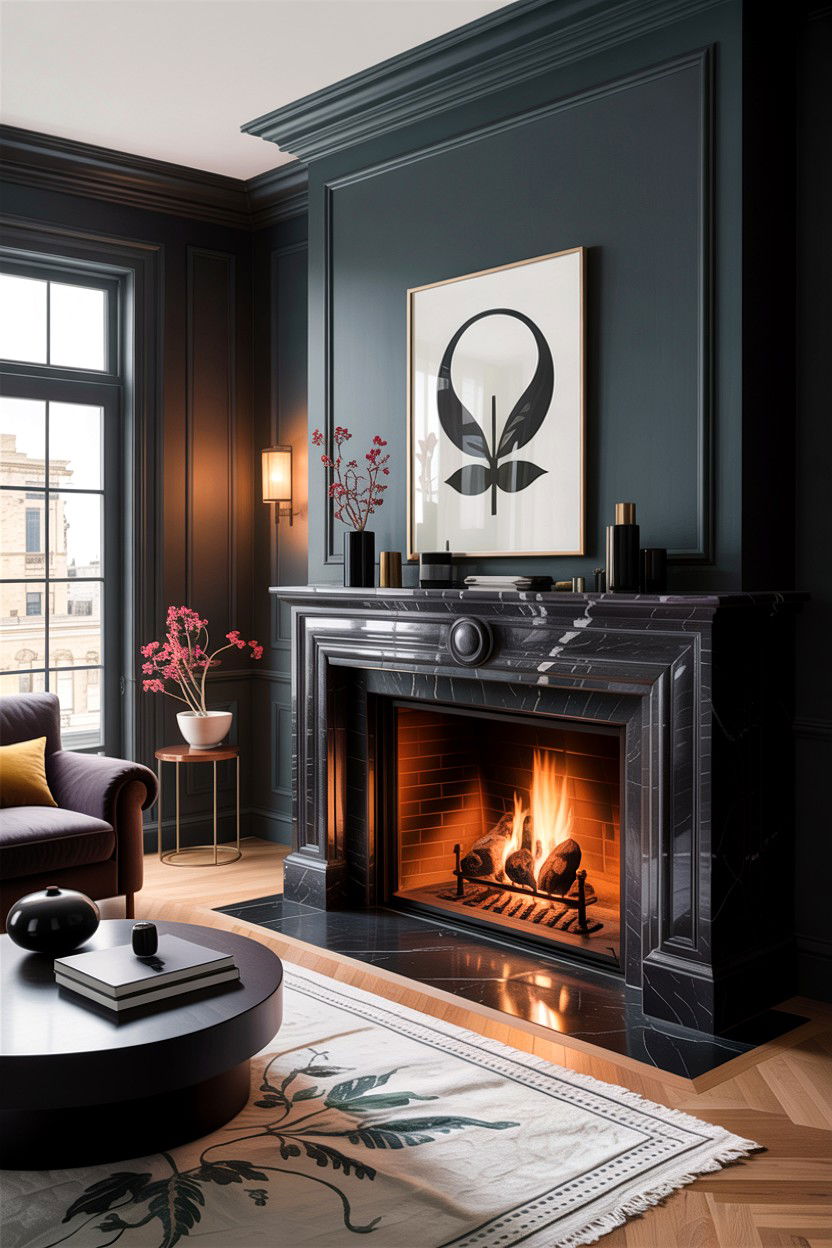
A dark stone fireplace living room uses a large-scale architectural feature to set the tone for the entire space. Whether it is a black marble surround or a floor-to-ceiling slate chimney breast, the dark stone provides a rugged and expensive-looking focal point. To complement the stone, use wall colors that are just a shade or two lighter to create a subtle gradient. This look is particularly effective in homes with a modern or contemporary aesthetic, as the natural texture of the stone provides a welcome break from flat-painted surfaces. It is a timeless design choice that adds immediate value and style.
28. Dark textured wallpaper living room
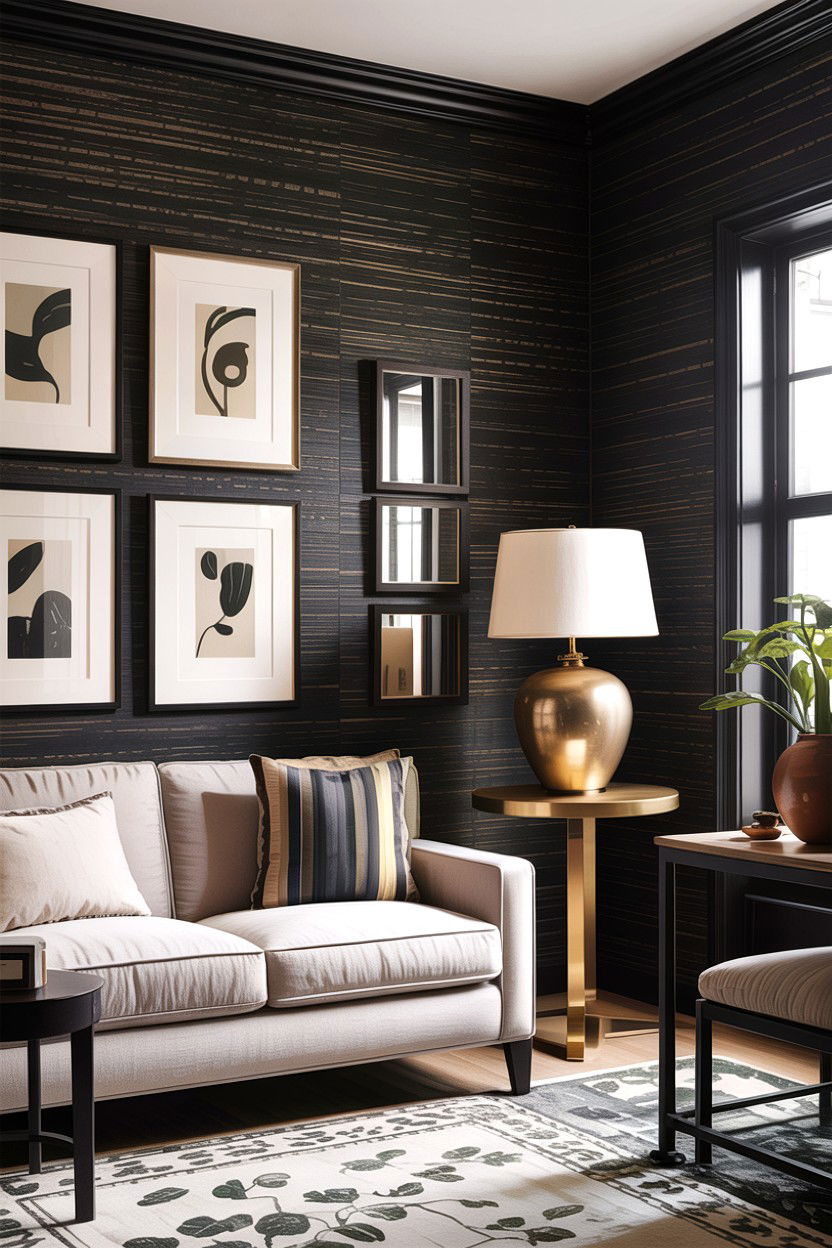
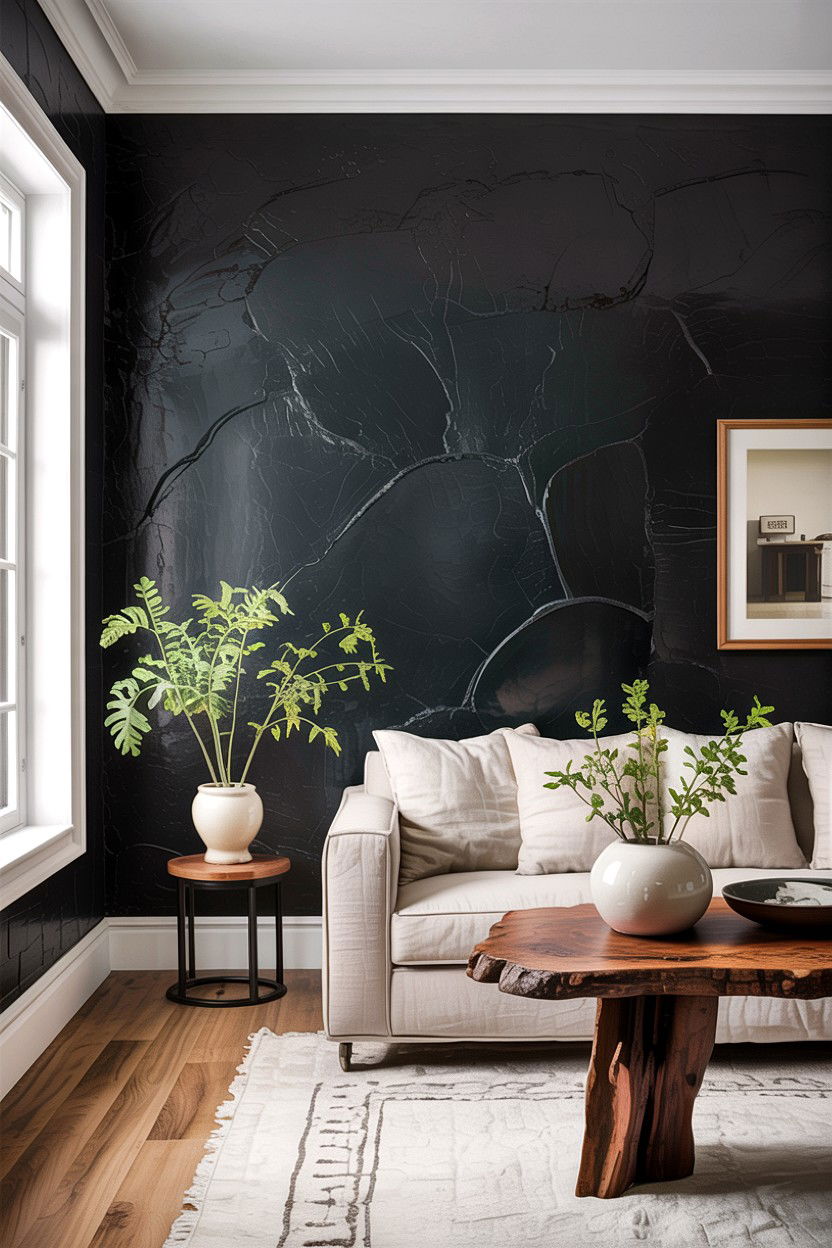
Using dark textured wallpaper living room designs is an excellent way to add depth and interest without relying solely on paint. Options like black grasscloth, navy faux-leather, or charcoal embossed patterns add a tactile quality that catches the light beautifully. Wallpaper also has the benefit of absorbing sound, making a large living room feel much quieter and more intimate. This is a great choice for those who want a "designer" look that feels layered and complex. Pair the wallpaper with simple, clean-lined furniture to allow the patterns on the wall to remain the star of the show.
29. Dark grey living room
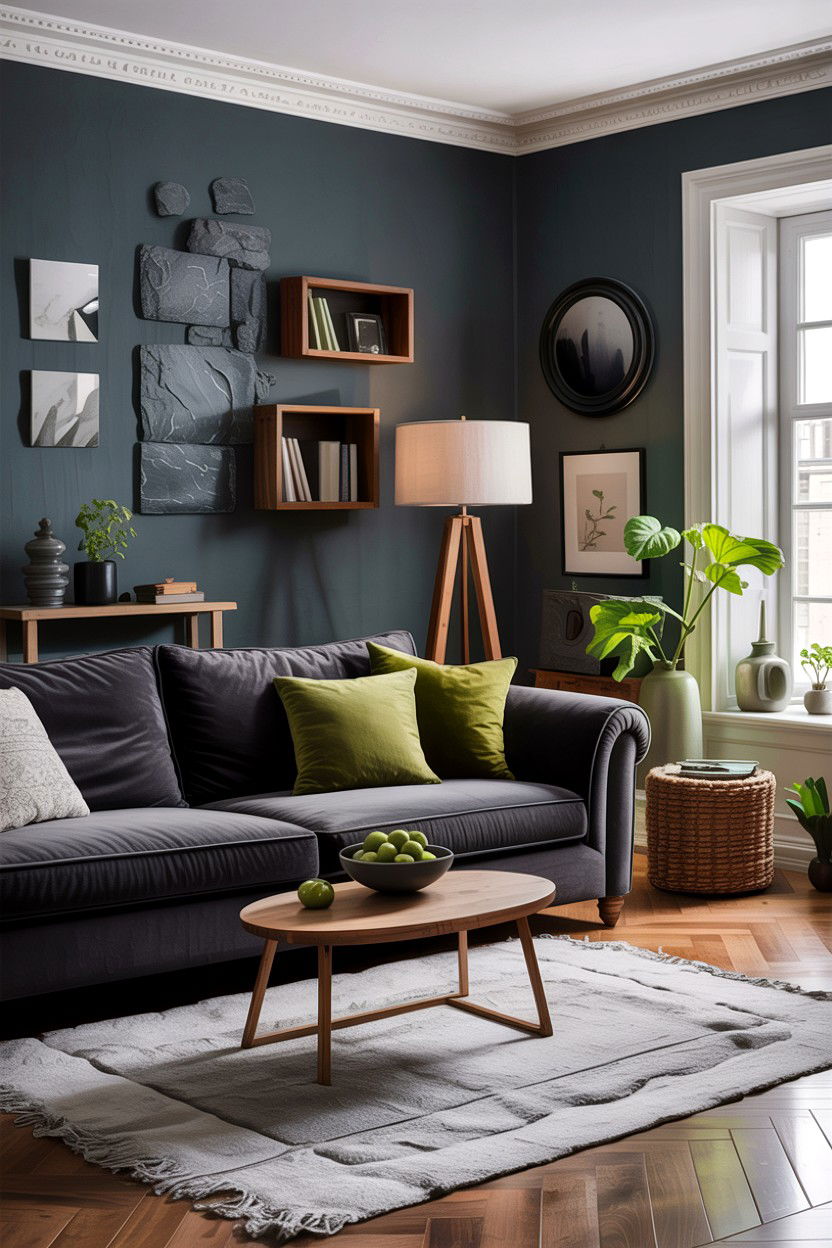
A dark grey living room is perhaps the most versatile of all moody designs, offering a neutral foundation that can lean either "warm" or "cool" depending on the undertones. A charcoal or slate grey provides a sophisticated backdrop that works with almost any accent color, from soft blush pink to vibrant lime green. To keep the grey from looking too "flat," it is important to layer in different materials like stone, wood, and various textiles. This approach is perfect for those who want a moody look that is easy to update over time simply by changing out the accessories and artwork.
30. Dark transitional living room
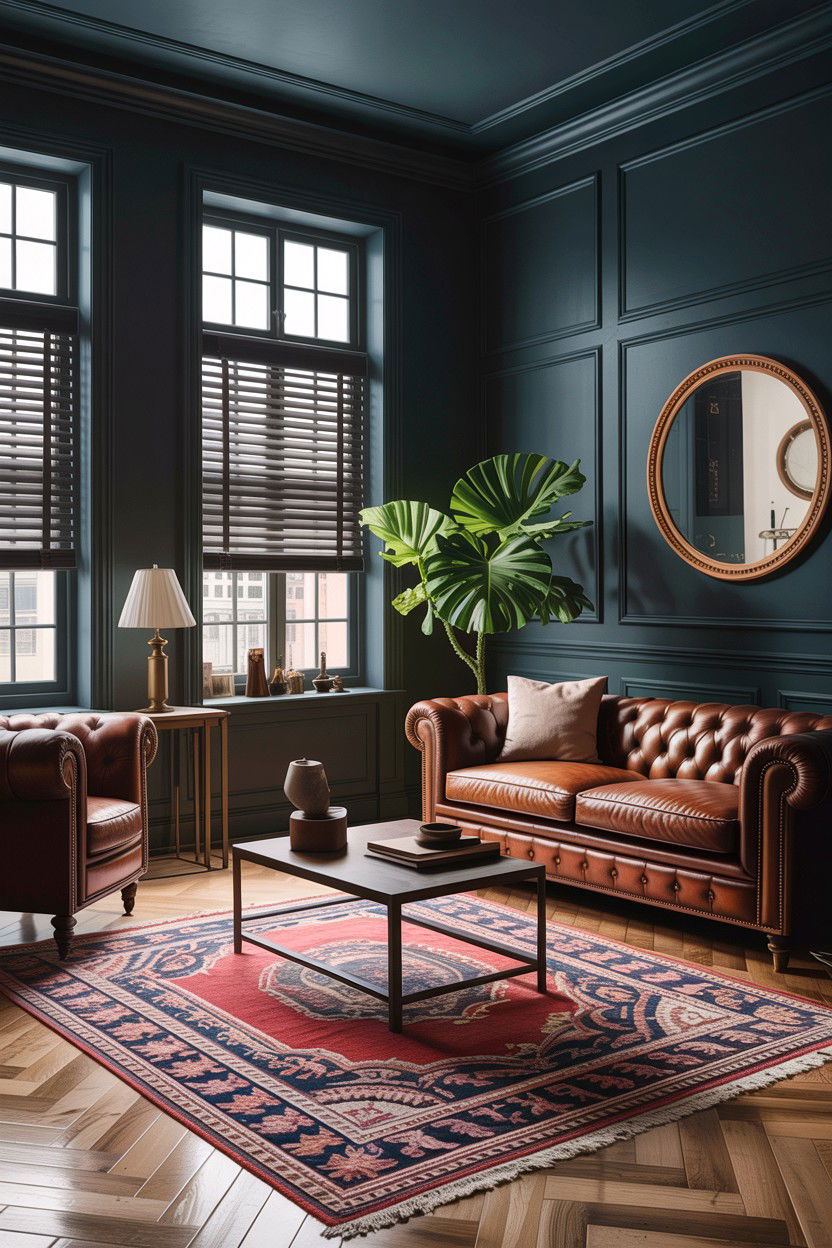
The dark transitional living room is a masterful blend of traditional comfort and modern edge. It utilizes classic furniture shapes—like a Chesterfield sofa—against a backdrop of dark, contemporary paint. This style is all about balance; for every "old" element, there is a "new" one to counter it. For example, you might pair an ornate vintage rug with a sleek, minimalist black coffee table. The dark walls act as the unifying force that brings these different eras together. This design is perfect for those who want a home that feels established and timeless but still reflects a modern, sophisticated sensibility.
Conclusion:
Embracing a dark living room design is a powerful way to inject personality, luxury, and comfort into your home. Whether you choose the regal depth of navy blue, the organic warmth of forest green, or the sleek sophistication of matte black, these moody palettes transform a standard space into a curated sanctuary. The key to success lies in the balance of lighting and texture, ensuring that the room feels intentional rather than simply dark. By following these thirty ideas, you can create a viral-worthy interior that offers a cozy refuge for your family and a stunning backdrop for entertaining guests for years.
Related posts:
Leave a Reply