

Designing a bathroom requires a delicate balance between luxury and logic to ensure the space is both beautiful and functional for daily use. Whether you are embarking on a full-scale renovation or simply updating a few key fixtures, following established industry standards is essential for a successful outcome. These rules provide a framework for safety, accessibility, and comfort, preventing common mistakes that can lead to costly repairs or awkward layouts. By understanding the relationship between plumbing, lighting, and spatial clearances, you can transform a standard washroom into a serene sanctuary that adds significant value to your home and enhances your well-being.
1. Bathroom layout planning
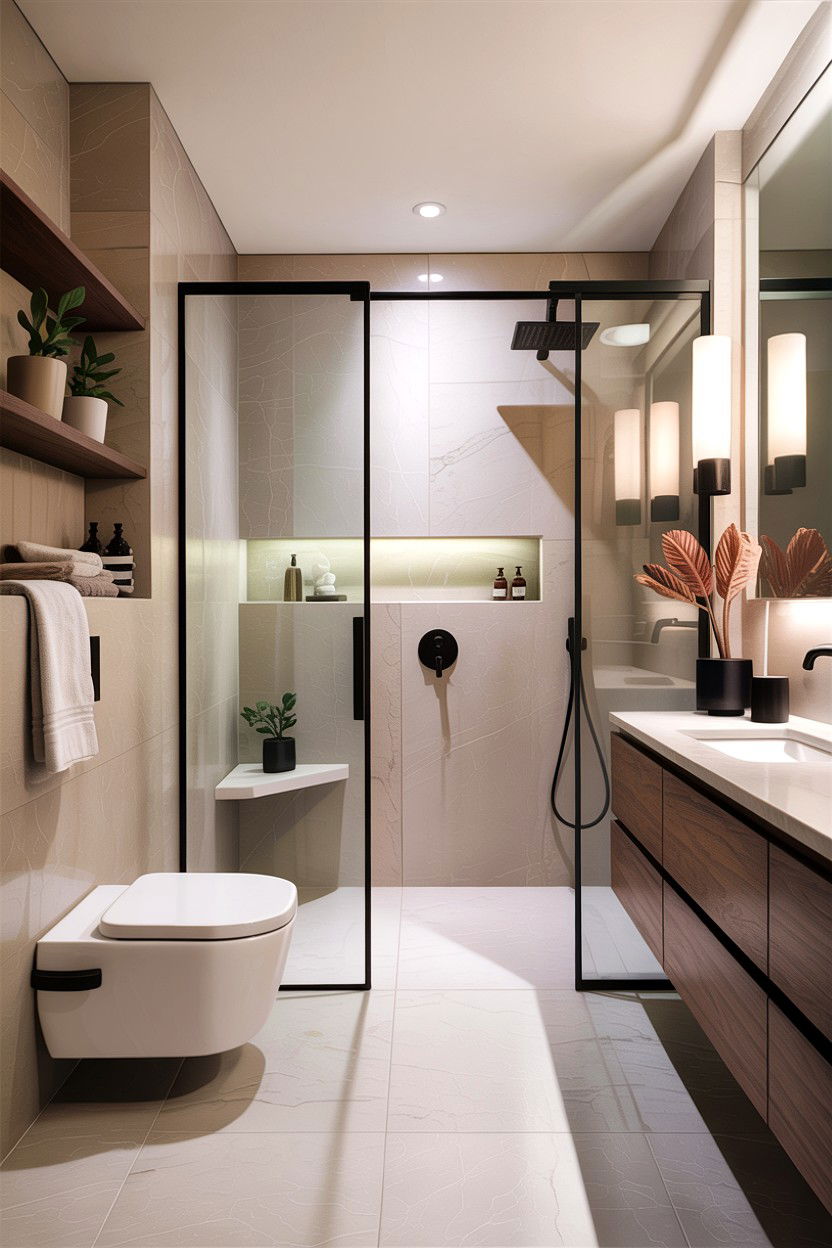
When you begin the process of organizing your bathroom space, the fundamental rule is prioritizing the flow of movement. A well-planned layout ensures that no doors collide and that there is sufficient floor space for a person to move comfortably between the sink, toilet, and shower. Professionals often recommend keeping the plumbing fixtures on one or two walls to minimize costs, but the primary focus should always be on the clearance requirements. You need to ensure that the entryway remains unobstructed and that the most frequently used items are easily accessible. This systematic approach prevents the room from feeling cramped while maximizing every square inch of the available footprint.
2. Standard vanity height
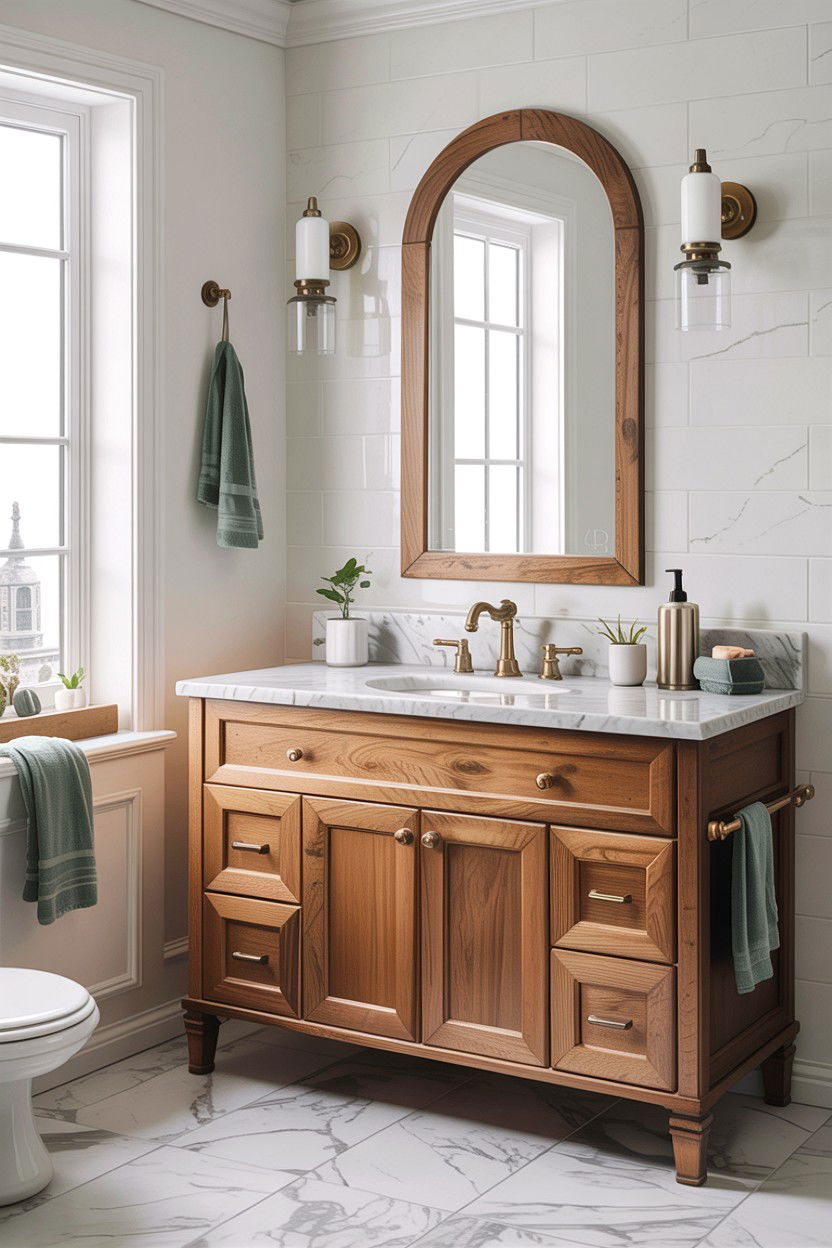
Have you ever noticed how a sink that is too low can cause significant back strain during your morning routine? The standard height for a bathroom vanity has traditionally been around thirty-two inches, but modern trends are shifting toward "comfort height" vanities that stand thirty-six inches tall. Choosing the right height depends heavily on the primary users of the space; for instance, a children's bathroom might benefit from a lower counter. However, for most adults, a taller vanity reduces the need to bend over while washing your face or brushing your teeth. Consistency in height across the cabinetry creates a streamlined look that feels both professional and ergonomic.
3. Toilet clearance space
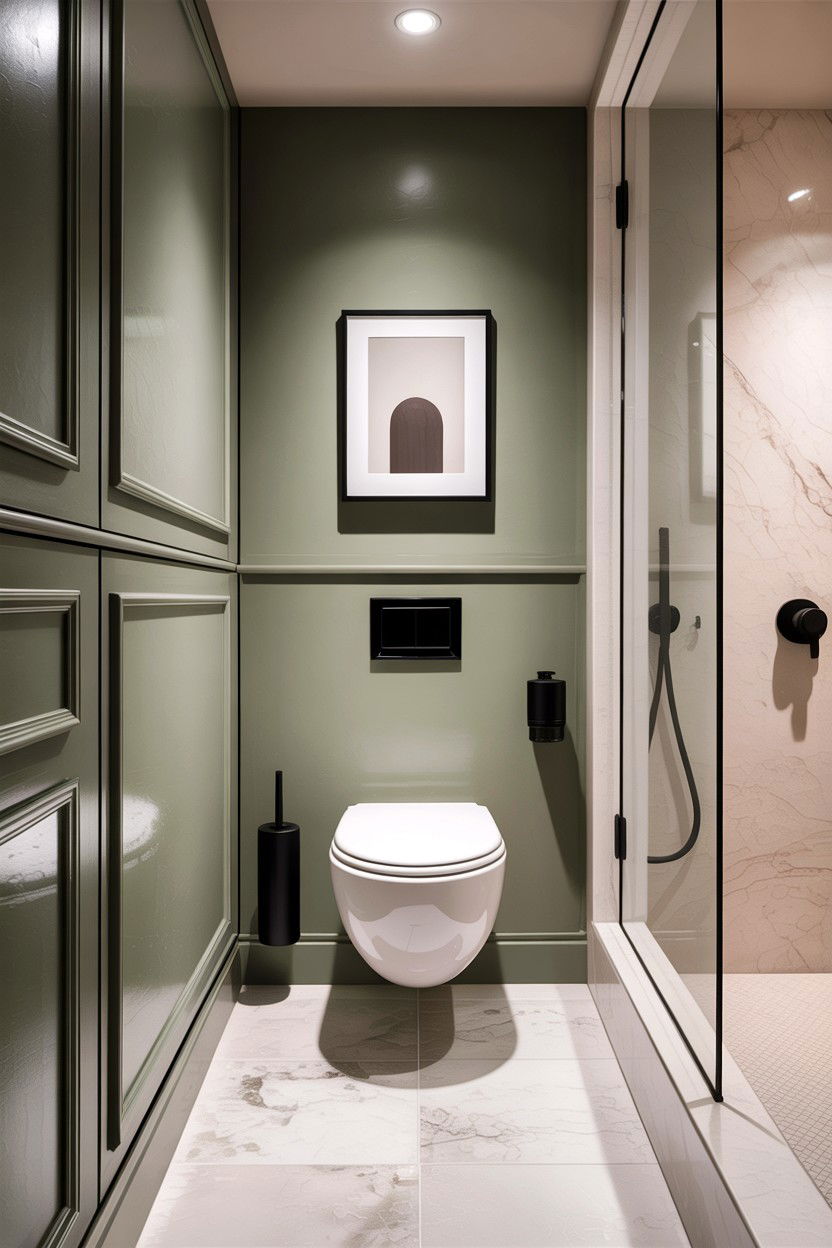
One of the most critical yet overlooked aspects of bathroom design is ensuring there is enough room around the toilet for comfort. Industry standards recommend at least fifteen inches of space from the centerline of the toilet to any adjacent wall or fixture, though eighteen inches is often preferred for a more spacious feel. Additionally, you must provide at least twenty-one inches of clear floor space in front of the toilet to allow for easy access. Failing to meet these minimums can make the area feel claustrophobic and difficult to clean. Proper spacing is not just about comfort; it is also a vital requirement for meeting local building codes.
4. Shower door swing
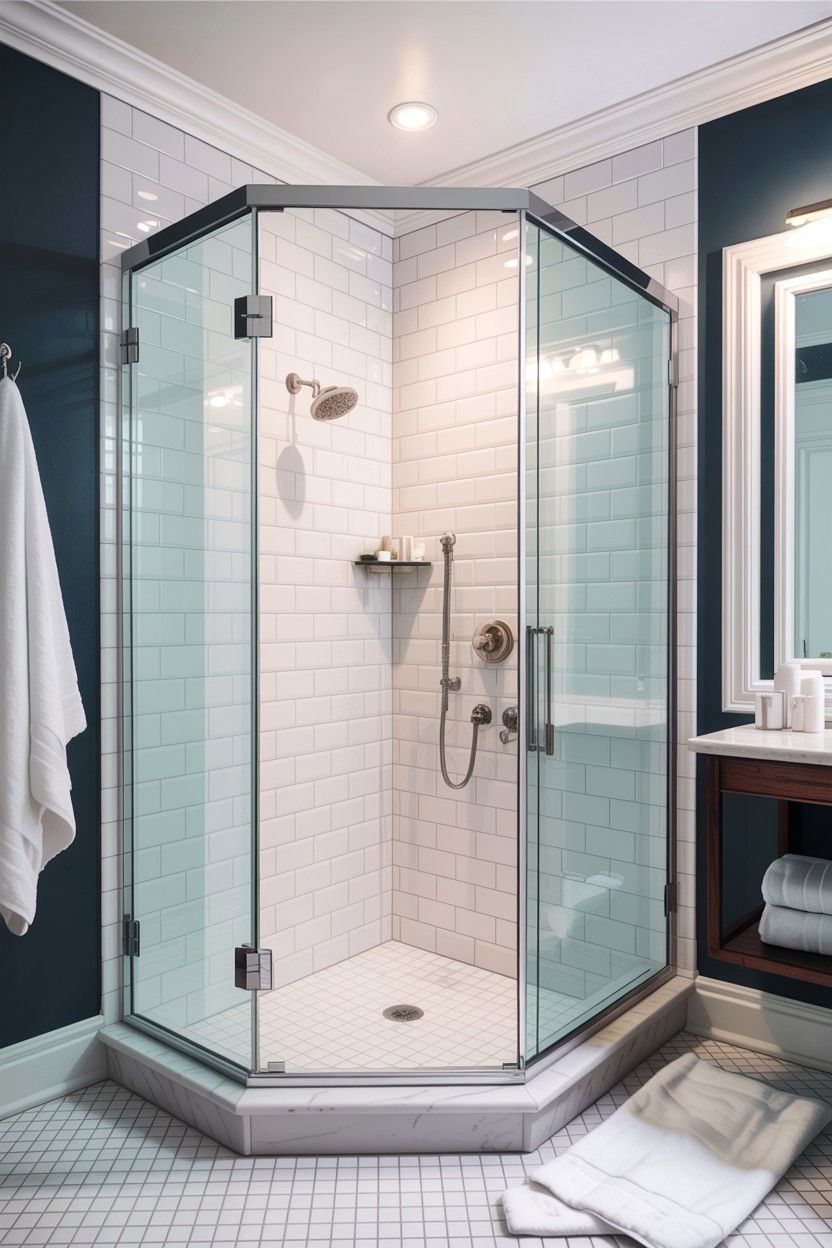
If you are installing a hinged shower door, you must ensure that it swings outward into the bathroom rather than inward. This is a vital safety rule because it allows for easy exit in case of an emergency, such as a slip or a medical issue inside the stall. Furthermore, you must verify that the door does not strike the vanity, the toilet, or the entry door when it is fully opened. Many homeowners opt for sliding glass doors or walk-in designs to avoid these clearance issues entirely. Carefully measuring the radius of the door swing during the planning phase prevents frustrating collisions and potential glass breakage.
5. Bathroom lighting layers
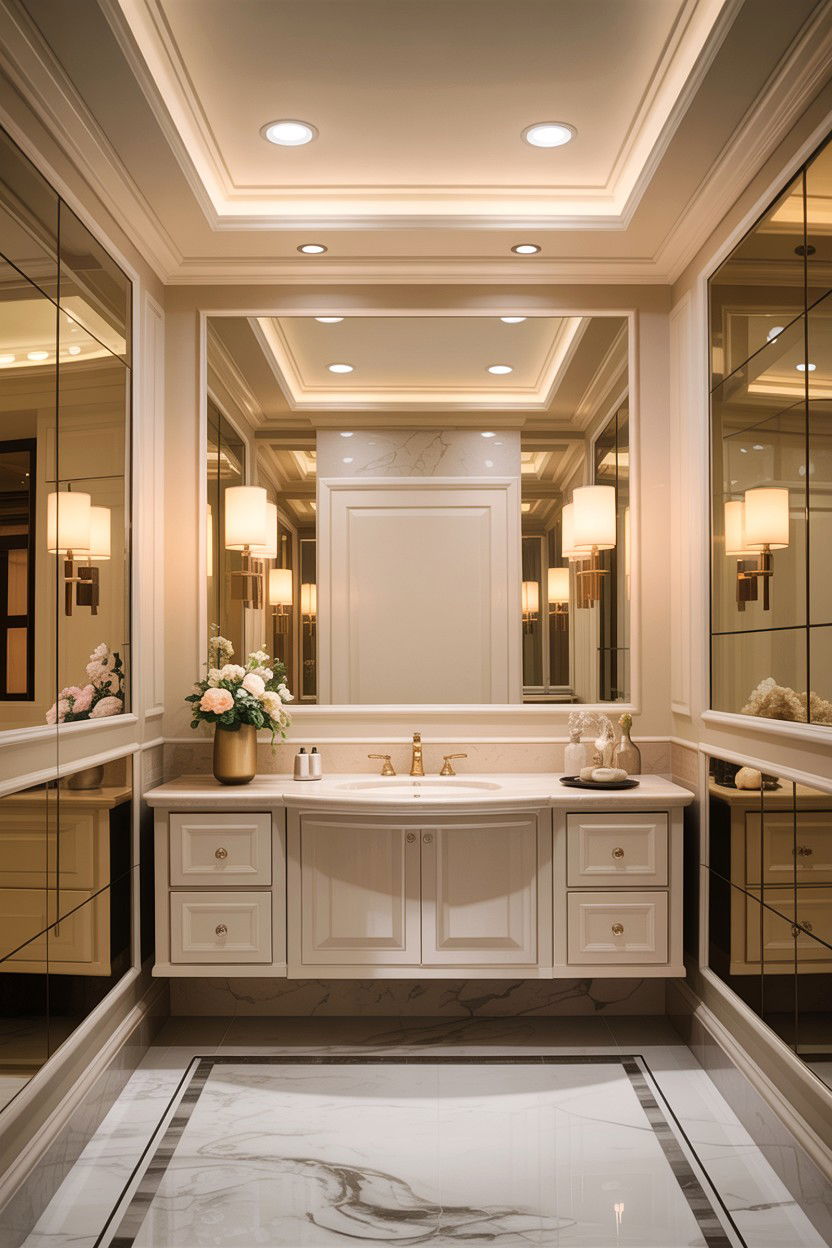
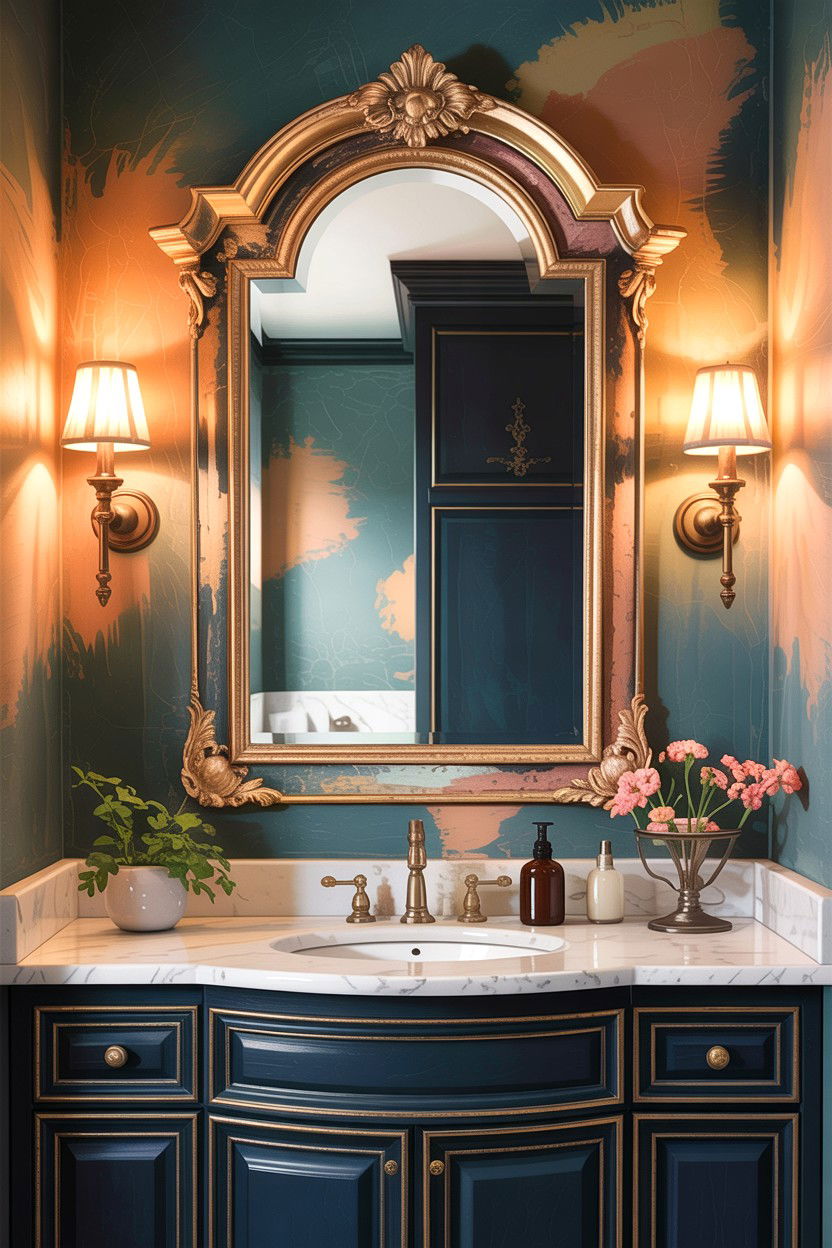
Creating an inviting atmosphere in your bathroom starts with a thoughtful lighting plan that incorporates multiple layers. You should never rely solely on a single overhead fixture, as this can create harsh shadows on your face when you are looking in the mirror. Instead, combine ambient lighting for general illumination with task lighting around the vanity and accent lighting to highlight architectural features. Wall-mounted sconces placed at eye level on either side of the mirror provide the most flattering light for grooming. Incorporating dimmer switches allows you to adjust the brightness levels, transforming the space from a bright morning prep area into a relaxing evening retreat.
6. Slip resistant flooring
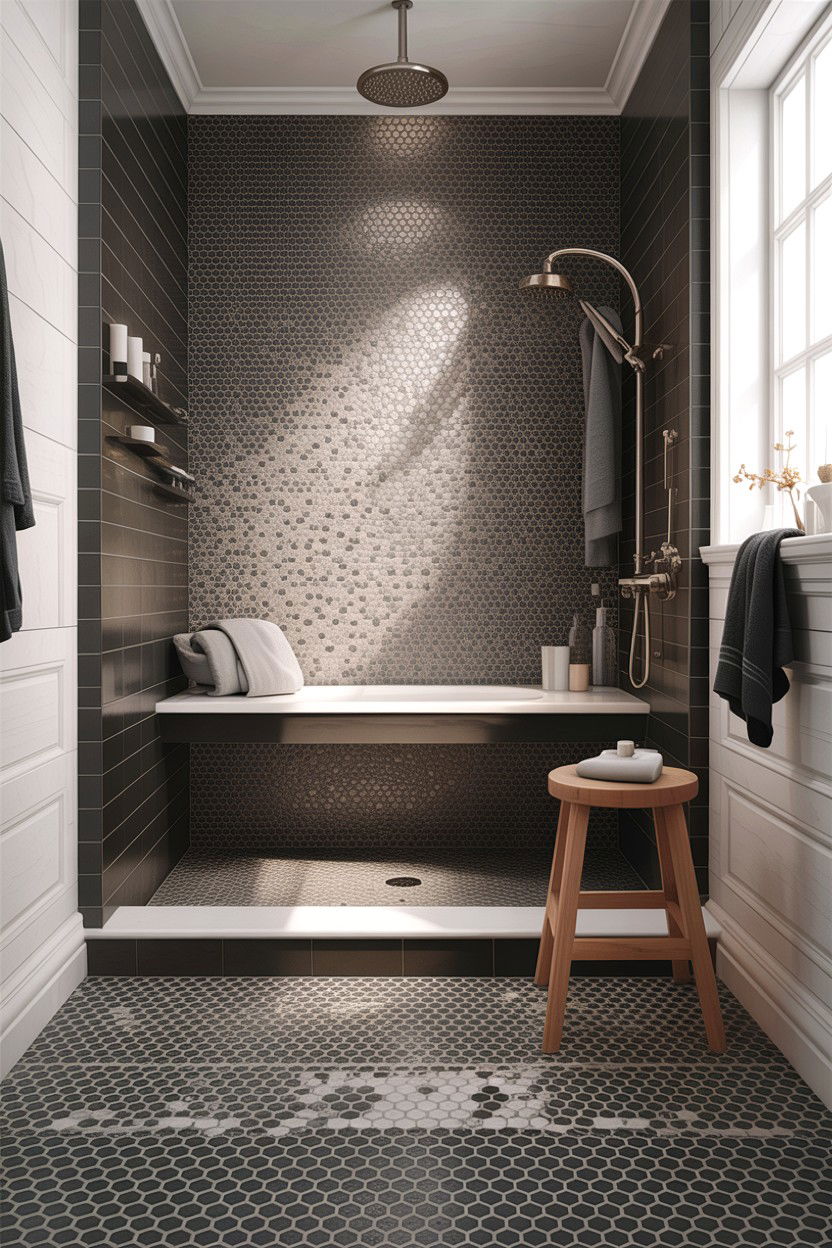
Safety should always be the top priority when selecting materials for a room that frequently becomes wet and slippery. The rule for bathroom flooring is to choose tiles or surfaces with a high "coefficient of friction," which indicates their slip resistance. Small-format tiles are an excellent choice because the frequent grout lines provide extra traction underfoot, especially in the shower area. If you prefer large-format tiles, look for options with a textured or matte finish rather than a high-gloss glaze. Testing the material with a bit of water before installation can give you a better idea of how it will perform in real-world conditions.
7. Ventilation fan capacity
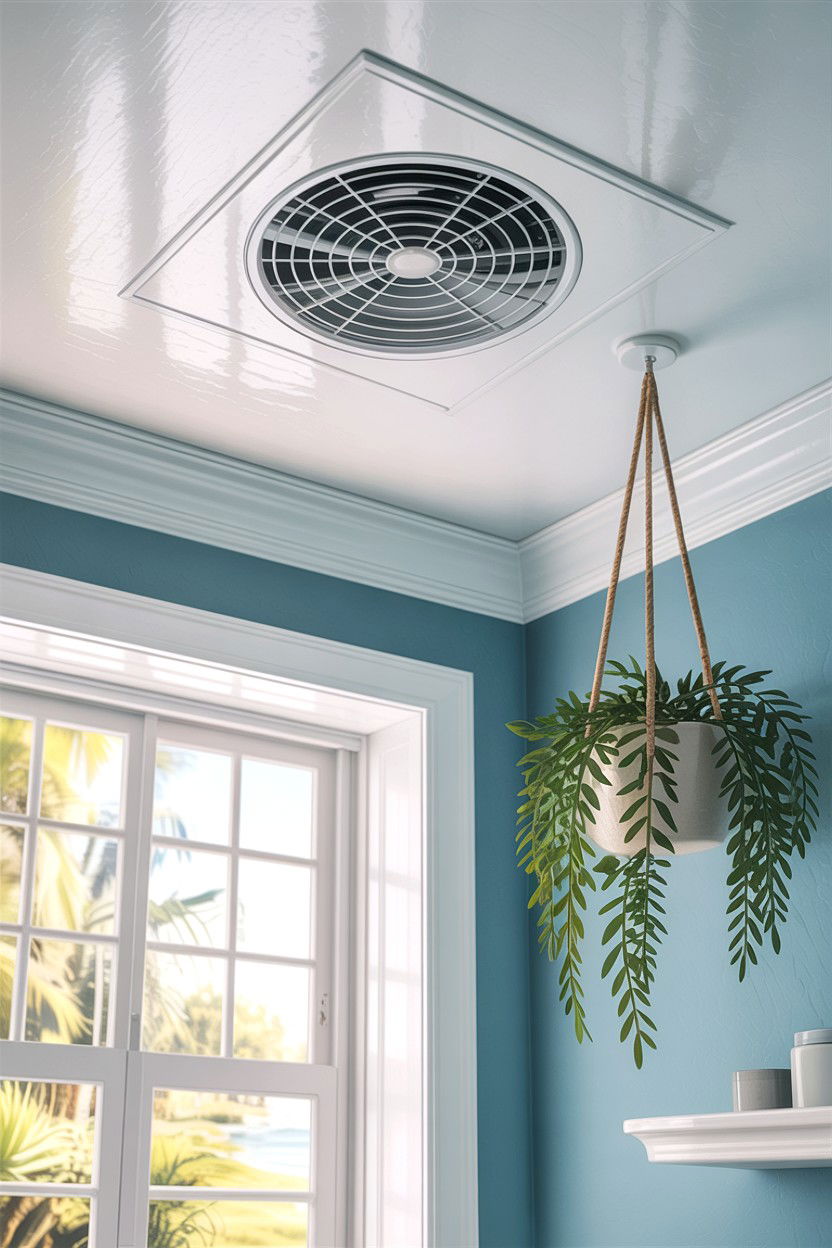
Effective ventilation is essential for preventing the growth of mold and mildew while protecting your cabinetry from moisture damage. The general rule is that your exhaust fan should be able to move one cubic foot of air per minute for every square foot of bathroom space. For larger bathrooms or those with high ceilings, you may need a more powerful unit or multiple fans to ensure adequate airflow. It is also important to choose a fan with a low "sone" rating to ensure it operates quietly. Proper venting to the outside of the home, rather than the attic, is a non-negotiable step for long-term durability.
8. Towel bar placement
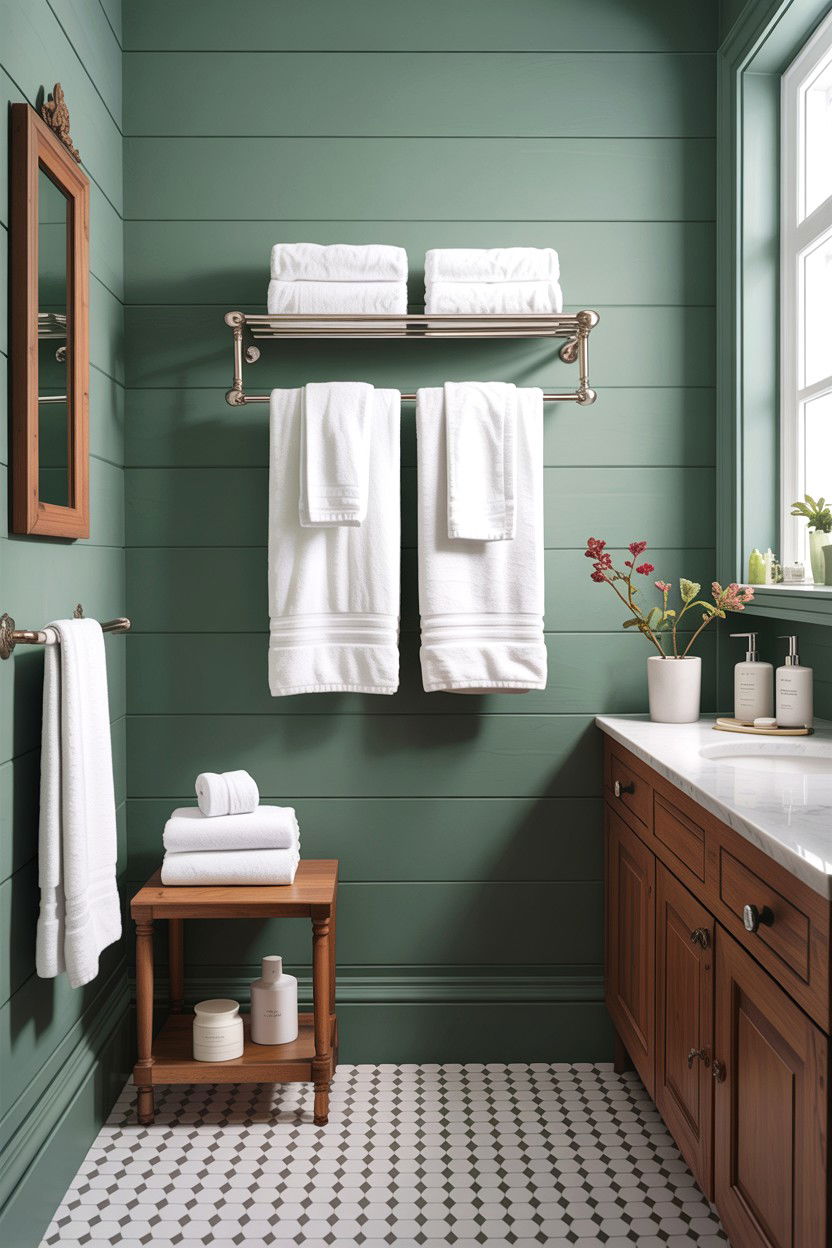
Where you place your towel bars can significantly impact the convenience and functionality of your daily routine. Ideally, a towel bar should be installed within easy reach of the shower or bathtub so you do not have to walk across the cold floor while dripping wet. The standard mounting height is forty-eight inches from the floor, but this can be adjusted based on the height of the users or the length of the towels. If space is limited, consider using robe hooks or a heated towel rack for added luxury. Ensuring the bars are securely anchored into wall studs will prevent them from pulling out over time.
9. Double vanity spacing
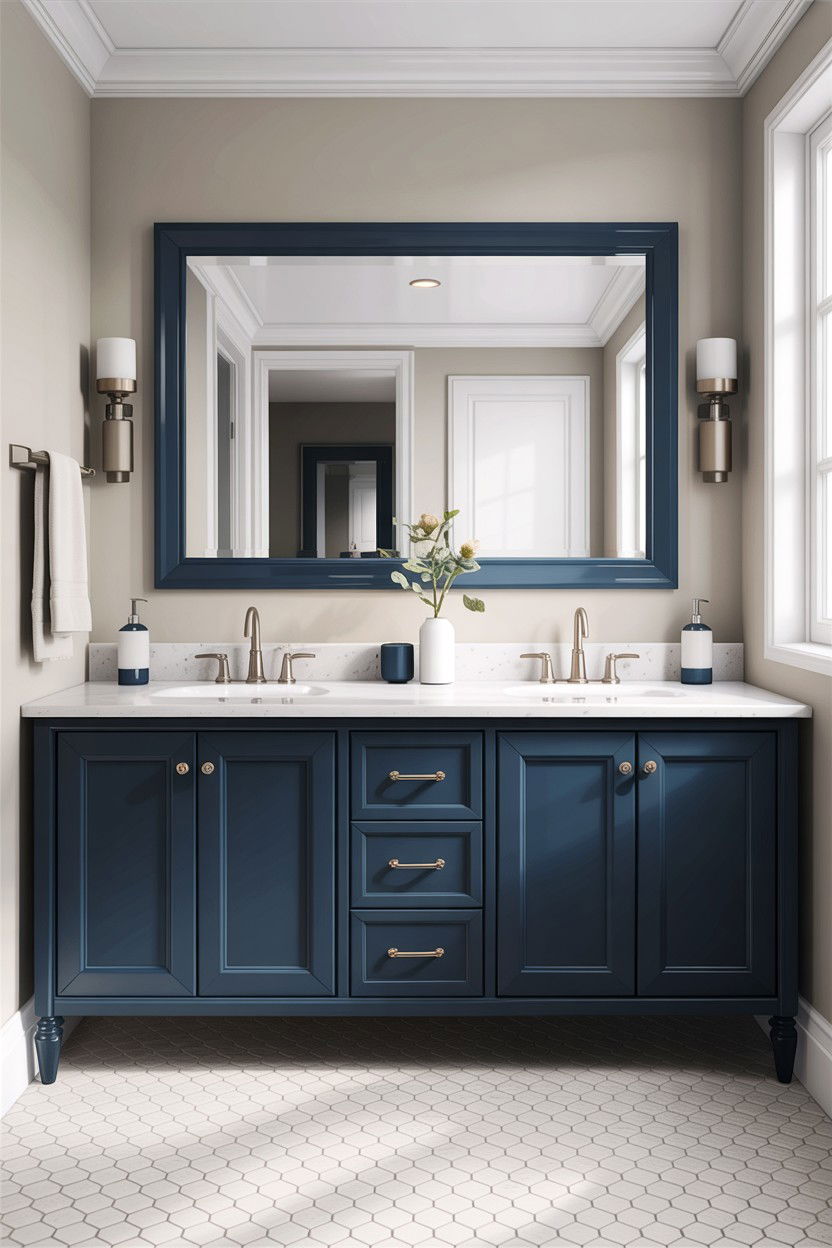
If you are planning to install a double vanity, the distance between the centerlines of the two sinks should be at least thirty-six inches. This spacing allows two people to use the vanity simultaneously without bumping elbows or feeling crowded. In smaller bathrooms, you might be tempted to squeeze two sinks into a sixty-inch vanity, but this often leaves very little usable counter space. Sometimes a single, larger sink with more surrounding counter area is a more practical choice for shared bathrooms. Balancing the number of fixtures with the available surface area is key to maintaining a functional and organized grooming station.
10. Walk in shower size
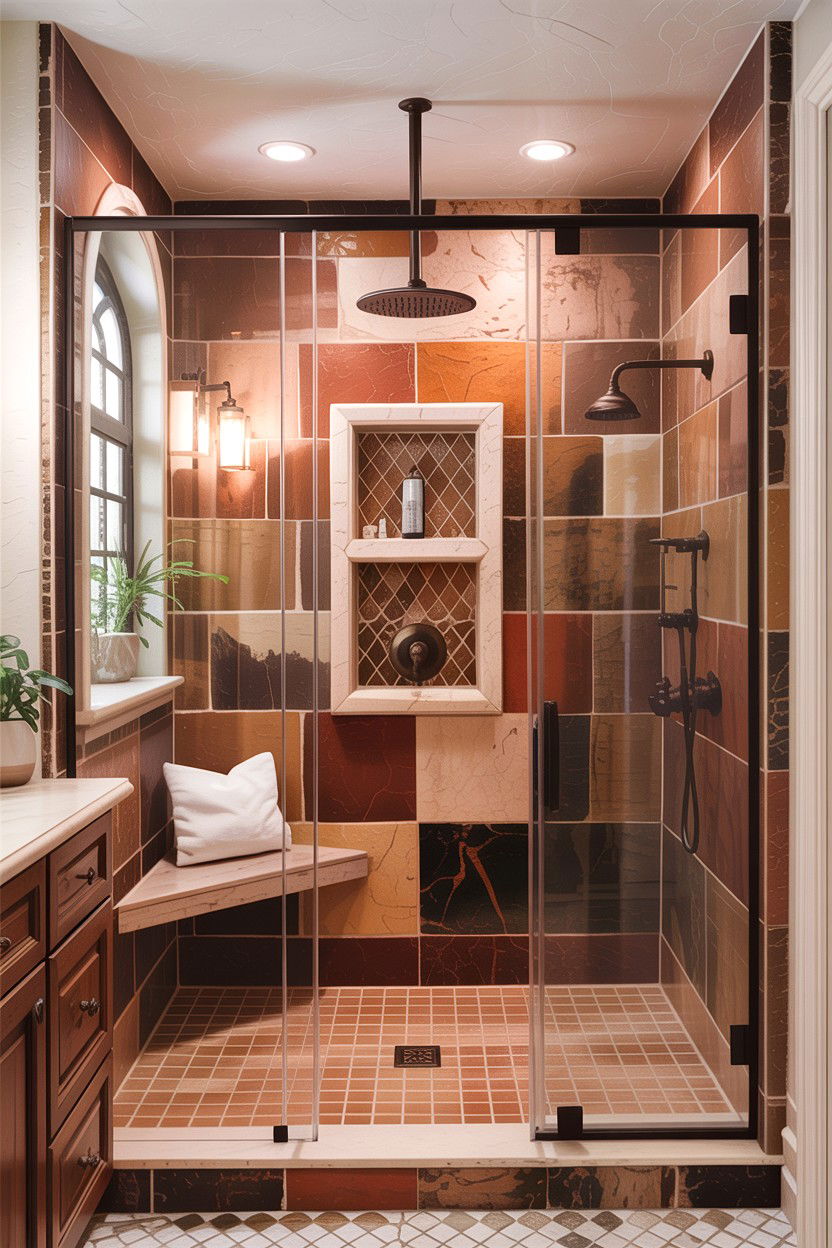
While a small shower can save space, the minimum recommended interior size for a comfortable walk-in shower is thirty-six by thirty-six inches. This dimension provides enough room for an adult to move freely without hitting the walls or the shower controls. If you are designing a curbless or barrier-free shower, you may need even more space to ensure water remains contained within the designated area. Many modern designs favor larger, rectangular showers that offer a more luxurious, spa-like experience. Regardless of the size you choose, ensure that the floor is properly sloped toward the drain to prevent pooling and potential water damage.
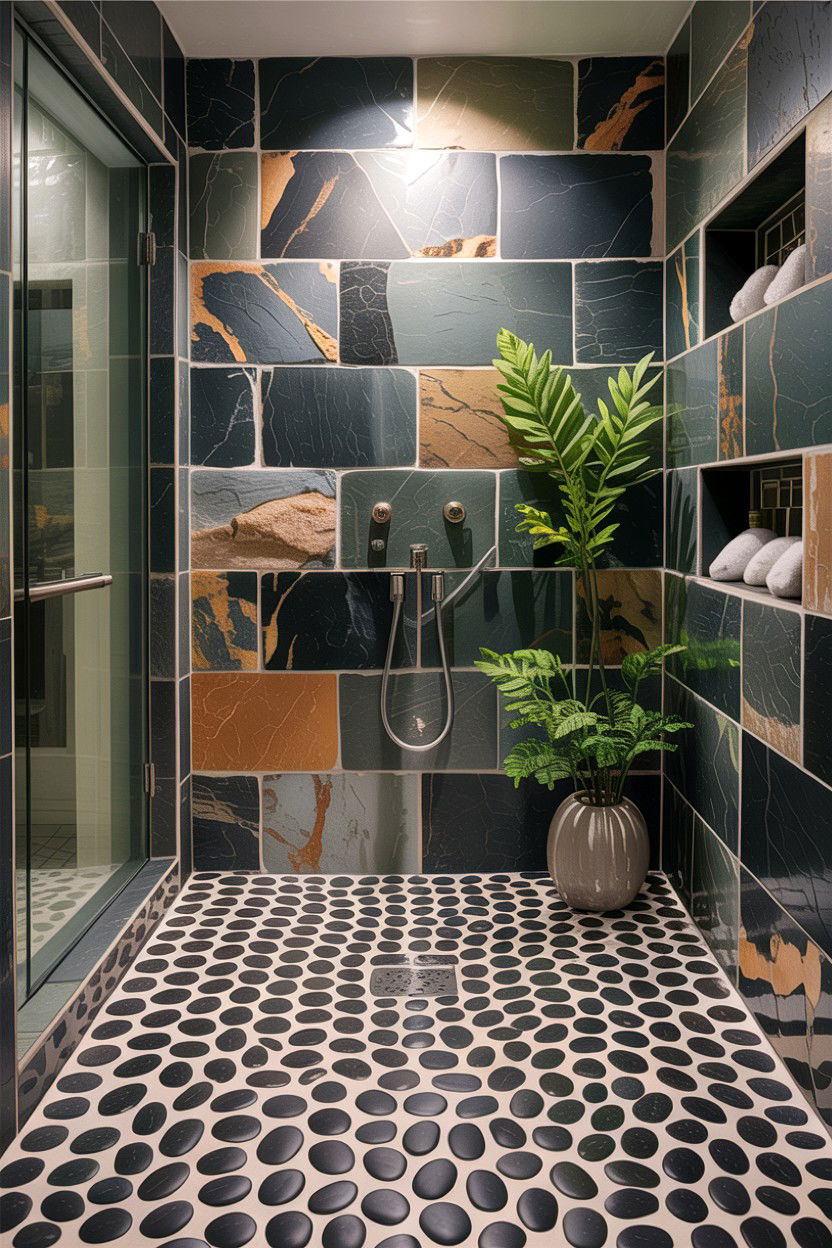
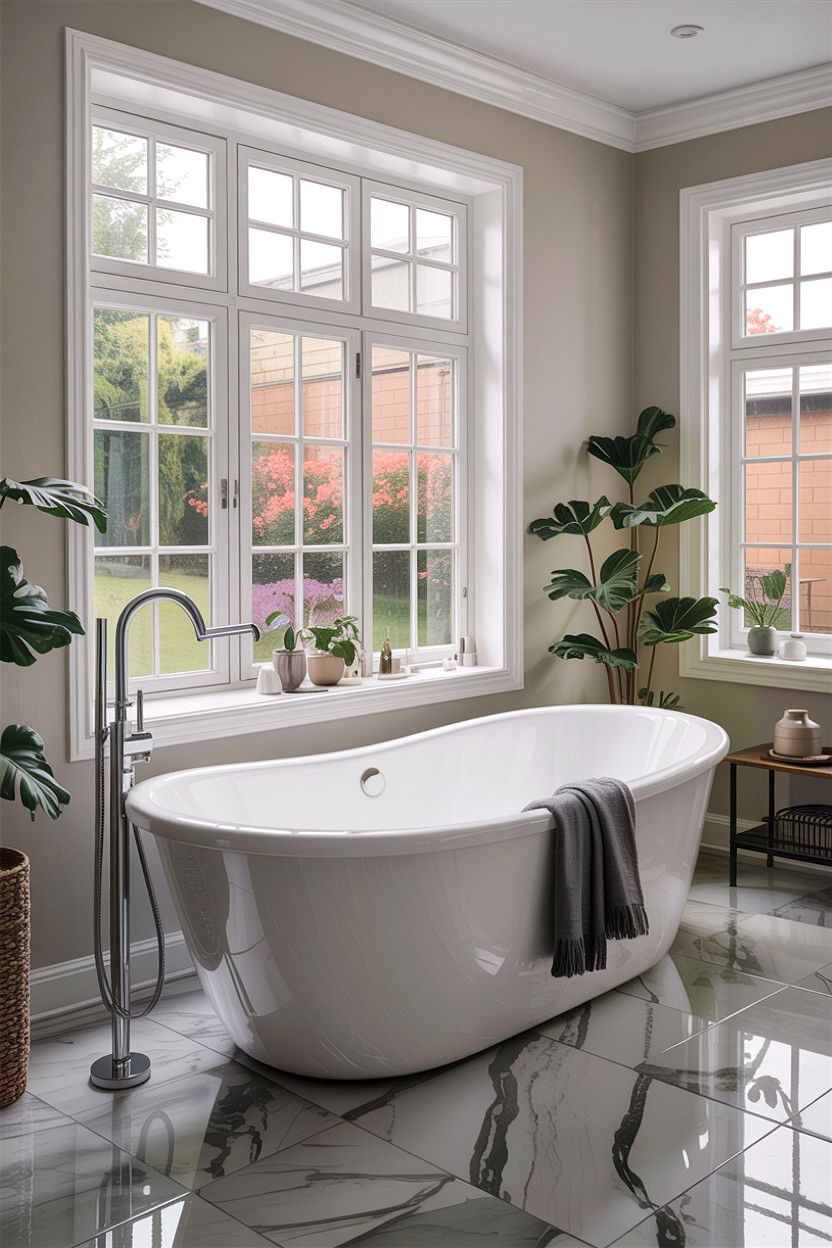
11. Bathtub deck height
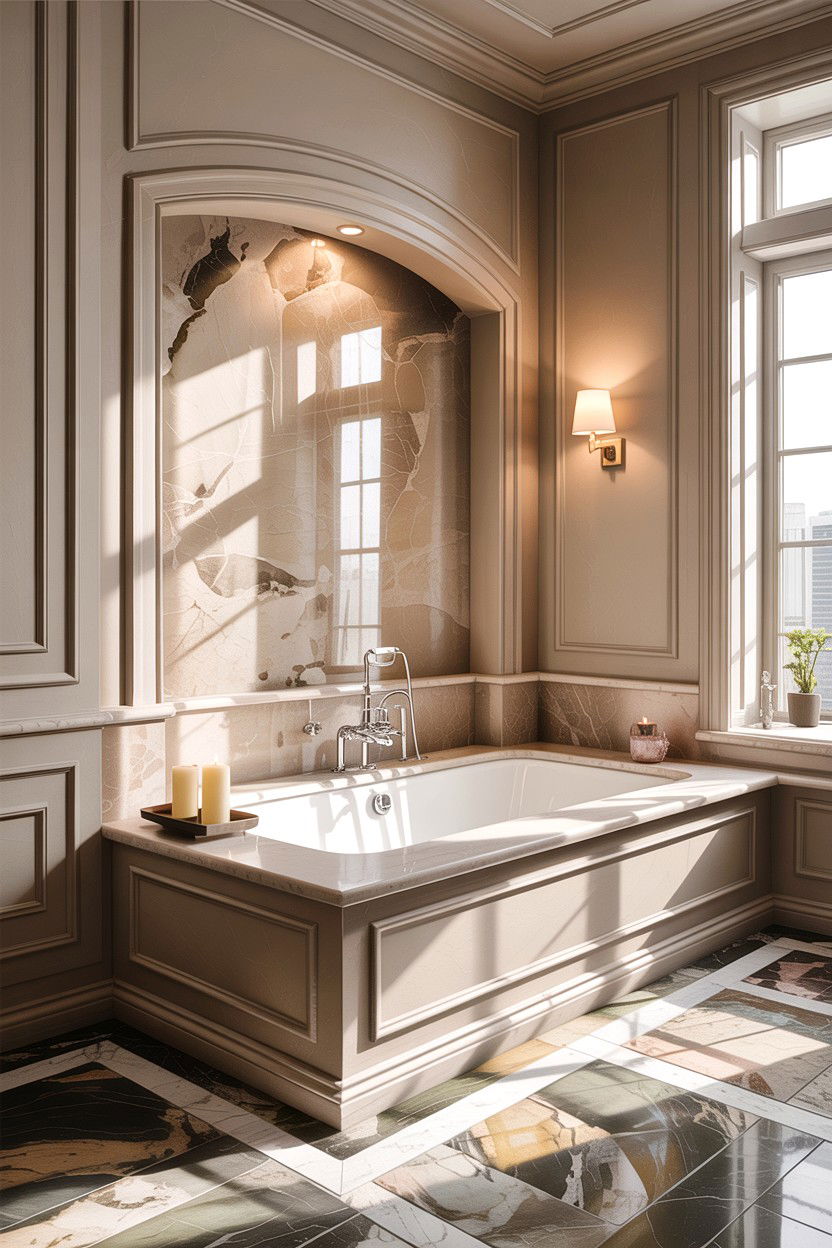
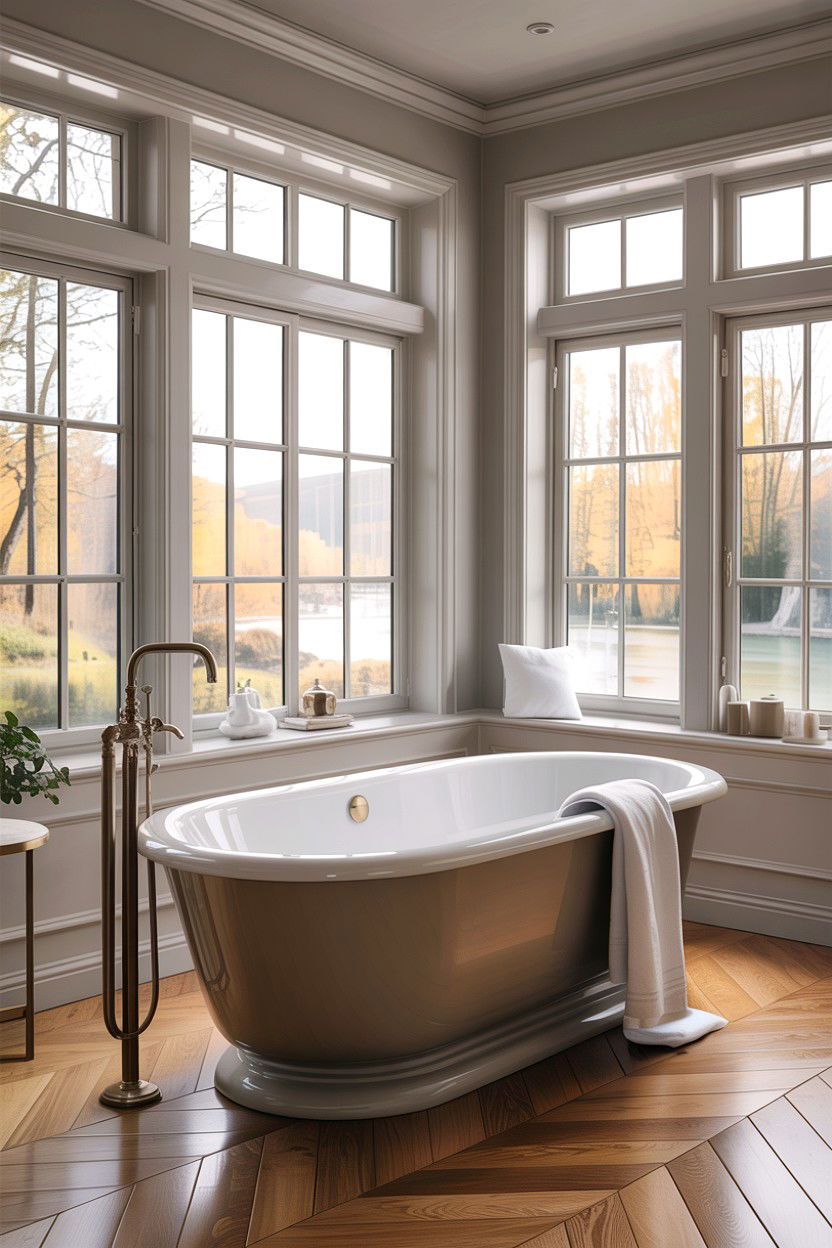
When installing a drop-in or undermount bathtub, the height of the surrounding deck is an important consideration for both aesthetics and accessibility. A standard bathtub deck usually sits around eighteen to twenty inches above the finished floor, making it easy for most people to step over the side. If the deck is too high, it can become a tripping hazard or make it difficult to enter and exit the tub safely. You should also ensure the deck is wide enough to provide a stable surface for sitting while you transition into the water. Coordinating the deck material with the rest of the bathroom creates a cohesive and polished look.
12. Recessed shower niche
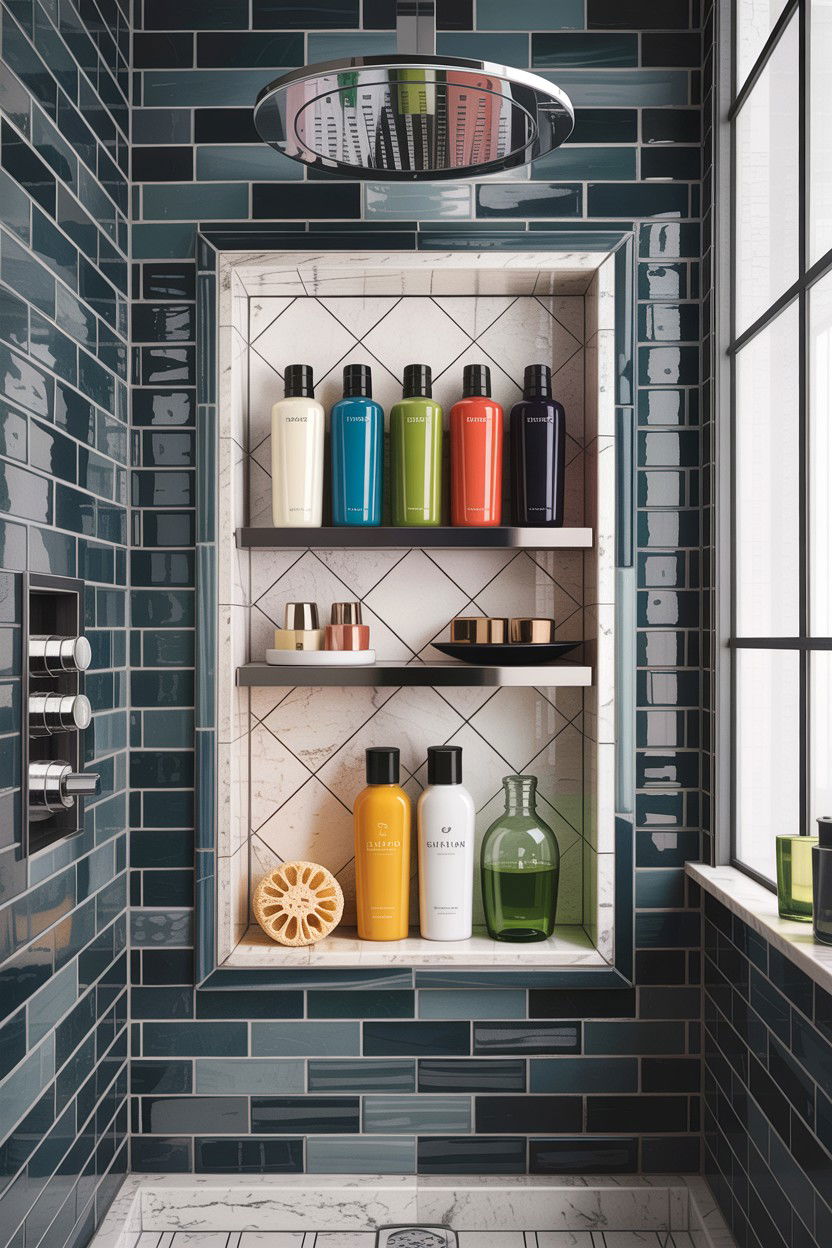
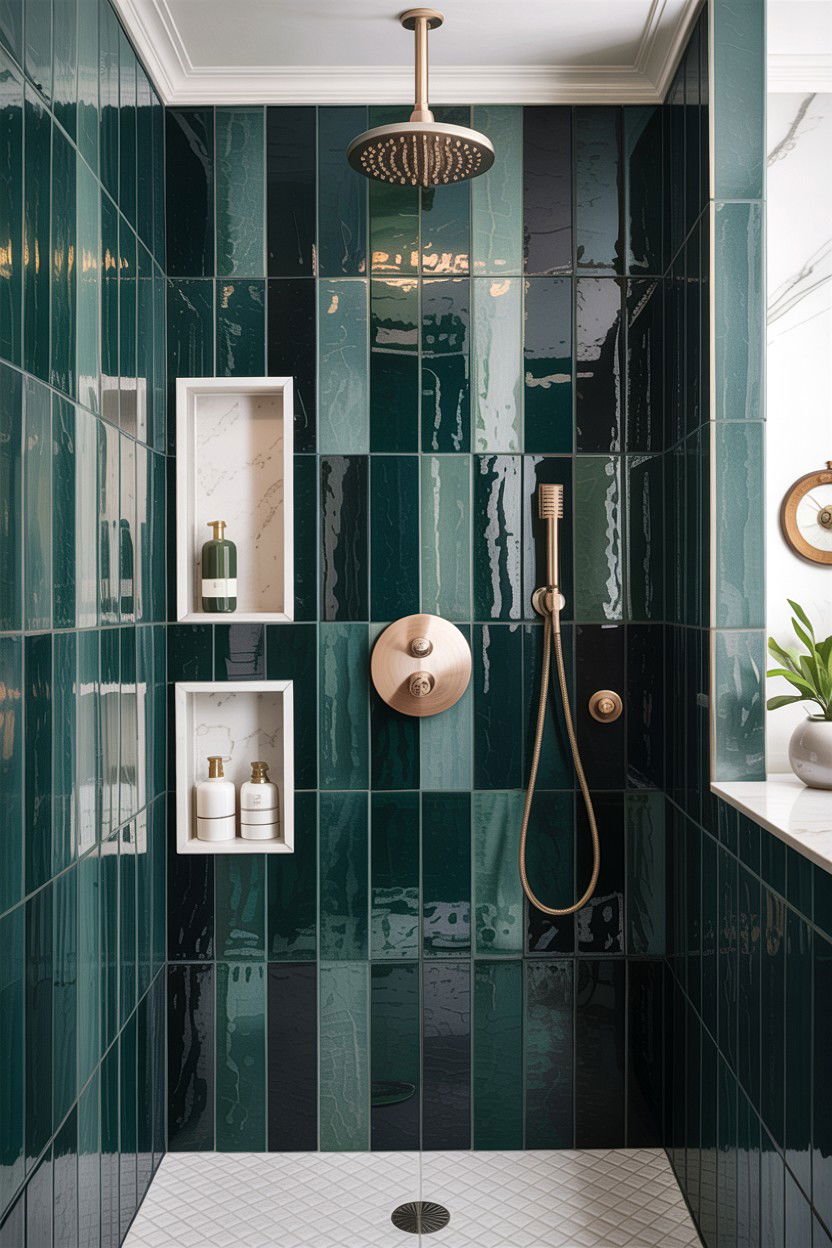
A recessed shower niche is a smart way to store shampoos and soaps without cluttering the floor or using flimsy hanging racks. The rule for placement is to install the niche between the wall studs at chest or eye level, typically around forty-eight to sixty inches from the shower floor. You should also ensure the bottom shelf of the niche is slightly sloped toward the shower to allow water to drain away. Using a contrasting tile inside the niche can turn a functional storage element into a beautiful design feature. Always plan the niche location before the waterproofing and tiling process begins to ensure a seamless integration.
13. Bathroom mirror size
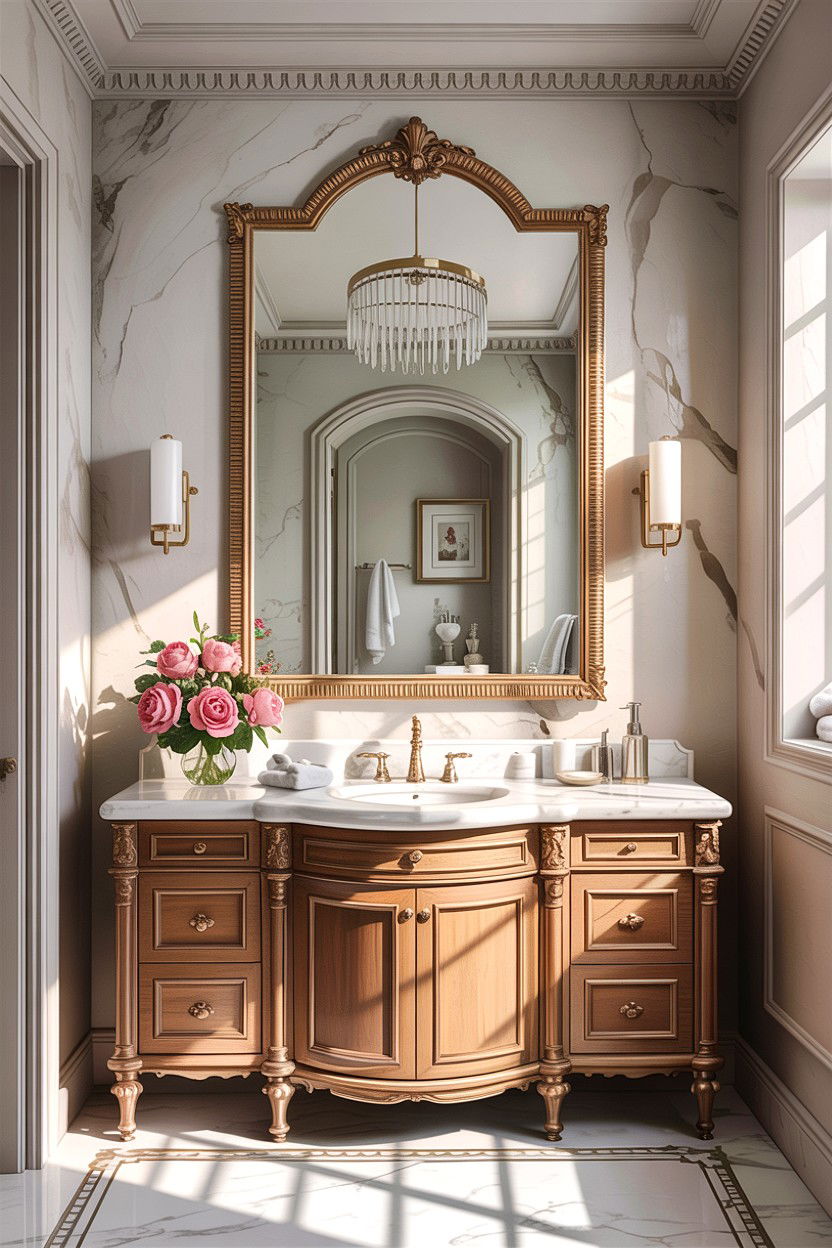
Choosing the right mirror size is essential for balancing the proportions of your vanity and the overall room. A general rule is that the mirror should be several inches narrower than the vanity cabinet to prevent it from looking top-heavy. For a double vanity, you can choose one large mirror that spans both sinks or two individual mirrors for a more personalized feel. The height of the mirror should be positioned so that the center is at eye level for the primary users, usually around sixty inches from the floor. Mirrors not only serve a functional purpose but also help to bounce light and make small spaces feel larger.
14. Grout line width
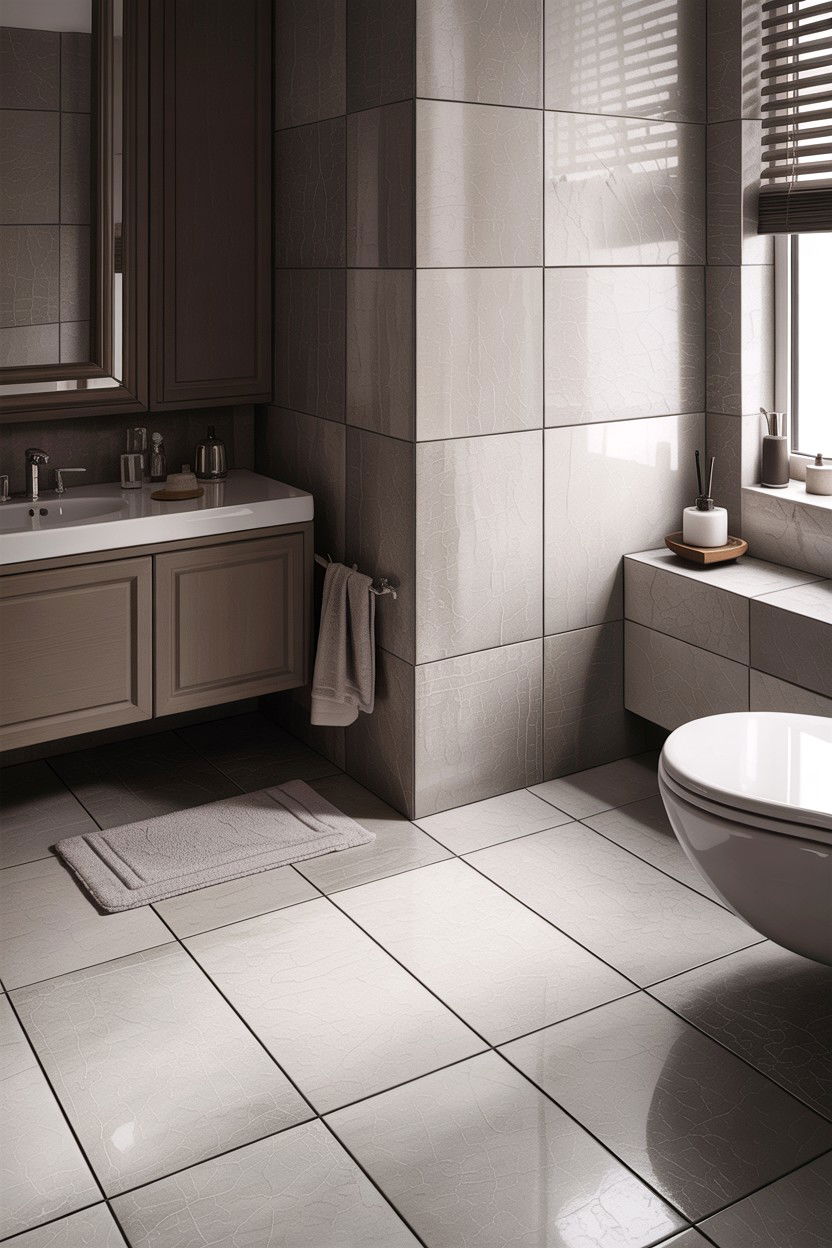
The width of your grout lines can dramatically change the appearance and maintenance requirements of your tile work. For a modern, seamless look, many designers prefer thin grout lines of about one-sixteenth of an inch, especially when using rectified tiles. However, wider grout lines can provide a more traditional or rustic feel and are often necessary for irregular tiles like slate or handmade ceramic. Keep in mind that wider grout lines mean more surface area to clean, so choosing a high-quality, stain-resistant grout is a wise investment. Matching the grout color to the tile can create a unified surface that minimizes the visual impact of the joints.
15. Water efficient fixtures
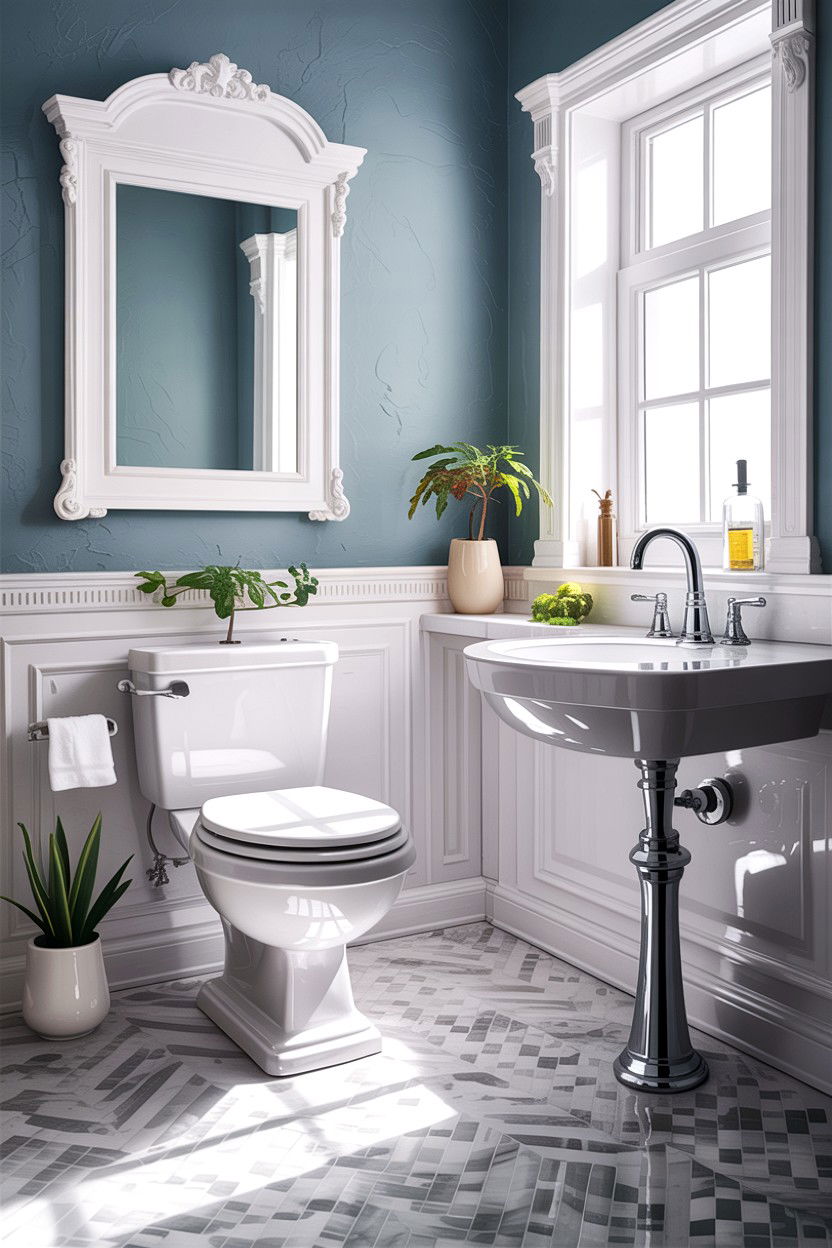
Incorporating water-efficient fixtures is a responsible design choice that helps conserve resources and lower your utility bills. Look for the WaterSense label on faucets, showerheads, and toilets, which indicates they meet specific efficiency and performance criteria. Low-flow showerheads can significantly reduce water usage without sacrificing water pressure, thanks to advanced aeration technology. Dual-flush toilets are another excellent option, allowing you to choose between a full or partial flush based on your needs. These sustainable choices are becoming the standard in modern bathroom design, reflecting a growing commitment to environmental stewardship while maintaining a high level of comfort and functionality for the entire household.
16. Bathroom storage cabinet
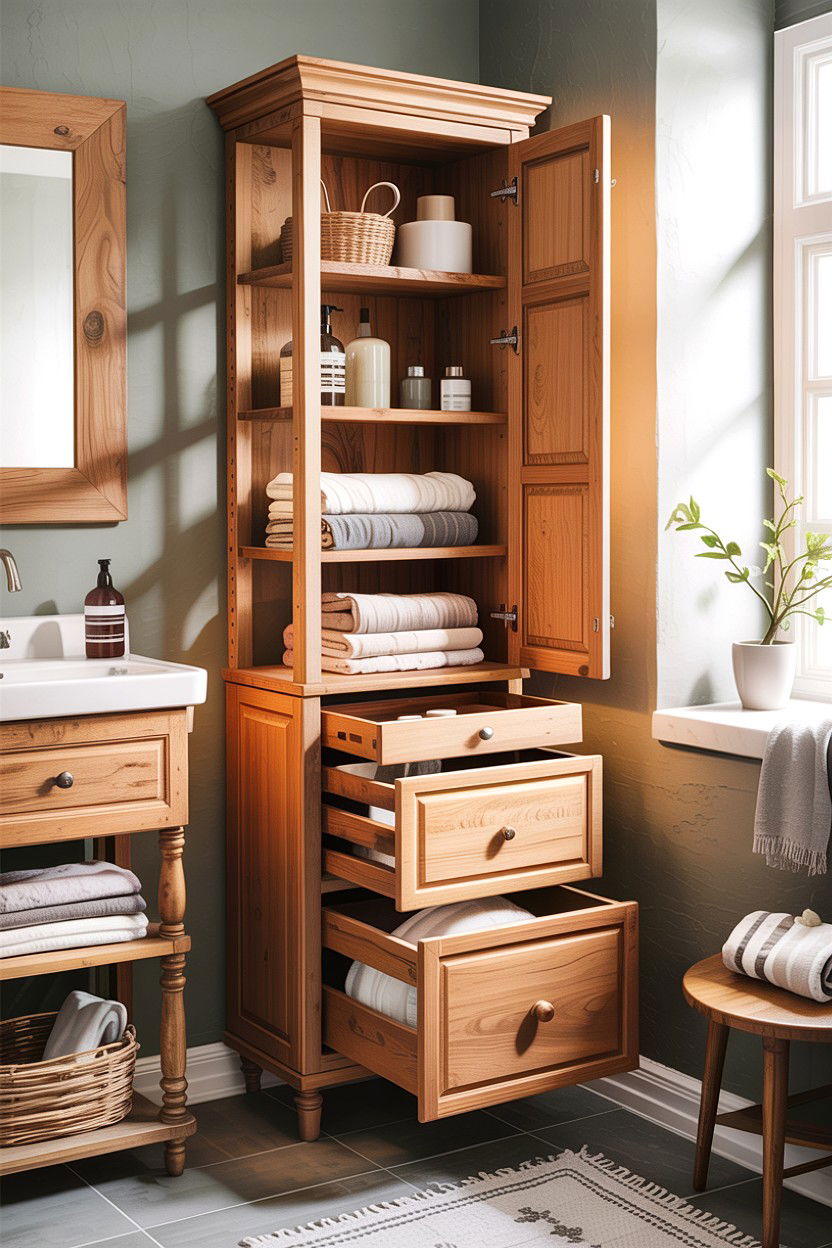
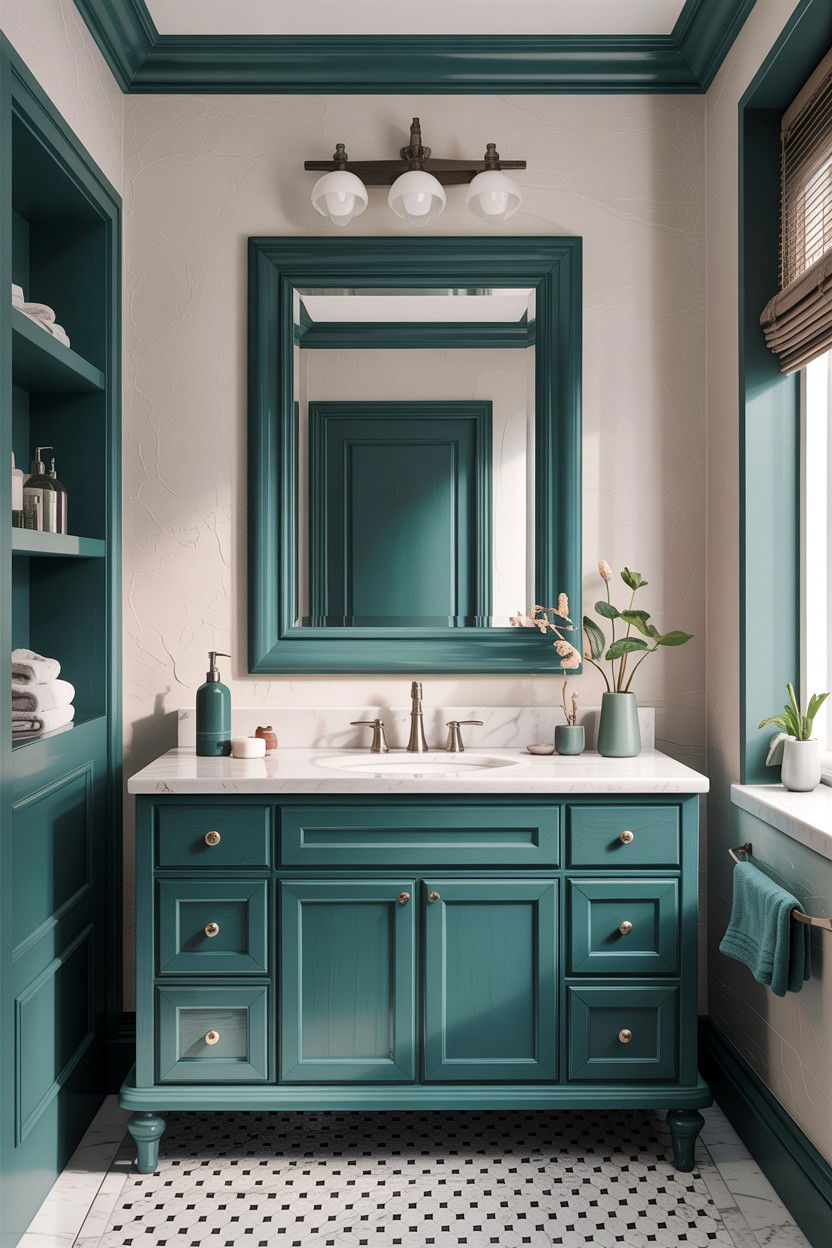
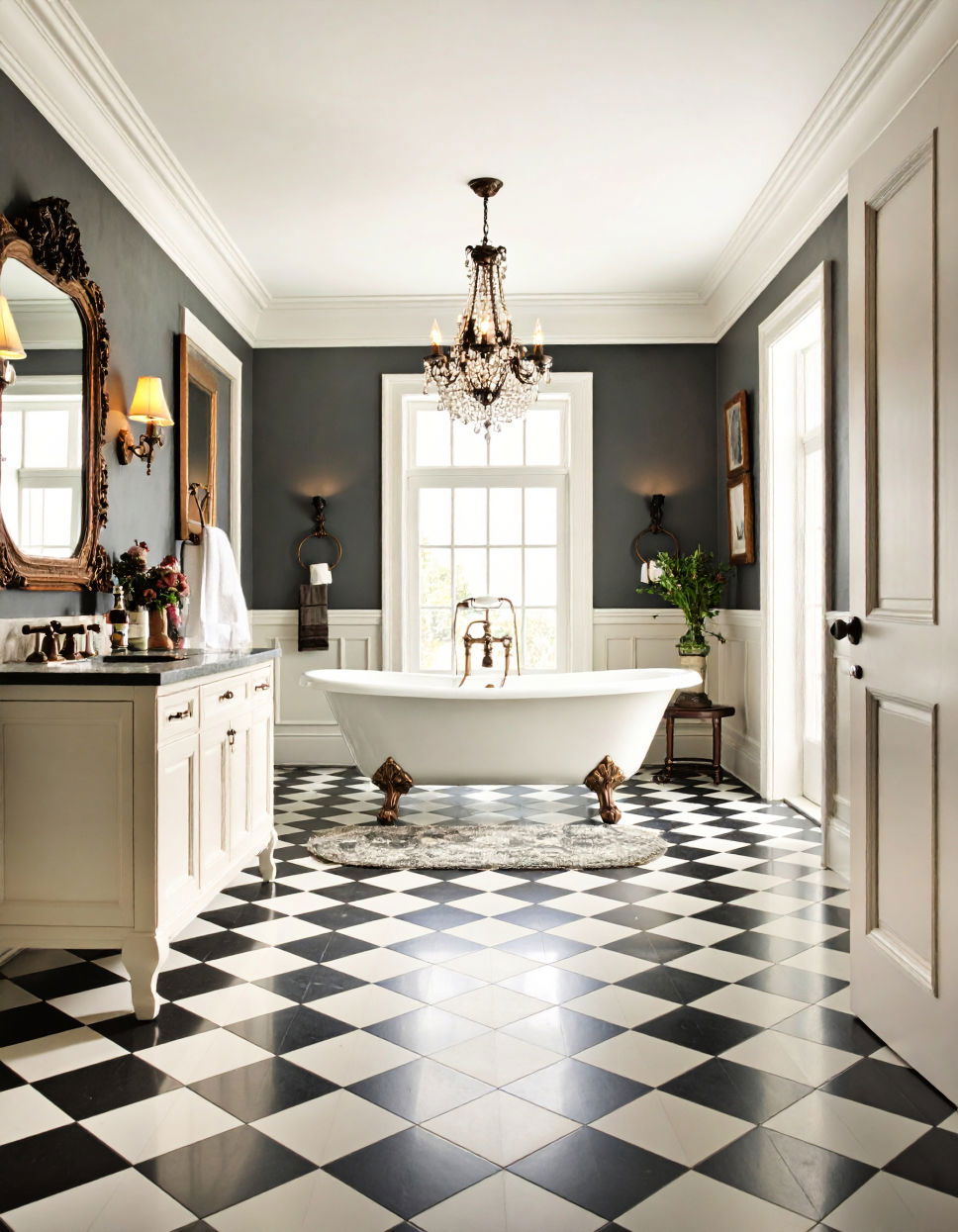
Adequate storage is the secret to maintaining a clean and organized bathroom, especially in busy households. The rule for storage is to utilize vertical space whenever possible, such as by installing tall linen cabinets or over-the-toilet shelving. Built-in cabinetry provides a streamlined look and can be customized to fit your specific needs, such as including pull-out drawers for hair tools or deep bins for towels. It is important to place frequently used items at eye level while storing occasional items on higher or lower shelves. A well-designed storage system prevents clutter from accumulating on the countertops, keeping the space feeling tranquil and ready for use.
17. Electrical outlet placement
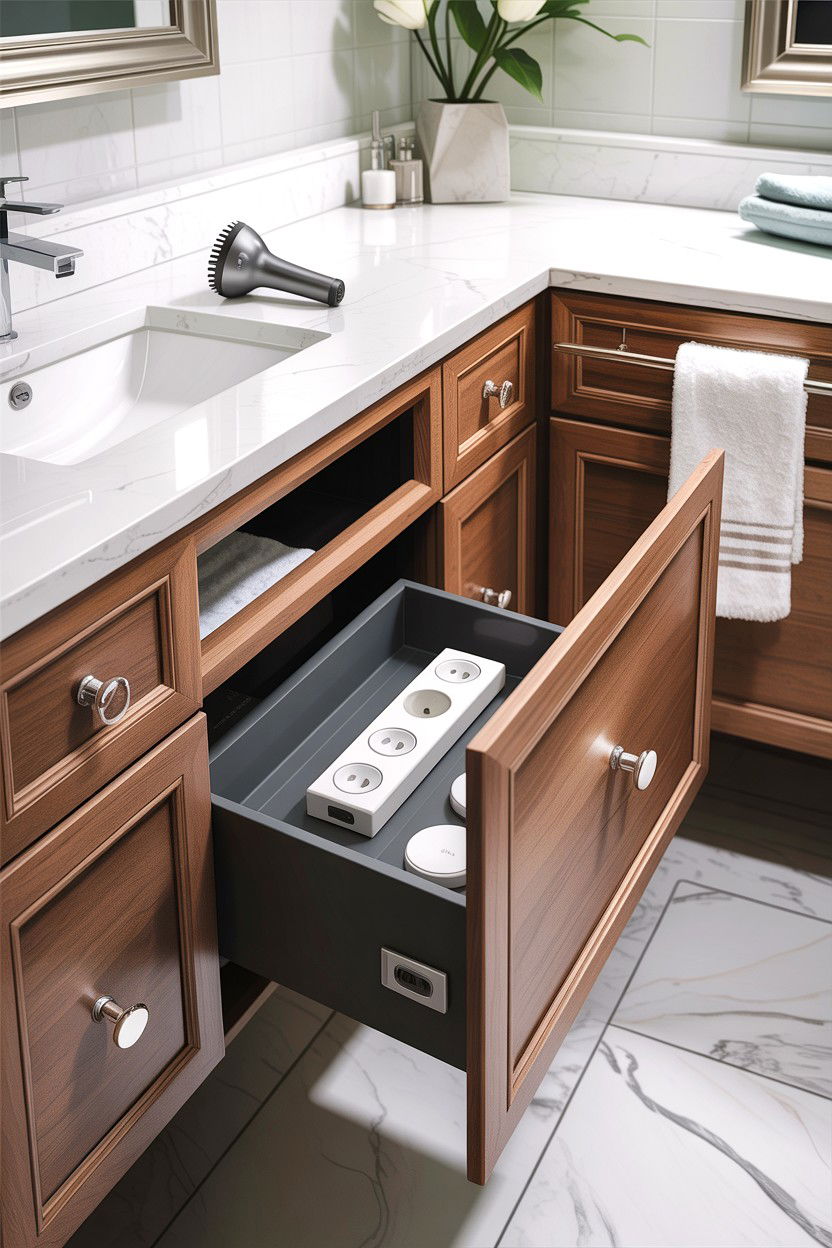
Safety is paramount when planning the placement of electrical outlets in a room where water is present. All bathroom outlets must be GFCI-protected to prevent electrical shocks and should be located at least three feet away from the edge of the bathtub or shower. Standard practice is to place outlets on the wall adjacent to the vanity, roughly four inches above the backsplash. For a cleaner look, many homeowners are now installing integrated outlets inside vanity drawers or medicine cabinets. This allows you to keep electric toothbrushes and hair dryers plugged in and ready to use while keeping the cords hidden from view and the counters clear.
18. Small bathroom color
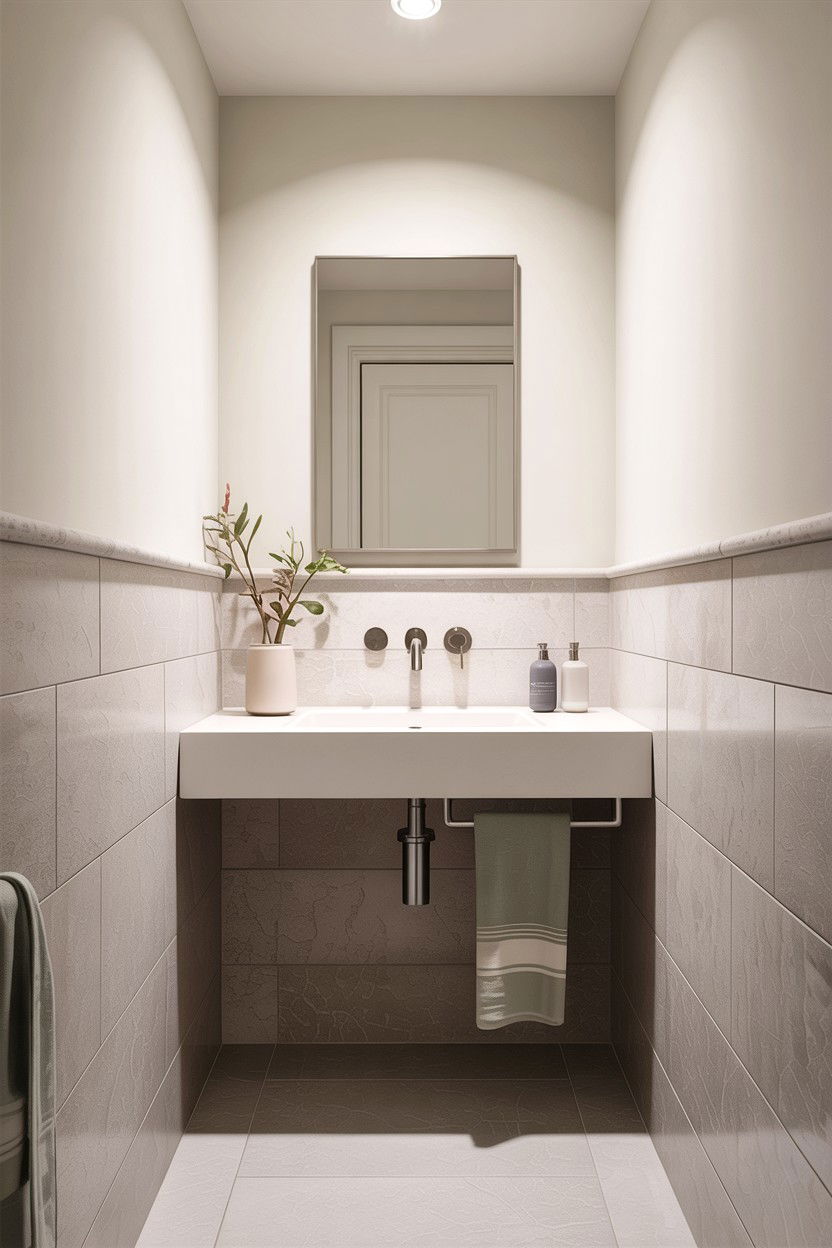
When designing a small bathroom, the color palette you choose can have a significant impact on how spacious the room feels. The general rule is to stick with light, neutral colors like soft whites, pale grays, or light blues to reflect light and open up the space. Using a monochromatic color scheme, where the wall color closely matches the tile and cabinetry, creates a seamless look that tricks the eye into seeing a larger area. If you want to add a pop of color, consider doing so through accessories like towels, artwork, or a small vanity. Avoiding dark, heavy colors on the walls prevents the room from feeling closed-in.
19. Shower bench depth
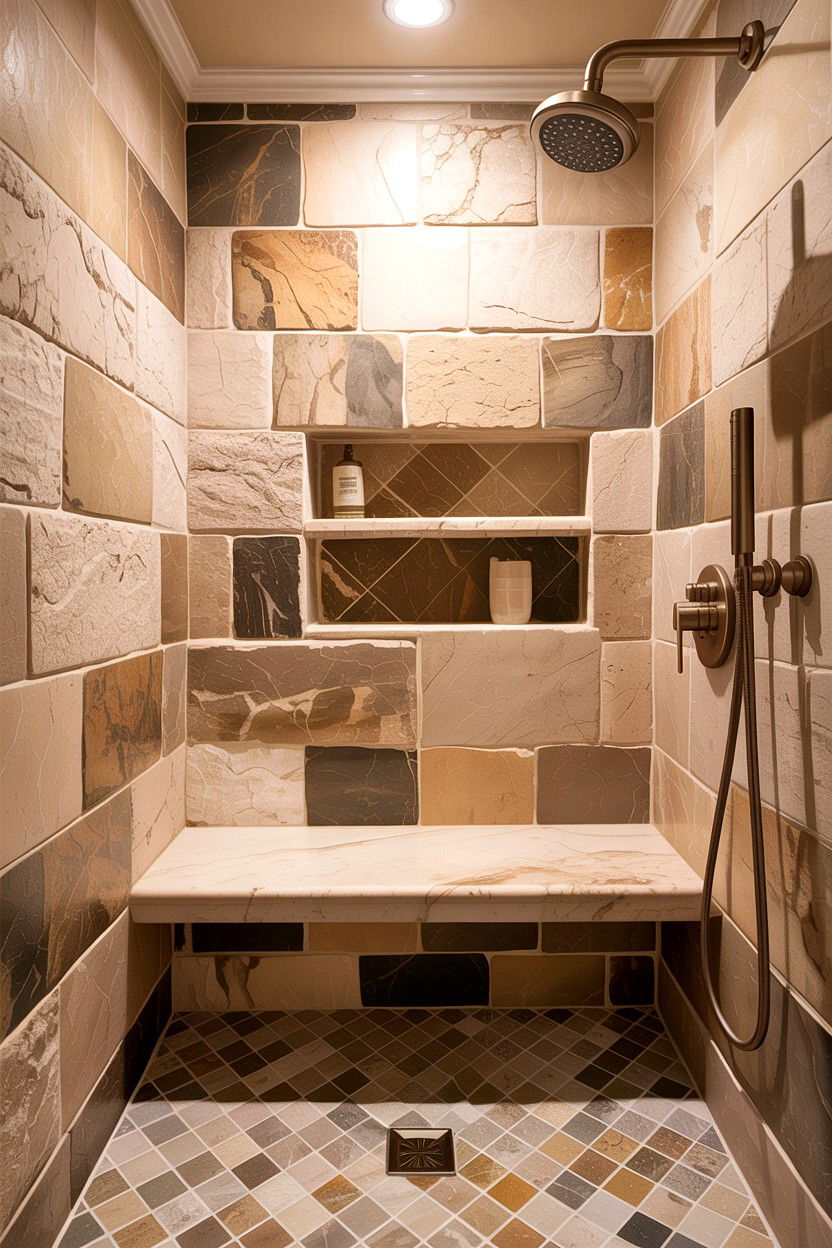
Including a bench in your shower adds a touch of luxury and provides a convenient place to sit or prop up your feet. For maximum comfort, a shower bench should be at least twelve inches deep, though fourteen to sixteen inches is ideal if space allows. The height of the bench should be between seventeen and nineteen inches from the floor, similar to a standard chair. You must ensure that the bench is properly waterproofed and sloped slightly toward the drain to prevent water from pooling on the surface. Whether it is a built-in stone bench or a folding teak seat, it should be sturdy and securely attached.
20. Pedestal sink storage
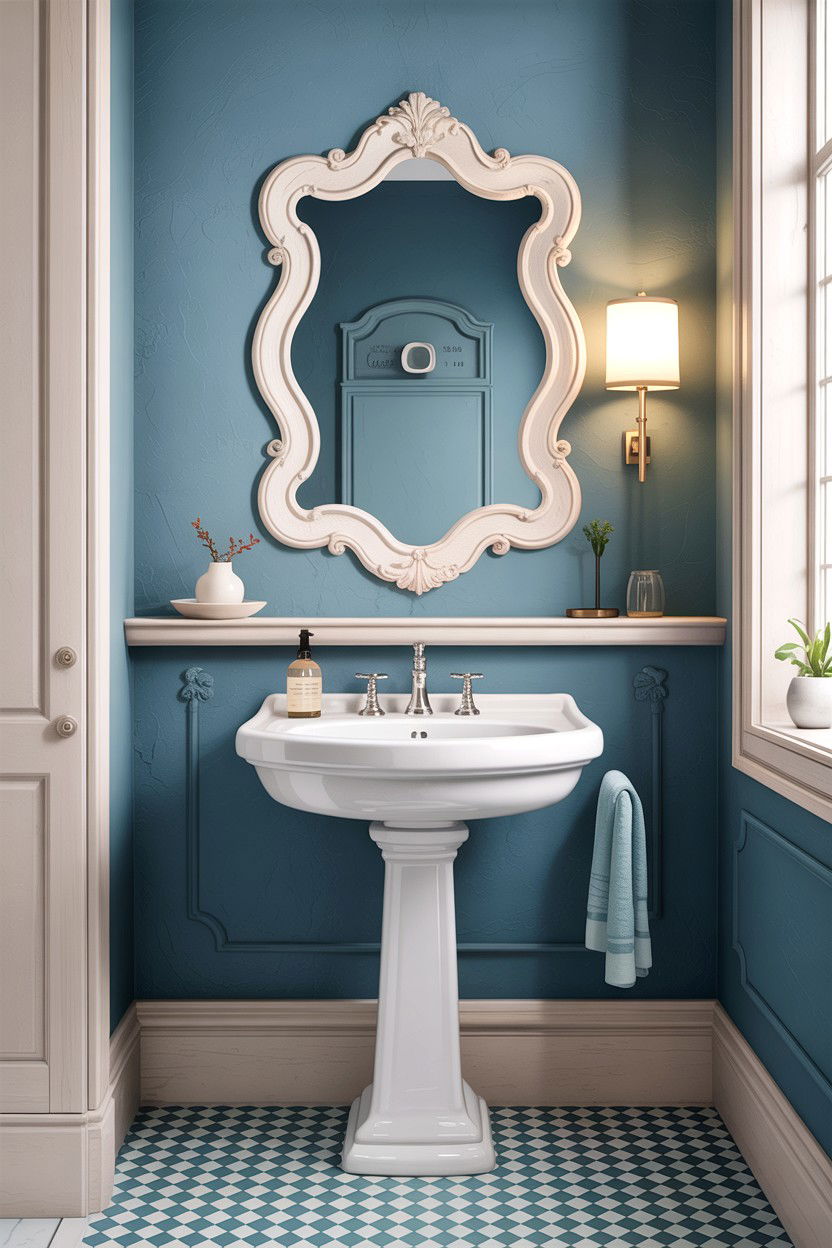
While pedestal sinks offer a classic and airy look that is perfect for small powder rooms, they provide virtually no storage or counter space. If you choose a pedestal sink, the rule is to supplement the room with alternative storage solutions like wall-mounted shelves, a recessed medicine cabinet, or a stylish floor basket. This ensures that guests have a place to set their belongings and that essential items like extra toilet paper are within reach. Pedestal sinks are best suited for rooms where heavy daily grooming does not take place. Their elegant silhouette can be a beautiful focal point when paired with the right decorative accessories.
21. Bathroom tile pattern
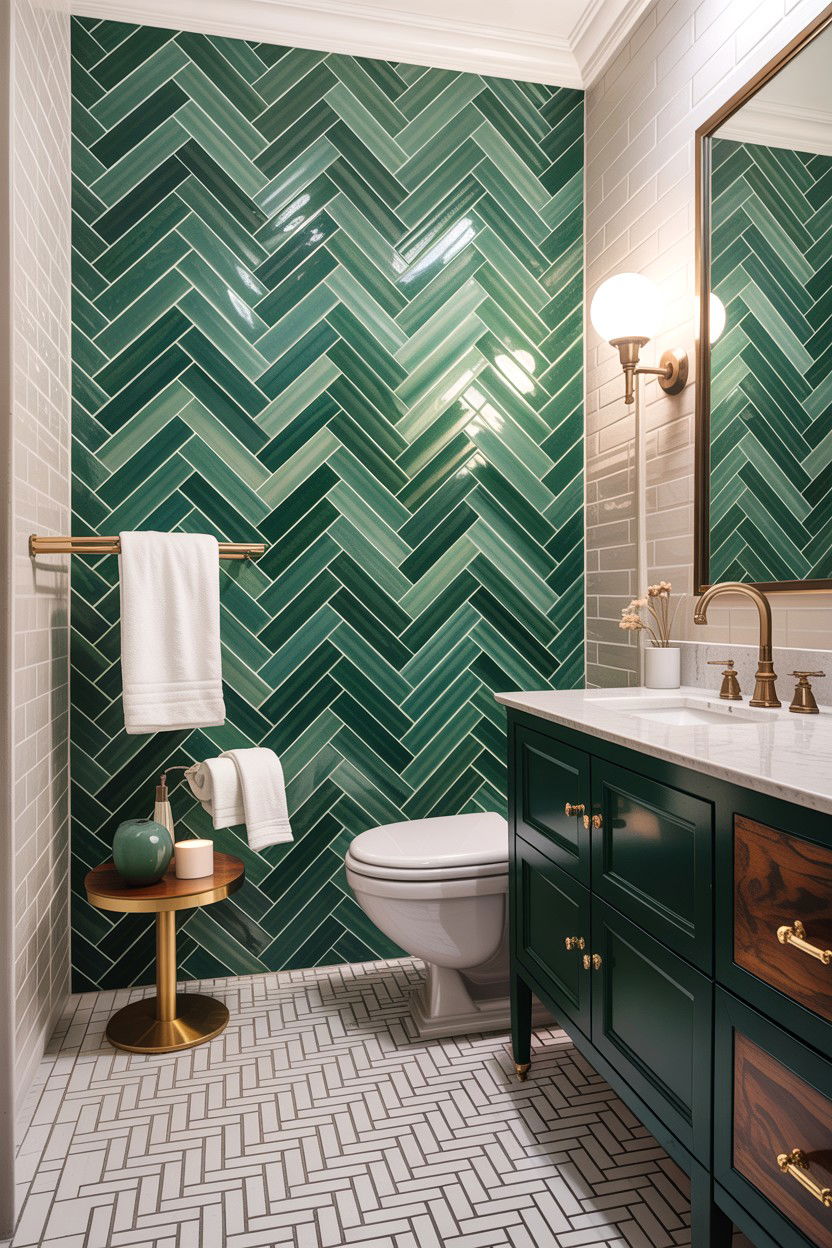
The way you lay your tile can completely change the visual dynamic of your bathroom. Popular patterns like herringbone, subway, or large-format stacked tiles each offer a different aesthetic, from traditional to contemporary. A useful rule is to use larger tiles in smaller bathrooms to reduce the number of grout lines, which can make the floor look busy and cluttered. If you are using a bold or intricate pattern, consider keeping the rest of the room's elements simple to avoid visual overwhelm. Aligning the tile pattern with the main architectural lines of the room, such as the vanity or the doorway, ensures a balanced and professional-looking installation.
22. Frameless glass shower
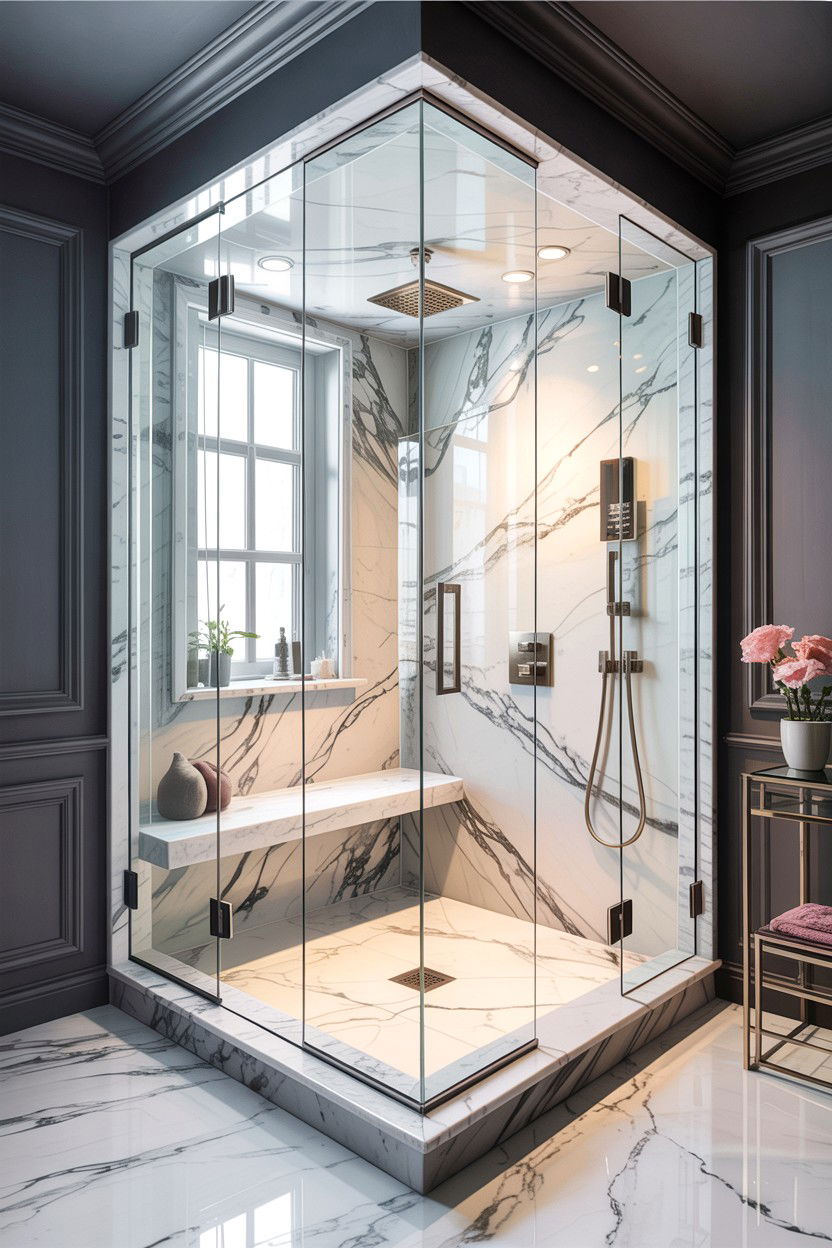
Frameless glass shower enclosures are a top choice for modern bathrooms because they create an unobstructed view that makes the entire room feel larger. The rule for these systems is to use heavy-duty tempered glass, typically three-eighths to one-half inch thick, to ensure stability without the need for bulky metal frames. It is also essential to use high-quality hardware that can support the weight of the glass and provide a smooth door operation. Because the glass is clear, it showcases beautiful tile work inside the shower, making it a focal point of the design. Regular cleaning with a squeegee will keep the glass looking pristine and spot-free.
23. Floating vanity clearance
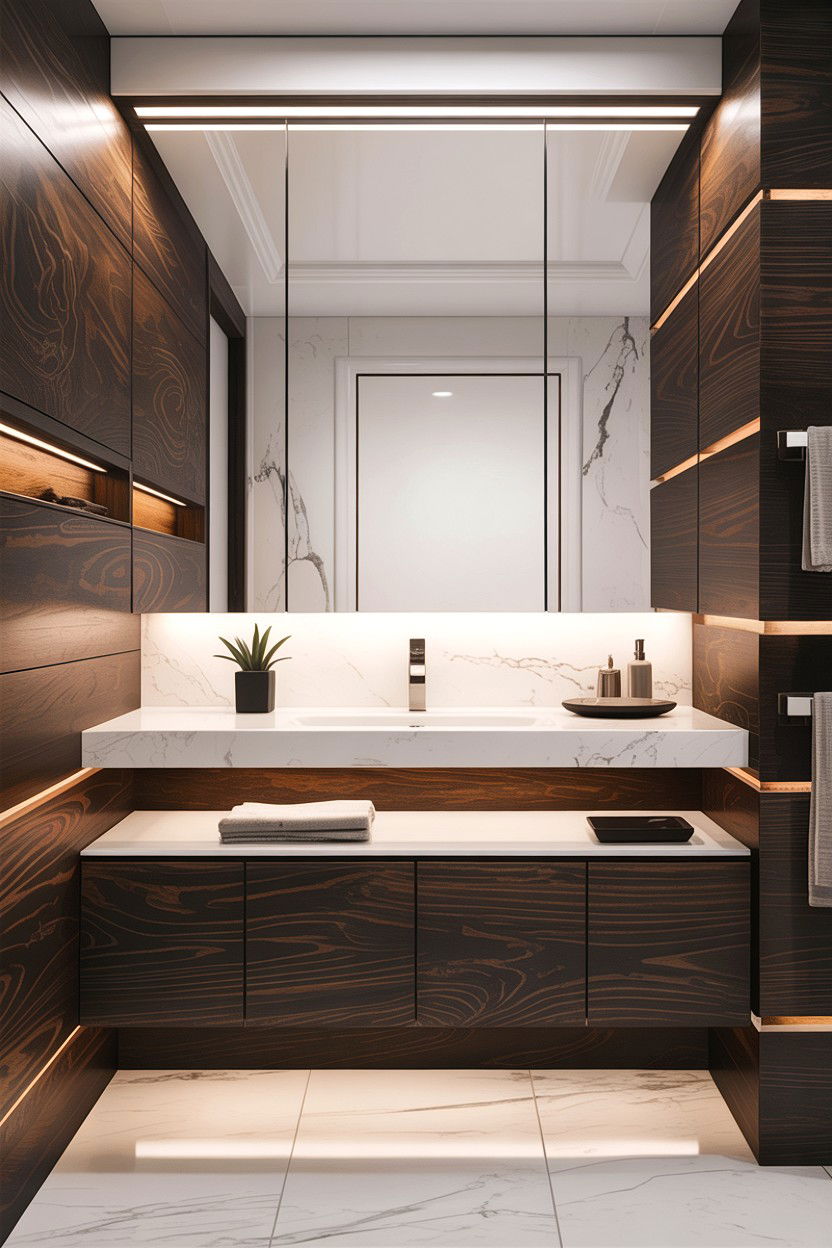
A floating vanity is a stylish way to modernise your bathroom and create the illusion of more floor space. The rule for installation is to ensure the vanity is securely anchored to the wall studs to support the weight of the cabinet and the countertop. Typically, a floating vanity is mounted so that the countertop sits at the standard thirty-four to thirty-six inch height. The open space underneath provides a clean look and makes cleaning the floor much easier. You can also use this space to tuck away a small step stool or a decorative basket. This design choice works particularly well in minimalist or contemporary bathroom settings.
24. Bathroom window privacy
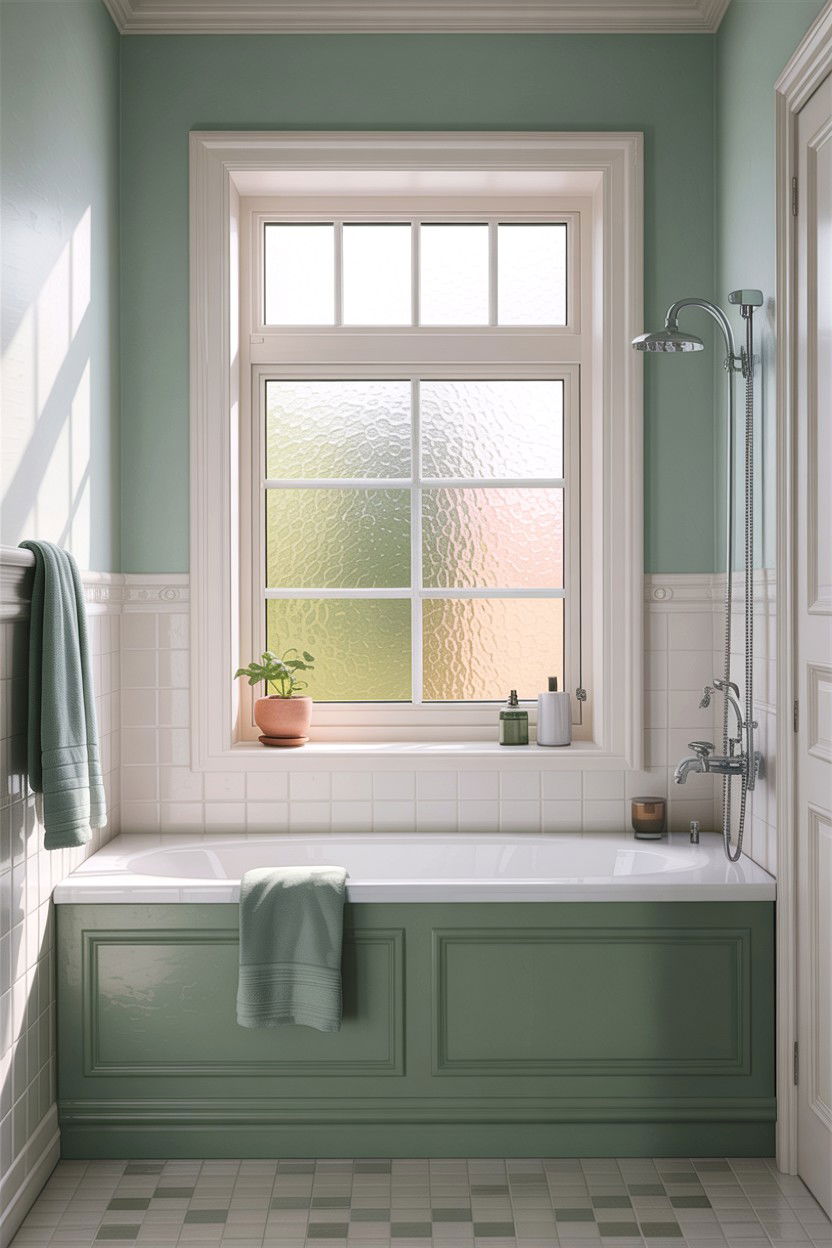
Natural light is a wonderful addition to any bathroom, but maintaining privacy is a crucial rule that cannot be ignored. If your bathroom has a window, consider using frosted, seeded, or textured glass to allow light in while obscuring the view from the outside. Alternatively, you can install moisture-resistant window treatments like faux-wood blinds or cellular shades that can be easily adjusted. Placing the window higher on the wall, such as a transom window, is another effective way to gain light without compromising your seclusion. Ensuring the window is properly sealed and trimmed will prevent moisture from damaging the surrounding wall and framing over time.
25. Heated floor system
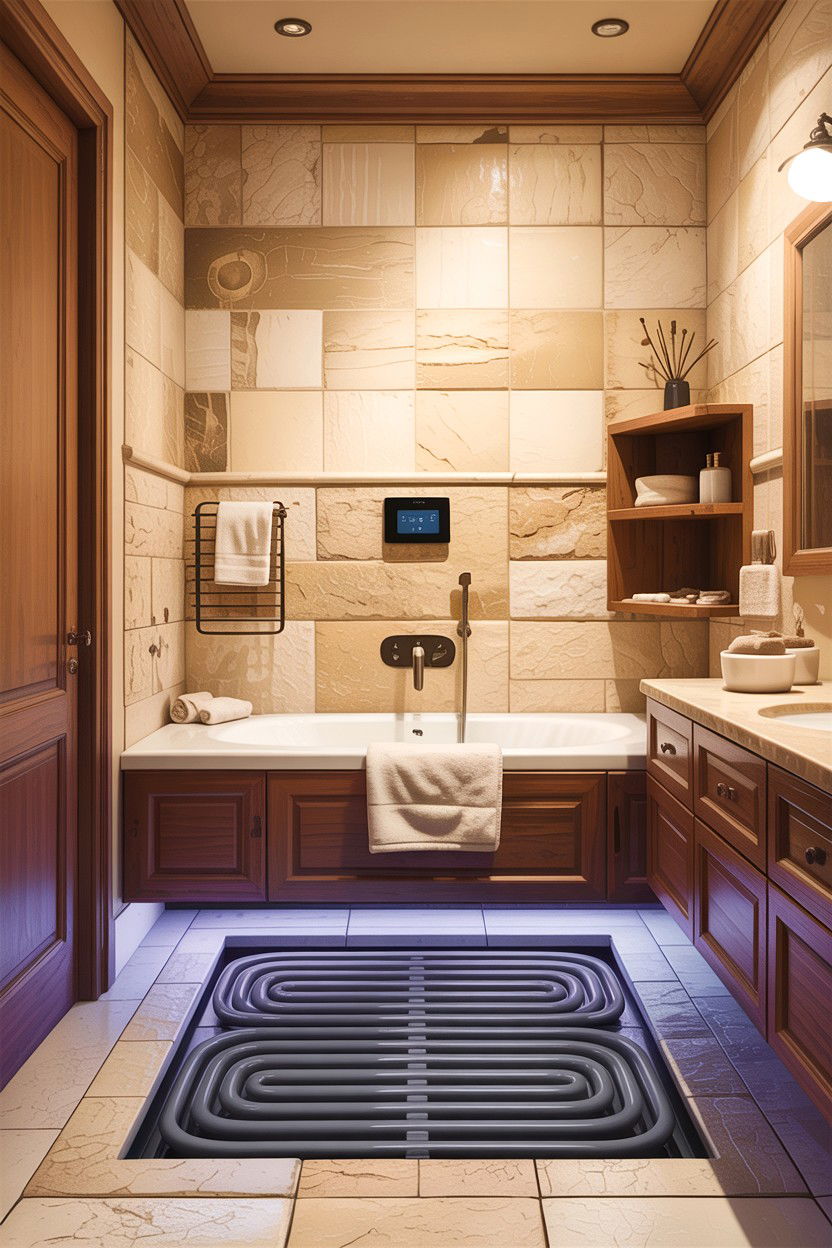
Installing a radiant heated floor system is a luxury upgrade that provides incredible comfort, especially during cold winter months. The rule for these systems is to lay the heating cables or mats directly beneath the tile or stone flooring, ensuring even heat distribution across the entire room. It is important to connect the system to a dedicated thermostat so you can program the temperature and timing to suit your schedule. Heated floors are not only energy-efficient but also help to dry up any moisture on the floor more quickly. This feature adds a high-end feel to the bathroom and is a major selling point for potential homebuyers.
26. Medicine cabinet depth
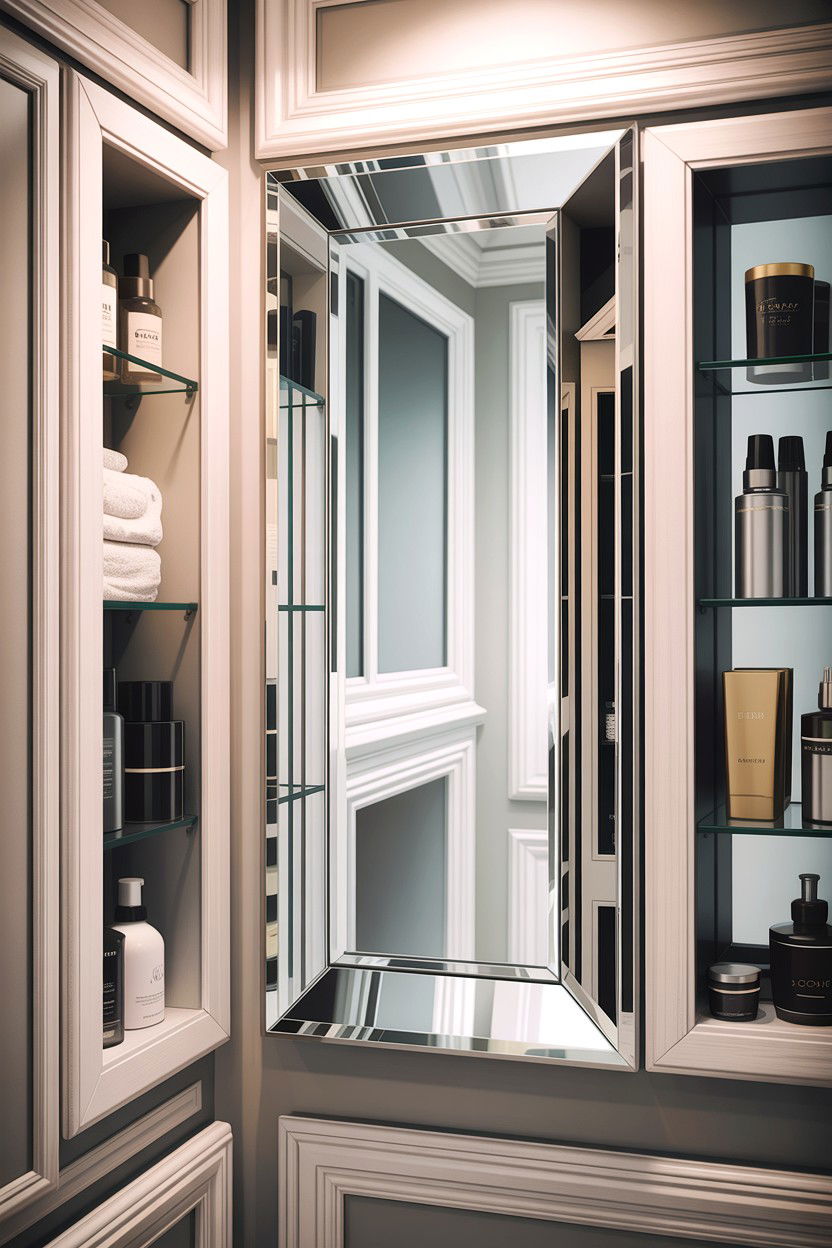
A medicine cabinet is a classic storage solution that keeps daily essentials within easy reach while keeping the countertop clear. The rule for choosing a medicine cabinet is to consider the depth, which is typically around four inches for recessed models. Recessing the cabinet into the wall between the studs creates a flush, streamlined look that does not protrude into the room. If you cannot recess the cabinet due to plumbing or electrical lines, choose a surface-mount model with mirrored sides to help it blend into the space. Many modern medicine cabinets now feature integrated lighting, magnifying mirrors, and even internal electrical outlets for added convenience.
27. Grab bar installation
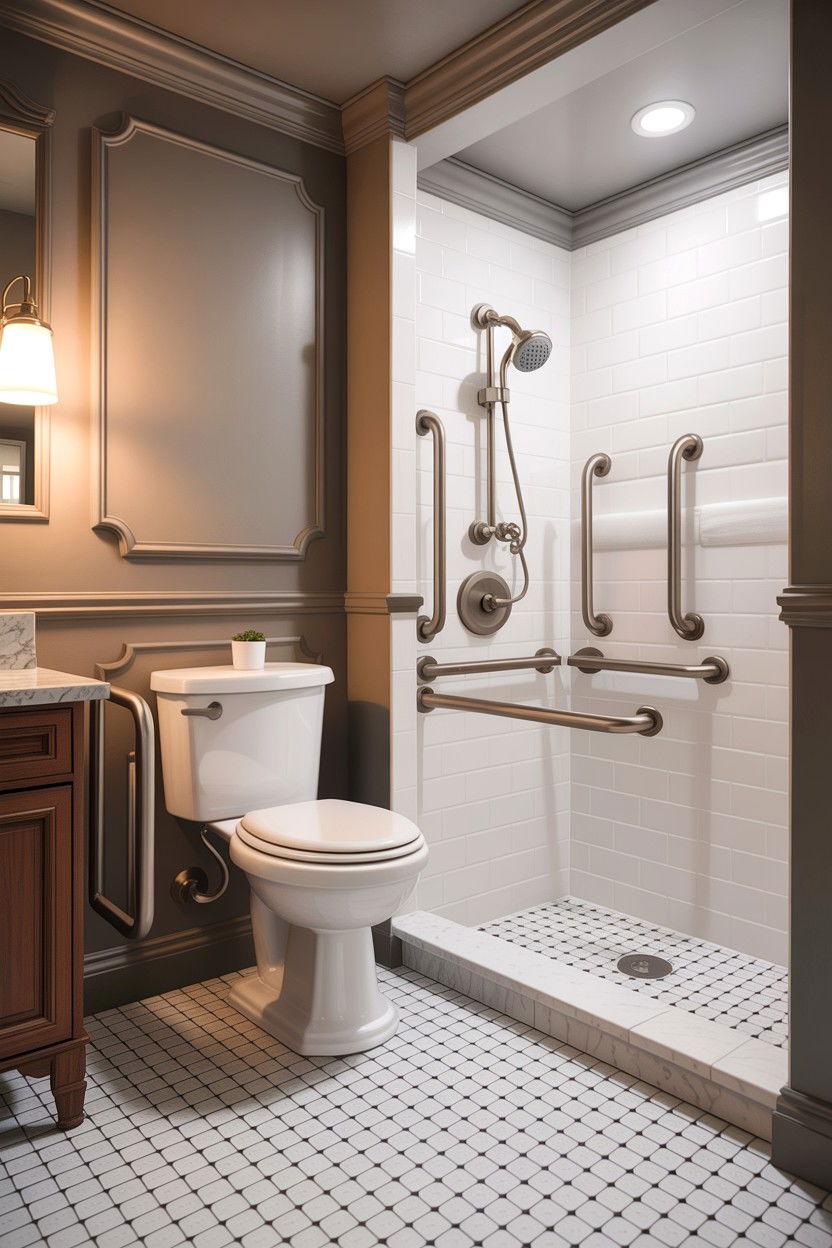
Incorporating grab bars into your bathroom design is a smart move for long-term accessibility and safety for users of all ages. The rule for installation is that grab bars must be securely anchored into solid wood blocking behind the wall to support a significant amount of weight. Standard placement includes one horizontal bar along the side wall of the shower and another near the toilet to assist with sitting and standing. Modern grab bars come in a variety of stylish finishes that match your other fixtures, proving that safety does not have to come at the expense of aesthetics. They provide peace of mind and help prevent slips.
28. Sconce light height
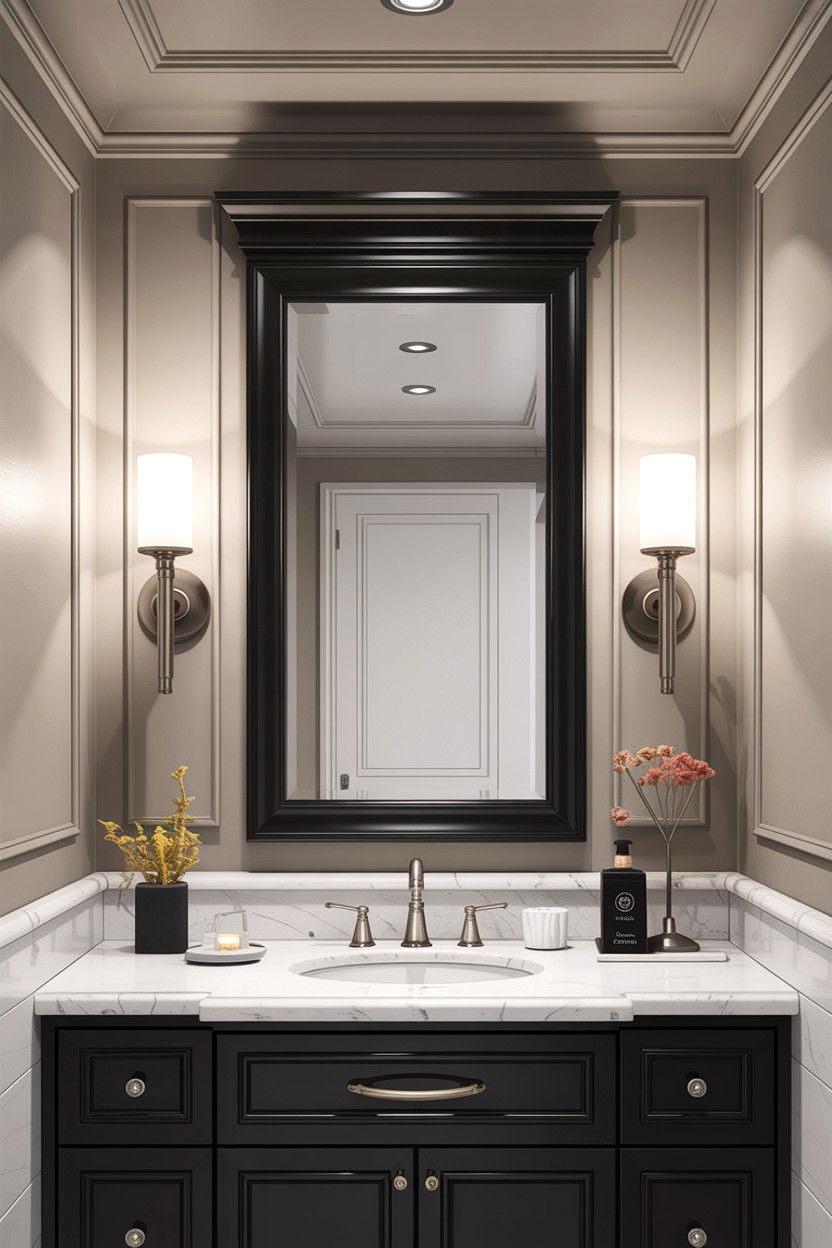
When installing wall sconces next to a bathroom mirror, the height at which they are mounted is critical for effective lighting. The rule is to place the center of the light fixtures approximately sixty to sixty-six inches from the floor, which is roughly eye level for most adults. This placement ensures that light is cast evenly across your face, eliminating the shadows that can make grooming difficult. If you have a particularly tall or short family, you can adjust the height slightly to accommodate the primary users. Choosing sconces with frosted glass shades will help to diffuse the light and prevent harsh glares during your morning routine.
29. Ceiling height bathroom
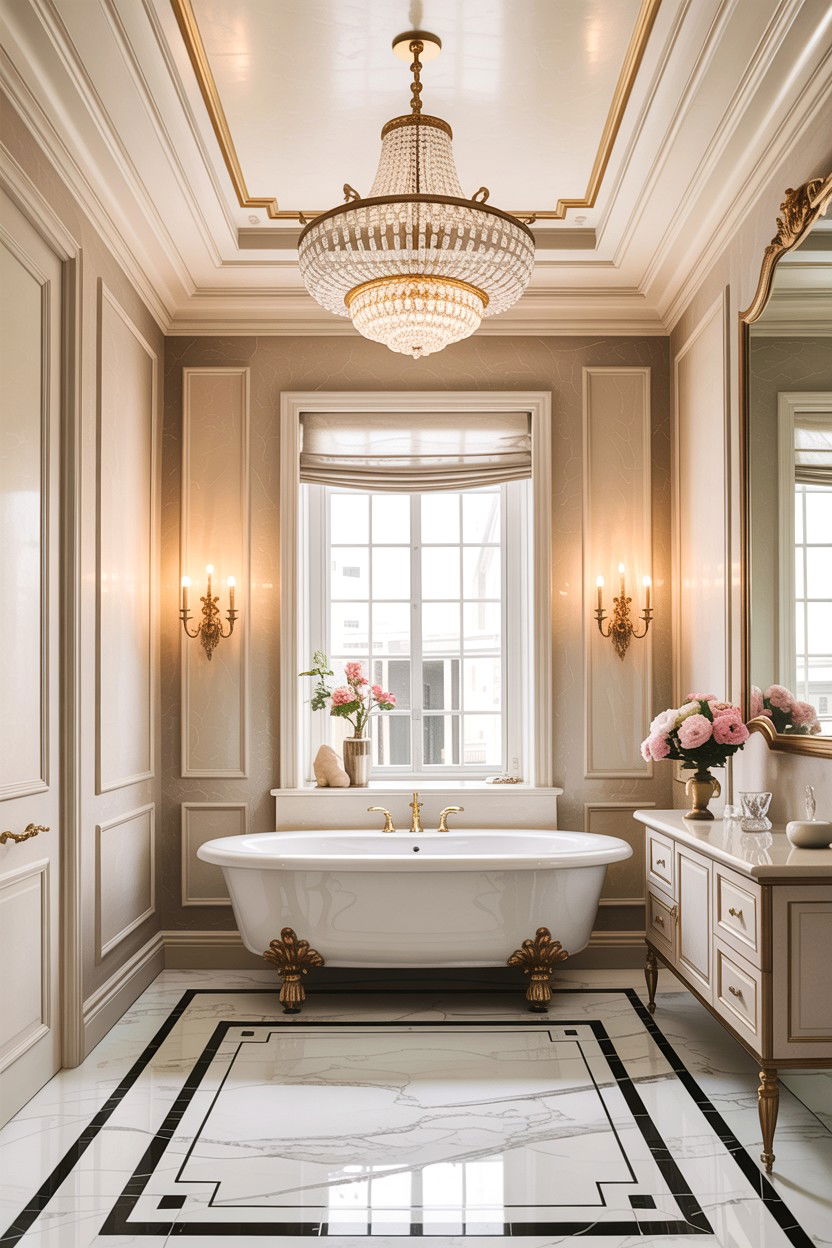
The height of your bathroom ceiling can significantly influence the overall feel and ventilation of the space. Building codes generally require a minimum ceiling height of eighty inches in the areas where users stand, such as in front of the vanity or inside the shower. Higher ceilings, such as nine or ten feet, can make a small bathroom feel much more grand and airy. If you are working with a sloped ceiling in an attic bathroom, ensure that the highest point is located over the most used fixtures. Adding crown molding or a unique paint color can emphasize the height and add architectural interest to the room.
30. Pocket door bathroom
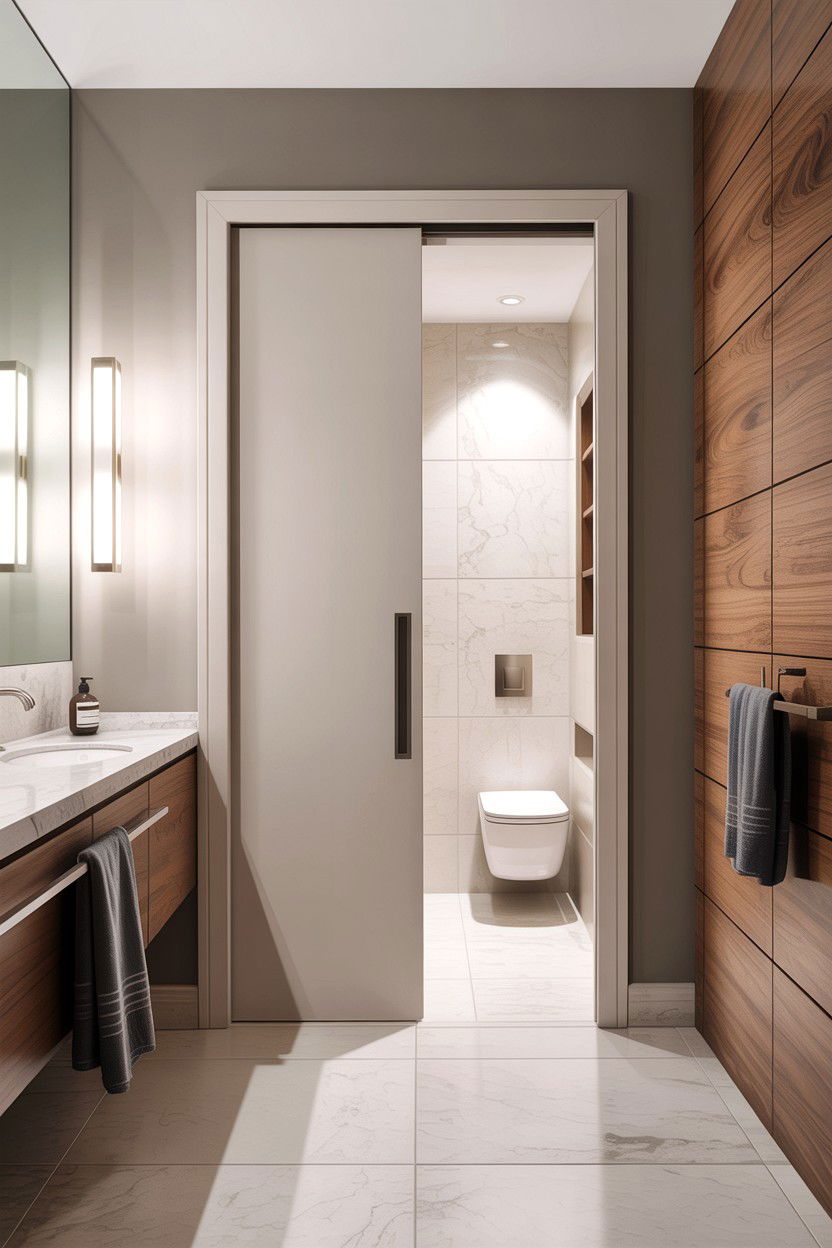
In a small bathroom where every inch counts, a pocket door can be a game-changing design choice. The rule for pocket doors is to ensure that the wall cavity is free of any plumbing or electrical lines before installation, as the door needs a clear path to slide into. Pocket doors eliminate the need for a traditional door swing, freeing up valuable floor space for a larger vanity or a separate shower. They are an excellent solution for ensuite bathrooms or powder rooms where space is at a premium. Choosing high-quality track hardware will ensure the door slides smoothly and stays on its track for years to come.
Conclusion:
Mastering the fundamental rules of bathroom design is the first step toward creating a space that is as practical as it is beautiful. By adhering to standard clearances, prioritizing safety features like slip-resistant flooring, and layering your lighting, you ensure that your bathroom remains a functional asset for years to come. These guidelines are not meant to stifle your creativity but rather to provide a solid foundation upon which you can build your personal style. A well-designed bathroom reflects a thoughtful approach to daily living, offering a perfect blend of efficiency and relaxation. Ultimately, the best bathrooms are those that cater to the unique needs of their users while following the timeless principles of good design.
Related posts:

Leave a Reply